

Fareed Kotb brings a 1930 Zeiss Ikon to the World Cup, then is denied four finals
A Cairo-based sports photographer limits himself to 20 shots per match, mocks and all, and still fights for the final.

Fareed Kotb, a 39-year-old sports photographer in Cairo, documented World Cup matches with a 1930 Zeiss Ikon Ideal 250/11. He photographed two games in Canada but says he was denied the World Cup final four times, raising pressure to make every frame count.
Fareed Kotb brought a camera made in 1930 to the World Cup, then ran into the kind of bottleneck that turns creative plans into operational reality. The 39-year-old sports photographer from Cairo documented two matches in Canada, shooting Portugal versus Croatia in Toronto and Colombia versus Switzerland in Vancouver. And even though he says it was his dream to shoot the final in America, he was denied four times, which he describes as difficult.
The camera choice forced a hard constraint on his workflow, not just his aesthetic. Kotb says he practiced extensively before traveling, learning how to load film, focus, set exposure, and take test photos, and he also studied old manuals and the camera's history like it was “studying for university.” With the 1930 camera, he explains he could take no more than 20 photos each game, compared with the last World Cup where he took 5,000 photos at one game. After the matches, he returned home to Egypt and plans to develop the film in the lab on Sunday, while admitting he cannot sleep and is “overthinking,” waiting to see if the photos are good.
For decision-makers, the interesting part is not that film looks cool. It is that Kotb designed a system where throughput is capped and outcomes are delayed, and then he still tried to deliver under tournament conditions that are optimized for speed. Digital photography gives you the ability to shoot, check results, and iterate within seconds. Film, especially with an early camera like the Zeiss Ikon Ideal 250/11 he narrowed down in a Cairo vintage camera market, removes that safety net. He describes having to plan movements and the photos he wanted to capture in advance because you only get one chance, then waiting until the film is developed to learn whether the shot worked.
That constraint matters because world-stage events are typically a scramble of timing, access, and permission. Kotb says when he arrived in Canada, fans, photographers, and volunteers mocked him because they had never seen a camera like it. Yet he still frames walking onto the pitch with a nearly 100-year-old camera as a highlight of the tournament. In his telling, every photo becomes an explicit bridge between the present and the past, but operationally it also means he had to trust preparation, because he could not “fix it in post” the way digital workflows allow.
The camera itself has a specific lineage that shapes his incentives. He narrowed down four cameras in Cairo and settled on one he found in a big box: the Zeiss Ikon Ideal 250/11. After researching the origin of the serial number, he learned it had been owned by a photographer who used it to photograph players before they traveled to the 1954 World Cup. That same photographer also shot Egyptian players before the 1936 Berlin Olympics. So this was not just a vintage prop. It was a tangible continuity project, with Kotb trying to connect his third World Cup to the first one in 1930, nearly 100 years earlier, by using a camera from that era.
There is also a clear access story here, and it is the part that most resembles real-world execution friction. Kotb says he was denied permission to shoot the World Cup final. Specifically, he says he was denied four times, even while describing the final as his dream to shoot in America. The source does not provide the reasons for denial, but the practical implication is obvious: even if you have the skill and a compelling concept, major events gate who can operate where, and those decisions can override even the most thoughtful technical plan.
For leaders watching adjacent industries, the second-order lesson is that “creative differentiation” still needs a permissions strategy. Kotb’s project gained attention quickly after he posted online about the camera. He says that after sharing it, he woke up the next morning to messages and comments from people interested in the results and excited about this very new but old way of taking photos in 2026. That audience pull is a powerful asset for any brand or creator, but it does not automatically solve the hardest constraint: tournament access.
Now he is in the waiting phase, which is also the core risk of the film approach. He cannot see results immediately. He is preparing for the film to be developed as if it were the “birth of my first baby,” while constantly overthinking whether the photos will be good. That emotional detail is not trivia. It is what happens when you trade instant feedback for a deliberate process. If the shots land, the payoff is a portfolio of intentional images connecting eras. If they miss, he has no second chance.
In other words, Kotb’s project is a live test of constraint-driven creativity: limited frames, delayed confirmation, and access hurdles. For executives, founders, investors, and creators, the stakes are the same even when the domain changes. You can choose a slower, more deliberate method to make your output meaningfully different, but you still have to clear permission walls, plan around irreversible tradeoffs, and be ready for outcomes you cannot instantly verify.
This story's Key Insights and Take-aways are locked.
Create a free account to unlock Executive Actions for one credit.
Register to UnlockAlways free for Executives Club members. Join the Club
More in Business

SK Hynix opens at $170, raises $26.5B, and tops foreign IPO records
In Friday's Wall Street debut, SK Hynix turns AI RAM demand into a $26.5B fundraising moment that rewrites comps.
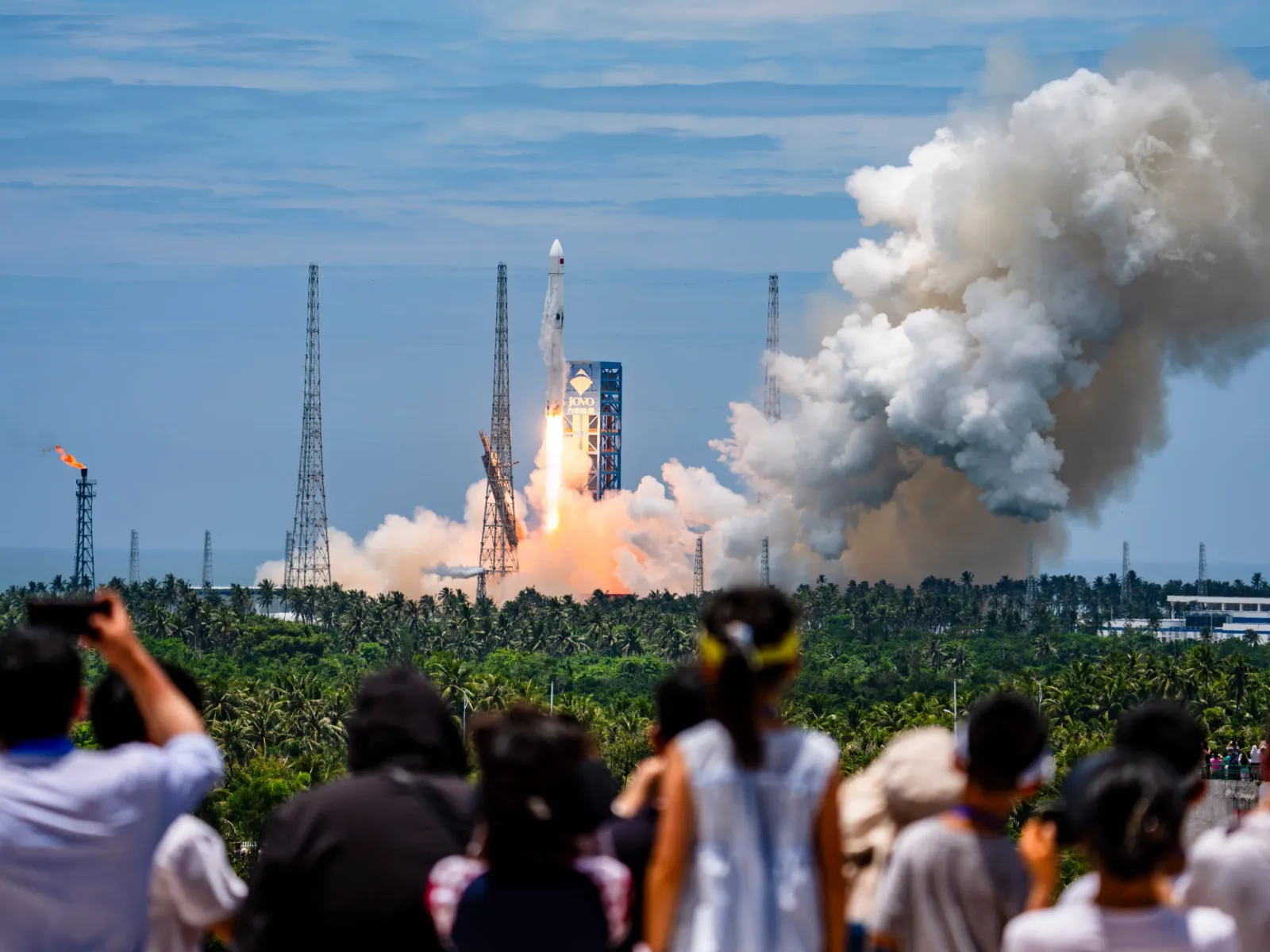
China lands a reusable Long March booster, a first that matches SpaceX and Blue Origin
A barge landing and net-based recovery move China from theory to proof, reshaping the reusability race and satellite ambitions.

AstraZeneca $27B wipeout as Wainua late trial misses cardiovascular target
A failed late-stage heart study triggered a swift market punishment, forcing investors and boards to reset timelines and risk.