
Farida Mahdy turns her grandmother’s Cairo closet into a 2024 fashion archive
The “Grandma and the Fur Coat” project documents how Ehsan Ouf matched cigarettes, brands, and style across decades.
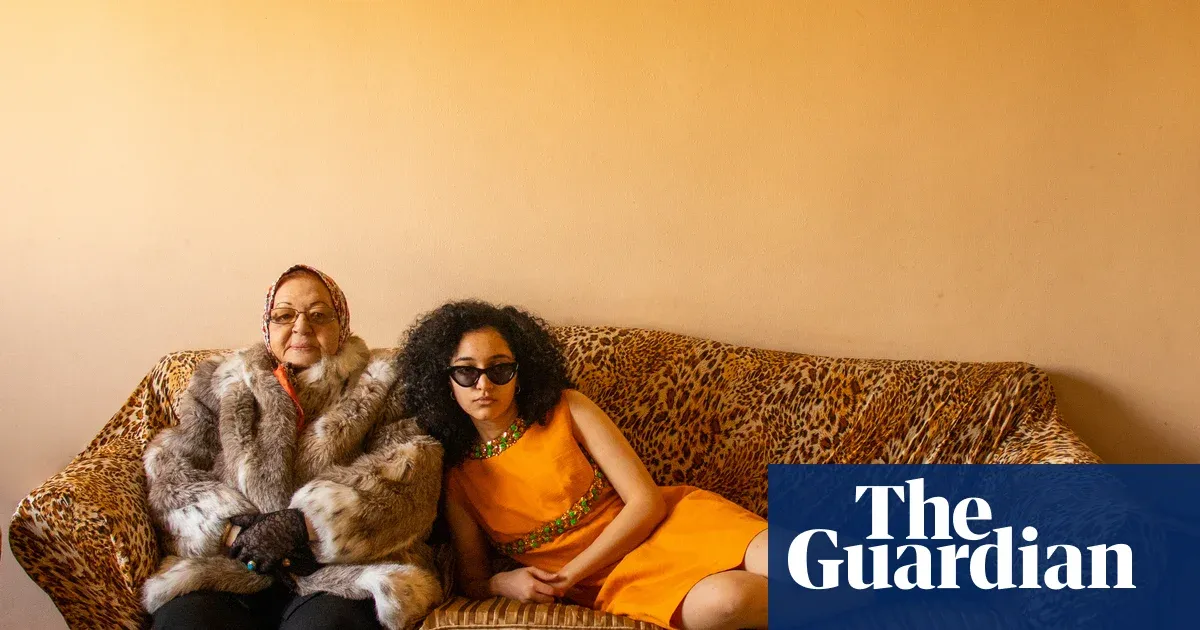
Egyptian photographer and curator Farida Mahdy launched “Grandma and the Fur Coat” in 2024 after finding photos of her grandmother, Ehsan Ouf. The project matters for decision-makers because it shows how lived archive stories become durable cultural and brand assets.
Egyptian photographer and curator Farida Mahdy started “Grandma and the Fur Coat” in 2024 after discovering a collection of photos of her grandmother, Ehsan Ouf. The centerpiece of the project is a portrait of Mahdy and Ouf together in Ouf’s flat in Cairo, capturing the specific, intimate style details that normal fashion documentation often misses.
Mahdy did not just observe from a distance. She lived with her grandmother for four years while studying photography, spending time chatting and watching TV on the couch. That time together matters because it explains why the archive feels so precise. The dress Mahdy wears is Ouf’s engagement dress from 1971, one of the very few items she still has. Ouf’s fur coat, meanwhile, was a gift from Mahdy’s late grandfather. Mahdy persuaded her not to sell the coat, and that personal act directly shaped why she began the project in the first place: to document how stylish Ouf was.
In the 1970s and 1980s, Ouf dressed like a celebrity. Mahdy says she wore brands such as Chanel and Dior, ran a personal lookbook using wigs, and even matched the colour of her cigarettes to her outfits. Those are small, almost throwaway details in a caption, but they are the whole point of why this kind of documentation can outlast trends. In fashion and media, attention usually goes to what is new. Mahdy is preserving what was already intentional, down to the coordination between a cigarette colour and an outfit.
There is also an incentive structure hiding in plain sight. Mahdy’s project is not only an art exercise, it is an argument for the value of private, domestic artifacts. A fur coat is not just an item. It is a decision history, including the fact that Mahdy intervened to keep it from being sold. In a world where many personal collections get liquidated when owners downsize or financial pressure hits, the difference between “kept” and “gone” is the difference between having future material and having nostalgia with missing evidence.
For executives, boards, and anyone thinking about brand building or cultural risk, this is a case study in how narrative access changes the product. When an archive is built from proximity, the viewer gets context, not just aesthetics. Mahdy’s four-year living arrangement is not a vanity detail. It is what lets the project preserve specificity: an engagement dress from 1971 that still exists, a gift origin tied to a late grandfather, and a wardrobe that extended beyond clothing into wigs and coordinated styling habits.
Zoom out and the second-order implications get sharper. The Middle East has vibrant fashion scenes, and Egypt in particular has a deep relationship with photography as a medium of memory. In that environment, projects like this can become cultural infrastructure, not only content. They can influence how institutions collect, how galleries curate, and how communities value their own visual histories. The “Grandma and the Fur Coat” title signals something businesspeople recognize instantly: the asset is the story, and the coat is the asset handle that makes the story holdable and legible.
Regulatory framing is less about formal compliance here and more about cultural stewardship. When projects document personal photos and clothing linked to identifiable individuals, the curatorial question becomes: how do you preserve without exploiting? The source does not raise any legal dispute, so there is no claim to make about enforcement. But the underlying governance problem is real for media creators and publishers: consent, control of images, and how subjects are represented once images leave the home. Mahdy’s role as a granddaughter who lived with her grandmother suggests a form of internal consent, but decision-makers in similar spaces still need to think about permissions if archives travel beyond the initial collection.
And for peers in creative and investment roles, the strategic stakes are practical. Mahdy is effectively building a durable catalog around a single, coherent relationship and a consistent aesthetic thread across decades. That creates leverage. It makes future exhibitions easier to explain, partnerships easier to negotiate, and audience trust easier to earn because the materials have provenance. In an attention economy, provenance reads like credibility.
Ultimately, the project offers a quiet counterpoint to how fashion archives are often treated as glossy retrospectives. Here, the stakes are personal and specific: a 1971 engagement dress that survived, a fur coat that was saved from sale, and styling choices that included matching the colour of cigarettes to outfits. Mahdy’s archive does not ask audiences to guess. It tells them exactly what was worn, where it came from, and why it still matters.
This story's Key Insights and Take-aways are locked.
Create a free account to unlock Executive Actions for one credit.
Register to UnlockAlways free for Executives Club members. Join the Club
More in Business

A flaw in PHP just forced governments to pull their own sites offline
European agencies from Belgium to Germany took websites dark to patch a critical weakness in the language behind almost 70% of the web, and the blast radius extends far beyond government portals.

BioWare shuts down, Mass Effect 5 dead after $55B EA buyout
The legendary RPG studio's closure lands months after a $55 billion investment group buyout of EA, raising tough questions for gaming's biggest acquirers.

Musk barred from the room as Tesla, SpaceX boards weigh $3.5 trillion merger
The CEO of both companies is a 'conflicted party' watching independent directors negotiate a tie-up that would create a $3.5 trillion giant he would own about a third of.