
FBI asks Air Force One passengers for phones after NYT raises Qatari jet security concerns
The Air Force One leak probe now hinges on witness access, device handling, and what officials choose to share.
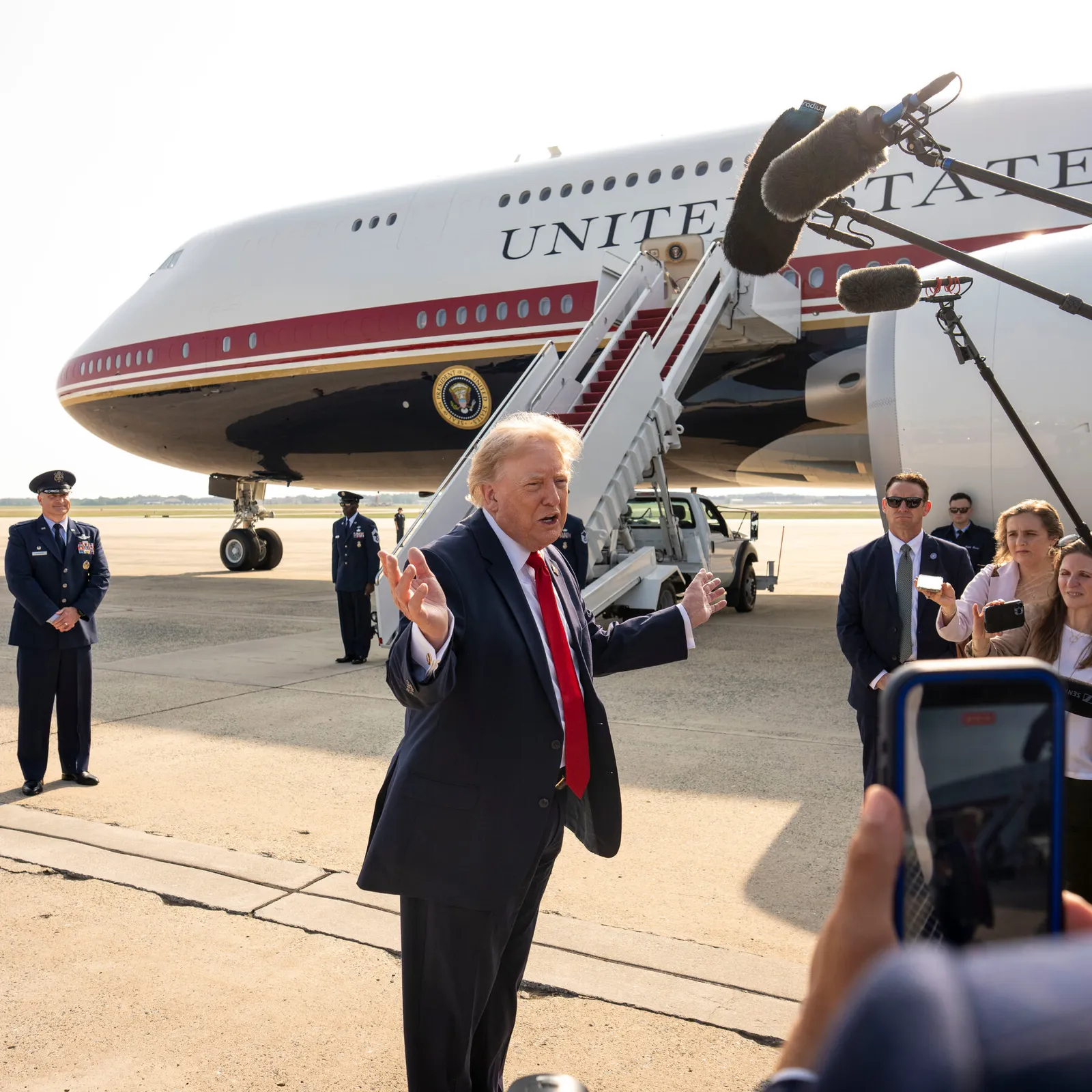
The FBI is seeking to speak with several people who flew aboard Air Force One with President Trump last week, requesting their phones. The New York Times previously reported on security concerns tied to a Qatari-donated jet, setting off a fast-moving investigation that could reshape how officials handle sensitive equipment and information.
The FBI is trying to get its hands on the phones of several people who flew aboard Air Force One with President Trump last week, as part of the Air Force One leak investigation. This push follows reporting by The New York Times on security concerns related to a Qatari-donated jet, which escalated the case from a security discussion into a witness and evidence scramble.
The practical implication is immediate: in leak investigations, access is everything. The FBI is not merely asking for statements in the abstract. It asked for phones, meaning investigators are likely looking for communications, location traces, photos, call logs, and any other digital breadcrumb that can connect what someone knew, when they knew it, and who they contacted. For decision-makers watching this, it is a clear signal that after high-profile security reporting, the government’s evidence collection can shift quickly from “review” to “retrieve devices.”
That matters far beyond courtroom timelines. Modern government travel for senior officials is a high-control environment where information hygiene is supposed to be tight. When a leak investigation connects to aircraft security and high-sensitivity travel, it also spotlights a broader operational question: who controls the “human layer” of security. In theory, protocols govern access to aircraft systems, devices, and secure communications. In practice, the weakest link is often not the aircraft itself, but what passengers do with their personal devices around sensitive contexts.
The underlying trigger here is the New York Times report about security concerns tied to a Qatari-donated jet. While this particular article segment focuses on the FBI’s effort to speak with passengers and request their phones, it highlights a common pattern in national security cases. Investigative reporting can change the information environment, increasing pressure for authorities to act, expanding scrutiny, and pushing investigators to gather evidence before stories, memories, or device data become harder to obtain. In other words: once reporting surfaces a specific security concern, the next step is often witness outreach tied directly to evidence preservation.
For executives and boards, the second-order effects are real, even if your organization is not directly involved with Air Force One. This kind of case is a live example of how regulators and investigators treat digital data. “We need your device” is a standard move because phones compress so much behavior into one place. They show patterns. They show timelines. They show contacts. They also create obligations around handling data properly, because once a device is taken into evidence, everything about storage, access, and logging becomes part of the evidentiary chain.
In corporate terms, that translates into a governance lesson for any organization that touches sensitive operations, government relationships, or critical infrastructure. If people can walk into sensitive environments with their own phones, policies need to anticipate investigation-grade questions. Even where no leak is alleged at your company, the process you follow when someone is asked to produce a device, or when internal teams preserve logs and communications, can determine whether you can cooperate quickly and credibly. The headline version of this FBI move is law enforcement asking for phones. The corporate version is internal readiness: having a defensible, repeatable process for device handling and evidence preservation.
There is also an organizational dynamics angle. When an investigation draws in individuals associated with a president’s travel, it creates a high-stakes coordination problem for whoever oversees compliance, security, and executive scheduling. People who flew aboard with President Trump last week are now potential evidence sources. That can generate fear, defensive behavior, and confusion about what can be shared. The FBI’s request for phones indicates the investigation is moving on the evidence side, which typically means the government is operating under its own urgency and timeline.
The strategic stakes are not abstract. If you are an executive in a company that interacts with governments, supports secure travel, provides aviation-related services, or manages compliance for high-profile personnel, this is a reminder that scrutiny can escalate quickly after credible reporting. Once authorities seek phones, the case usually reaches beyond general questioning. It becomes about reconstructing events, verifying narratives, and finding the specific digital traces that corroborate or contradict claims. In that environment, speed and discipline are competitive advantages, because delays and sloppy data handling can turn a manageable issue into an investigation that compounds over time.
This story's Key Insights and Take-aways are locked.
Create a free account to unlock Executive Actions for one credit.
Register to UnlockAlways free for Executives Club members. Join the Club
More in Politics

LA County: DOJ's 20,000 'noncitizen' voter list is 'unreliable,' includes U.S.-born
Preliminary review by Los Angeles County election officials finds errors in the federal list, raising the stakes for voter roll integrity ahead of November.

Trump's $1.5B Pentagon chip investment lands in North Carolina
A $1.5 billion defense infusion for North Carolina chipmaking signals a new era of Pentagon-backed reshoring - here's what it means for the industry.

Nigeria confirms first Ebola case in Abuja, a woman just off a Uganda flight
Health Minister Muhammad Ali Pate says the patient flew in from Uganda, putting Africa's latest outbreak on Nigeria's doorstep.