
US strikes Iran-linked targets in Hormuz threat crackdown, Trump threatens wider action
A new US strike wave hits military capabilities tied to Strait of Hormuz shipping threats, with Trump warning it could expand.
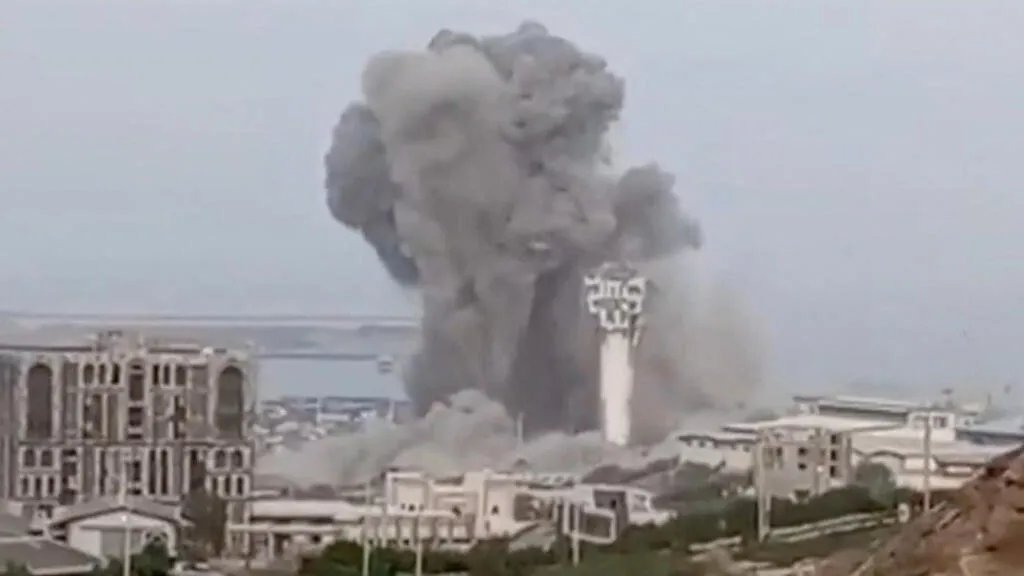
The United States launched fresh strikes against Iran on Wednesday, targeting military capabilities linked to threats against shipping in the Strait of Hormuz. President Donald Trump warned he could widen the campaign unless Tehran returned to negotiations, raising the stakes for how quickly escalation risk is managed.
The United States launched a fresh wave of strikes against Iran on Wednesday, targeting military capabilities linked to threats against shipping in the Strait of Hormuz. The immediate operational logic is straightforward, even if the consequences are not: when a passage as strategic as Hormuz becomes unsafe for commercial traffic, governments feel pressure to act fast, visibly, and with enough force to deter more disruptions.
President Donald Trump added a second, equally clear signal. He warned he could widen the campaign unless Tehran returned to negotiations. That matters because it frames the strikes not as a limited, one-off response, but as leverage. In other words, Washington is pairing kinetic action with a political ultimatum: either talks resume, or the intensity increases.
For executives watching this from boardrooms rather than briefing rooms, the key issue is how quickly geopolitical risk can translate into market and operational risk. The Strait of Hormuz is one of the world’s chokepoints for energy and shipping. Even when strikes do not directly disrupt physical output, fear and uncertainty can move first: insurers price higher, shipping routes shift, and supply chain timelines tighten. Those reactions can ripple into energy costs, transportation costs, and planning assumptions across sectors, from industrials that need steady inputs to consumer businesses that rely on stable logistics. The “paralyzed” element mentioned in the live update matters too, because when a region’s normal movement slows or stalls, the cost of restoring normal flow can rise sharply.
There is also a policy incentive layer underneath the headlines. When governments threaten to widen military campaigns, they often do so to influence bargaining behavior. Trump’s warning that the campaign could expand unless Tehran returned to negotiations suggests the US objective is not only to degrade specific capabilities, but also to change Tehran’s willingness to engage. From a risk-management perspective, that means scenario planning should assume both paths: talks could resume, or the pressure could escalate. Markets typically price the uncertainty between those branches, and that pricing can be brutal when shipping and energy routes are involved.
In corporate terms, second-order effects often appear where executives least expect them: contracts, compliance, and capital markets. If shipping becomes volatile, firms can face disputes over force majeure clauses, delays, and delivery obligations. If sanctions or export controls intensify in response to a conflict, compliance workloads can surge, screening requirements can tighten, and certain counterparties can become off-limits overnight. Even without new measures being announced in the live update, companies tied to regional logistics or to upstream supply chains typically prepare for regulatory tightening in the wake of strikes, because regulators tend to interpret escalation as an opportunity to harden enforcement.
Another operational implication is how quickly insurance and finance underwriting can react. Shipping risk is not abstract. Underwriters adjust premiums, deductibles, and coverage conditions when threat levels change. Banks and lenders can also reassess risk exposure for trade finance or asset-backed lending tied to affected corridors. The practical takeaway for decision-makers is that geopolitical shocks can change balance-sheet assumptions faster than the underlying business model. That is why executive teams often run “corridor stress tests” even when there is no direct customer loss, simply to quantify how route disruption, cost inflation, and payment delays could affect cash flow.
Finally, there is a governance angle for investors and boards. A situation like this pulls multiple responsibilities at once: protect employees and assets, keep essential operations running, and ensure disclosures and risk reporting remain accurate as headlines move. The fact pattern in the live update is concise, but the direction is not subtle. The US launched fresh strikes on Wednesday, targeted Iran-linked military capabilities connected to threats to shipping in the Strait of Hormuz, and Trump warned he could widen the campaign if Tehran does not return to negotiations. That combination turns a military event into a bargaining contest with time pressure.
Peers in similar roles should treat this as a trigger for escalation-aware planning. Whether your exposure is energy procurement, transportation logistics, trade finance, or regional compliance, the strategic stake is the same: when chokepoints face threats, normal operations can become a high-volatility input to the broader economy. In that environment, the winners are the teams that can translate fast-moving events into clear operational choices, robust contract posture, and disciplined capital decisions. The live update may be short on detail, but the consequence is long: if talks do not resume, the possibility of wider action stays on the table, and the market often hates uncertainty more than it hates bad news.
This story's Key Insights and Take-aways are locked.
Create a free account to unlock Executive Actions for one credit.
Register to UnlockAlways free for Executives Club members. Join the Club
More in Politics

LA County: DOJ's 20,000 'noncitizen' voter list is 'unreliable,' includes U.S.-born
Preliminary review by Los Angeles County election officials finds errors in the federal list, raising the stakes for voter roll integrity ahead of November.

Trump's $1.5B Pentagon chip investment lands in North Carolina
A $1.5 billion defense infusion for North Carolina chipmaking signals a new era of Pentagon-backed reshoring - here's what it means for the industry.

Nigeria confirms first Ebola case in Abuja, a woman just off a Uganda flight
Health Minister Muhammad Ali Pate says the patient flew in from Uganda, putting Africa's latest outbreak on Nigeria's doorstep.