

NYT moves to quash Trump subpoenas forcing 3 reporters to reveal confidential sources
A federal bid to compel testimony from Julian E. Barnes, Eric Lipton, and Eric Schmitt collides with First Amendment claims.
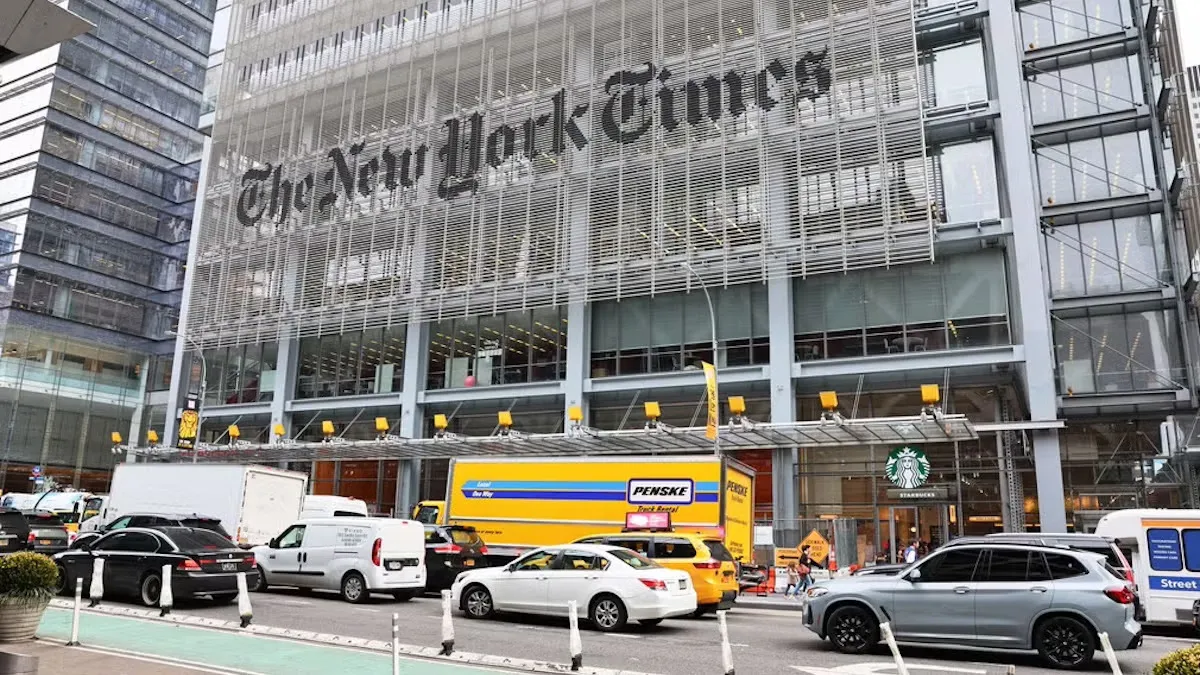
The New York Times filed a motion to quash Trump administration subpoenas aimed at three journalists, seeking to force disclosure of confidential sources tied to coverage about the Air Force One plane. For decision-makers, the case spotlights how national security reporting can become a legal and reputational pressure point.
The New York Times has filed a motion seeking to block subpoenas that would force three of its reporters to reveal confidential sources connected to coverage of President Trump’s new Air Force One. In the filing, the Times says the subpoenas “violate the constitutional rights of The Times and its journalists,” arguing the moves are meant to punish the paper for reporting, not to uncover wrongdoing.
The three journalists named in the subpoenas are Julian E. Barnes, Eric Lipton, and Eric Schmitt. The Justice Department delivered those subpoenas to several reporters’ homes Friday, requiring them to testify about their confidential sources before a federal grand jury in Manhattan. Times lawyer David McCraw, in the motion, described the subpoenas as “abusive and improper” and tied the effort directly to First Amendment rights and the paper’s ability to report freely on the administration.
Why this matters is that the Air Force One reporting sits in the crosshairs of national security and political accountability at the same time. Last week, the journalists reported that Trump “Turkey” on an older Air Force One for security reasons, citing advice of the Secret Service. Then on July 9, another New York Times article reported that the new Air Force One lacked anti-missile capabilities and other advanced security features that were present on the older aircraft. In other words, the coverage was not rumor-chasing. It was structured as a public-interest story about security features, sourced information, and official choices.
From there, the legal logic ramps up quickly. The subpoenas, according to the reporting, are part of a federal grand jury process in Manhattan. The Times frames the filing as a constitutional fight. McCraw argues the subpoenas are brought “in bad faith to punish The Times for its coverage,” and that they cross the line from investigating material facts to pressuring journalists into breaking confidentiality.
The administration, meanwhile, has already laid down its framing. The subpoenas were issued by Jay Clayton, described here as the U.S. attorney in Manhattan, whom Trump nominated to serve as his director of national intelligence. Todd Blanche, the acting attorney general, said during his Senate confirmation hearing Wednesday that he authorized the subpoenas. Blanche’s stated rationale was that “We’re not targeting reporters - they’re material witnesses,” comparing the situation to “Just like a reporter would be a material witness to a car crash.” That argument, as a matter of legal position, tries to collapse the distinction between ordinary testimony and source-protecting journalism.
The Times is countering that distinction with a direct institutional claim: the subpoenas are not neutral requests for facts, they are an intimidation mechanism that threatens reporting on matters the paper considers essential to national security. Joe Kahn, the Times executive editor, published a video defending the reporters and calling the subpoenas a “naked attempt to intimidate The New York Times and to keep us from reporting on matters that we think are essential to national security.” In the paper’s view, compelling confidential sources is not just a procedural inconvenience. It changes behavior and future information flows.
There’s also a governance angle for anyone who leads a company with a newsroom, a public-policy team, or any role dependent on trust. These subpoenas are being used in the name of a grand jury, and the Times is explicitly treating the move as retaliatory and constitutionally improper. That is exactly the kind of conflict that can spill across industries. When journalists are pushed to disclose sources, executives in other sectors can anticipate a chilling effect not only on the media, but on the sources who might be willing to talk. That can reshape how quickly information reaches the public, and how aggressively companies, boards, and regulators react to breaking stories.
Zoom out further and this becomes part of a bigger pattern: national security coverage often triggers legal and political scrutiny because the information is sensitive, and the incentives for both secrecy and accountability are extreme. Even when reporting is based on disclosed facts, the sourcing can become the battleground. For boards and senior leaders, the second-order risk is operational and reputational. Expect more scrutiny on internal documents, more pressure on counsel, and more debates over whether transparency is worth the legal exposure.
Ultimately, this is a case about the boundary between investigation and compelled speech. The Times wants to “go to court to defend our journalists’ rights to report freely” and to provide the public with stories it says matter. The administration wants to treat the reporters as “material witnesses.” For decision-makers watching this closely, the stakes are clear: the outcome will signal how aggressively confidential journalism can be compelled when national security questions are in play, and whether the legal system treats sourcing as a protected line or an optional hurdle.
This story's Key Insights and Take-aways are locked.
Create a free account to unlock Executive Actions for one credit.
Register to UnlockAlways free for Executives Club members. Join the Club
More in Politics

LA County: DOJ's 20,000 'noncitizen' voter list is 'unreliable,' includes U.S.-born
Preliminary review by Los Angeles County election officials finds errors in the federal list, raising the stakes for voter roll integrity ahead of November.

Trump's $1.5B Pentagon chip investment lands in North Carolina
A $1.5 billion defense infusion for North Carolina chipmaking signals a new era of Pentagon-backed reshoring - here's what it means for the industry.

Nigeria confirms first Ebola case in Abuja, a woman just off a Uganda flight
Health Minister Muhammad Ali Pate says the patient flew in from Uganda, putting Africa's latest outbreak on Nigeria's doorstep.