
FCC greenlights Reflect Orbital’s mirror satellite Eärendil-1 to light Earth at night
A new FCC authorization lets a mirror satellite redirect sunlight. Astronomers warn it could become an existential threat to optical astronomy.
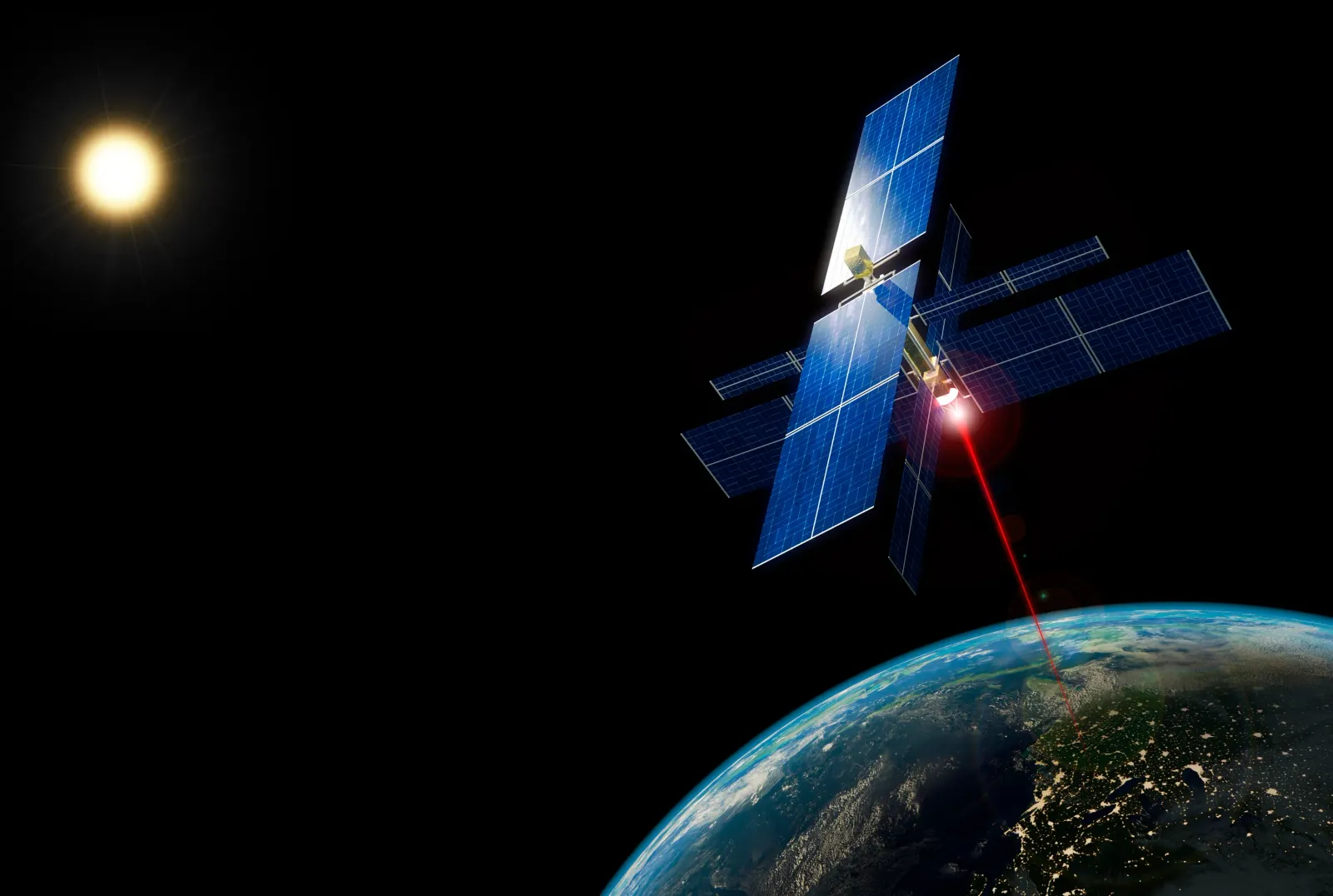
The FCC authorized Reflect Orbital to launch its mirror satellite, Eärendil-1. The European Southern Observatory says the project poses an existential threat for optical astronomy.
The U.S. Federal Communications Commission (FCC) has authorized Reflect Orbital to launch its mirror satellite, Eärendil-1, designed to reflect sunlight and illuminate parts of Earth at night. That single regulatory decision is now the center of a fight over what “safe” looks like when sunlight becomes a controllable beam from space.
For decision-makers, the key part is not just that the FCC approved a launch. It is that the technology’s intended function directly collides with an existing public interest: optical astronomy. The European Southern Observatory (ESO) warned, “For optical astronomy, this poses an existential threat,” pointing to a fundamental risk that normal nighttime observing could be permanently disrupted by artificial sky illumination.
This is the kind of conflict regulators rarely get to ignore. The FCC’s role is often thought of as communications and spectrum oversight, but satellite approvals and the conditions around them sit at the boundary of safety, interference, and how space activities affect other users. When a satellite can redirect sunlight, the question quickly becomes: not whether it works, but who else gets disrupted, and whether the disruption scales with adoption. In other words, once the permission exists for one platform, it sets expectations for what is allowable in the future.
Reflect Orbital’s plan is deliberately counterintuitive. Instead of passively orbiting, the satellite would use a mirror to redirect solar energy toward the ground. That means the “output” is not confined to a single sensor or experiment. It can create brightness in areas below, effectively adding artificial light sources to the night sky and potentially to the viewing environment for ground-based telescopes.
Optical astronomy depends on darkness, because faint objects are only detectable if the background stays low. Even small increases in ambient light can make data noisier, reduce the number of usable observations, and force scientists to spend more time filtering or excluding affected frames. The ESO’s language is unusually blunt for a technical domain. Calling the threat “existential” signals that the concern is not about minor inconvenience but about whether core observing programs can remain viable.
Second-order implications are where boardrooms should pay attention. A project like Eärendil-1 creates a new category of stakeholder: not just the company and the regulator, but astronomical institutions, observatories, and the broader research ecosystem that relies on predictable night conditions. If the concern materializes, the ripple effect could include pressure to add constraints to future approvals, complaints, policy debates, and a longer runway for satellites that aim to generate visible effects on Earth. Even if Eärendil-1 itself is already cleared, the regulatory momentum can harden into compliance requirements that raise costs for similar technologies.
There is also a governance angle. Space projects often move through a patchwork of approvals, with different agencies looking at different risks. One regulator can greenlight launch authorization while other communities argue about scientific impacts and mitigation measures. When the first major public objection comes from a high-profile astronomy organization like ESO, it can quickly turn a technical question into a public policy dispute. That is exactly the kind of disruption executives want to avoid late in the timeline, when changes are expensive and commitments are locked.
For Reflect Orbital and any peers considering mirror or light-manipulation concepts, the stakes are strategic: approvals are only half the battle. The other half is whether you can sustain a social license for visible effects from space, including clear mitigation plans that satisfy skeptical technical audiences. And for the leadership team across the satellite economy, the message from this FCC authorization is broader than one spacecraft. It suggests that “space lighting” could become a recurring regulatory and ethical question, and that optical astronomy might be the canary in the coal mine for how the industry handles interference with existing uses of the night sky.
In short: the FCC has authorized Eärendil-1. ESO has warned the consequences could reach beyond disagreement into the survival of optical observing. The decision now sets the terms of the next phase, where the industry will have to prove that redirecting sunlight from orbit does not permanently rewrite the conditions scientists need to see the universe.
This story's Key Insights and Take-aways are locked.
Create a free account to unlock Executive Actions for one credit.
Register to UnlockAlways free for Executives Club members. Join the Club
More in Science

Alaska's 1,580-foot tsunami had warning signs. Scientists just found them.
Rapid glacier retreat, heavy rainfall, and thousands of tiny tremors preceded Alaska's 1,580-foot tsunami, a warning for every coastal community in a warming world.

The rare mutation that lets high-risk brains dodge Alzheimer's
Scientists found a natural defense against protein buildup, opening a new path to preventive treatments.

3,000 steps a day may halve Alzheimer's decline, study finds
New research links a modest daily walk to less tau buildup and nearly half the cognitive and functional decline, even for those with early signs.