
July 10, 2011: ISS astronauts finally saw Atlantis dock, not photobomb Earth again
One last NASA shuttle photo over the Bahamas captured a 30-year program’s end and why it mattered to everything that followed.
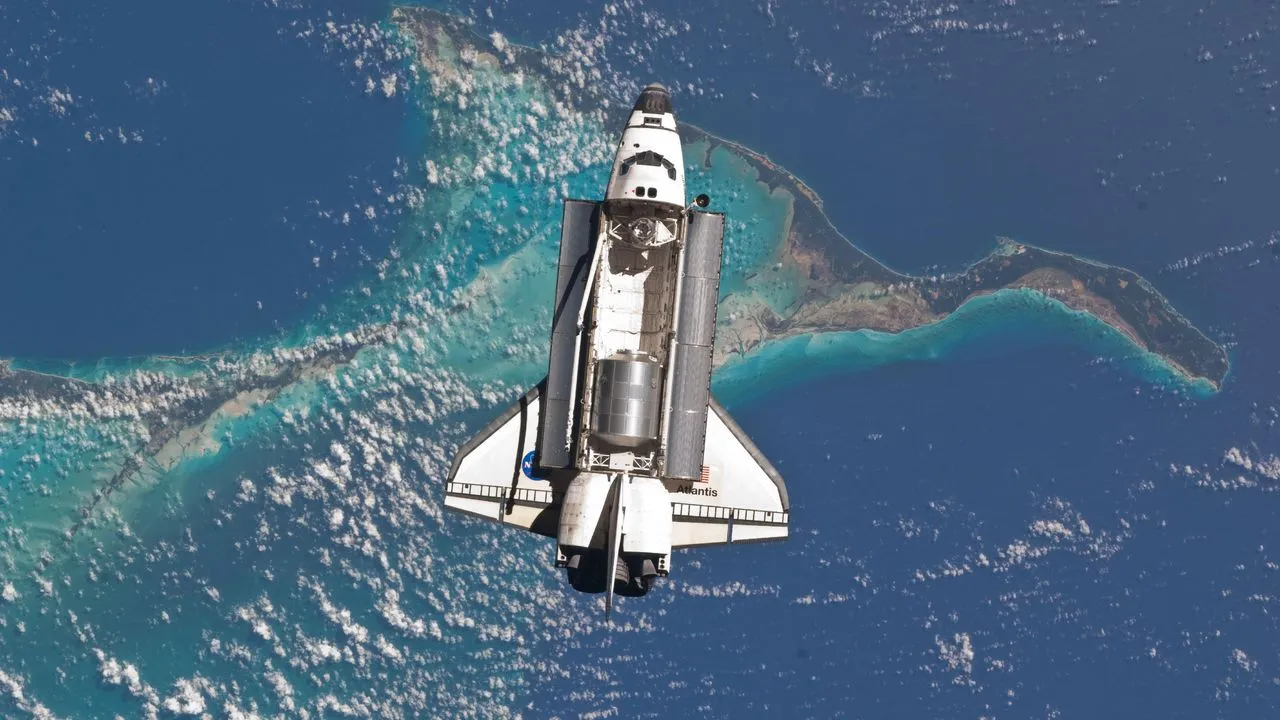
On July 10, 2011, an unnamed astronaut aboard the International Space Station captured Atlantis approaching for the last time as it prepared to dock. The moment closed NASA’s winged human spacecraft era, ending a program that flew 135 missions and helped build the ISS.
On July 10, 2011, an unnamed astronaut on board the International Space Station snapped a stunning image: NASA’s space shuttle Atlantis approaching the ISS and, for the final time, turning into a photobomb in astronauts’ view of Earth. The shuttle was over the Bahamas, and the bay doors were open, exposing the cargo area as Atlantis lined up for docking. It is the last “punctuated snapshot” of an iconic era, and the photo lands with extra weight because the Space Shuttle Program itself would end just days later in the calendar of history: Atlantis touched down at the Kennedy Space Center on July 21, 2011.
This was not a casual photo moment. It was the real docking choreography. Space shuttle bay doors opened once the spacecraft reached low Earth orbit because it prevented the shuttle’s radiators from overheating. With the doors open, the docking mechanism housed within the cargo bay could attach to the ISS, creating a pressurized seal so astronauts could move between the two spacecraft. In other words, the “photobomb” was also a critical systems step. The shuttle passed over turquoise waters of the Bahamas while the hardware work that mattered most for crews was happening in parallel. (Image credit: NASA/Bill Ingalls.)
To understand why a single ISS photo became a headline, zoom out to the scale of what the shuttle fleet actually did. NASA’s Space Shuttle Program included five plane-like spacecraft: Columbia, Challenger, Discovery, Atlantis, and Endeavour. Together they completed 135 missions between 1981 and 2011, racking up more than 32,000 hours in space. Those missions were not just rides. They helped construct the ISS, then later ferry astronauts to and from the station. The shuttles also deployed and maintained other major missions, including servicing the Hubble Space Telescope.
Atlantis was the last shuttle to fly. Its final flight began on July 8, 2011, when it launched from the Kennedy Space Center in Florida, vertically strapped to a massive fuel tank and a pair of rocket boosters. It returned on July 21, gliding down to land on a runway at the launch site. The spacecraft is now on display at the Kennedy Space Center Visitor Complex. Atlantis successfully completed 33 missions, which was the second-highest total behind Discovery.
The program’s operational footprint was enormous, and the numbers show it in a way that feels almost surreal. In total, the space shuttles orbited Earth 4,848 times, traveling nearly 126 million miles (203 million kilometers). That distance was more than 525 times the distance between Earth and the moon. Astronaut photos of shuttles were popular for a reason NASA representatives highlighted in 2011: they were “punctuated snapshots of distinct places on Earth,” “framed by a human eye.” The production value was human perspective, but the real strategic value was what it signaled. It suggested an architecture for continuous human access to space.
And yet, two tragedies shaped the risk narrative so deeply that “ending the program” never meant “undoing the past.” The Space Shuttle Program famously suffered the 1986 Challenger and 2003 Columbia disasters, which killed all crewmembers on board. Those events made every operational assumption more expensive, more scrutinized, and harder to defend. NASA eventually canceled the program in 2011, citing the high cost of maintaining aging spacecraft and a reduced need for the vehicles after completion of the ISS the same year. That reduced need point matters: if the station is finished, the logic for constant shuttle logistics changes.
For leaders watching space and adjacent industries, this is also a board-level lesson about infrastructure timelines. NASA’s shuttle fleet was the only winged spacecraft to carry humans into space, and it combined multiple roles: crew transport, station construction support, and deployment or servicing of other spacecraft. After the ISS construction phase, the cost-benefit equation shifted. When programs depend on specialized platforms, you do not get to “just swap” in midstream like it is a software release. You either fund the aging platform, or you redesign the supply chain for access to orbit.
Second-order effects show up in how teams plan for continuity after a flagship ends. The shuttles visited Russia’s Mir, serviced Hubble, and deployed both the Magellan probe to Venus and the Galileo probe to Jupiter. That history underscores that the shuttle era was also a multi-mission capability. Once the program ended on July 21, 2011, the question for decision-makers became straightforward but high-stakes: how do you preserve human access and mission flexibility without carrying the overhead of a shuttle system designed around a specific vehicle and specific docking workflow? The July 10, 2011 photo is a clean artifact of that transition. It is beautiful, yes. But it also marks the last time the old architecture photobombed Earth before the world moved on to whatever came next.
This story's Key Insights and Take-aways are locked.
Create a free account to unlock Executive Actions for one credit.
Register to UnlockAlways free for Executives Club members. Join the Club
More in Science

Alaska's 1,580-foot tsunami had warning signs. Scientists just found them.
Rapid glacier retreat, heavy rainfall, and thousands of tiny tremors preceded Alaska's 1,580-foot tsunami, a warning for every coastal community in a warming world.

The rare mutation that lets high-risk brains dodge Alzheimer's
Scientists found a natural defense against protein buildup, opening a new path to preventive treatments.

3,000 steps a day may halve Alzheimer's decline, study finds
New research links a modest daily walk to less tau buildup and nearly half the cognitive and functional decline, even for those with early signs.