
Ferrari arrives in Spain with upgrades, betting tire math beats old-school strategy
Abrasive Catalunya punishes wear, and the best plan might be the one that looks most traditional.
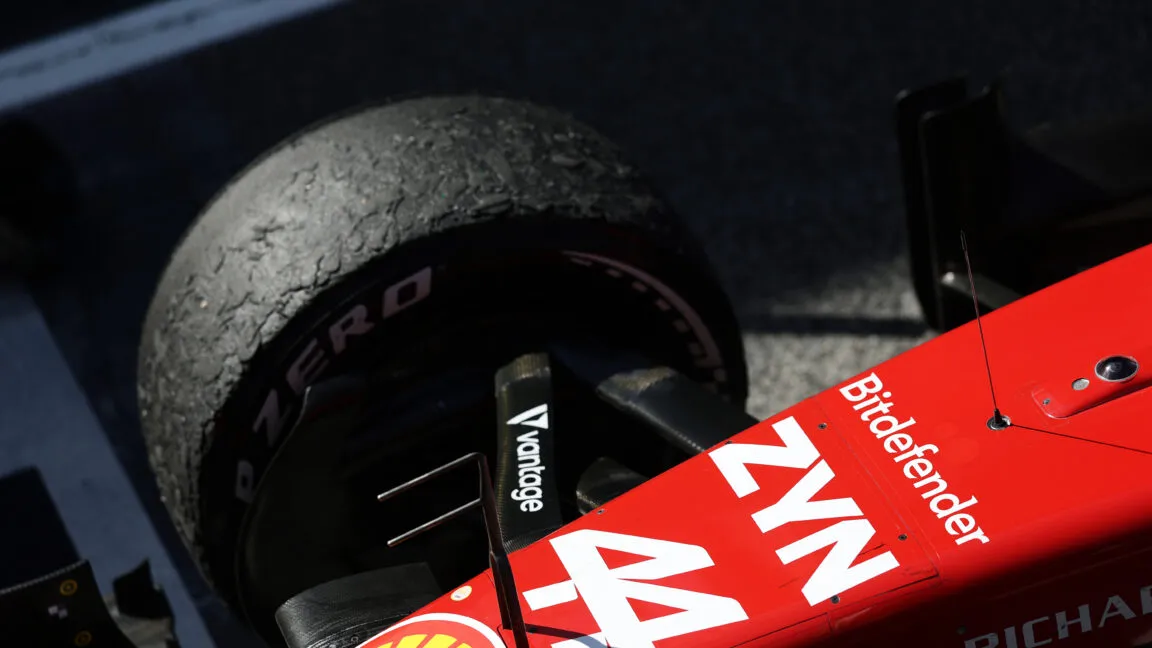
Ferrari came to Spain full of confidence, armed with a ton of new upgrades. In Catalunya's abrasive, downforce-heavy conditions, tire wear dictates whether one-stop convenience wins or four-stint math can outplay rivals.
Formula 1 raced in Spain this past weekend, and it was not a “just wing it” kind of show. The Barcelona-Catalunya circuit is purpose-built for fast racing, with a track surface that's more abrasive than usual and fast corners that demand real downforce. In plain English: if you can’t carry speed through turns, you pay for it twice, because you also have to add more energy after the corner. That makes Catalunya less about single-lap drama and more about whether your team has nailed the interaction between aerodynamics, energy management, and tire degradation.
Ferrari’s approach matters because the team “came to Spain full of confidence” thanks to a ton of new upgrades. On a circuit where the more downforce you have, the less the car slides, and the less it slides, the less the tires get eaten up, upgrade work is not cosmetic. Better grip and stability can slow down the wear curve, which directly changes what strategy is possible. The tire wear in particular suggested the strategies for the weekend: as tires wear, they become slower, to the tune of 0.2-0.3 seconds per lap. Once you have a lap-time penalty that predictable, teams stop talking in vibes and start talking in stints.
Here’s the strategic backbone of the race. So far, all the races this season have been one-stop affairs, where drivers make their required change from one tire compound to another. But 66 laps of Catalunya do not politely fit into a one-stop box. At minimum, the endgame would require at least three sets of Pirelli tires, and it could even take four. This is where the “old-fashioned strategy fight” shows up, because more pit stops mean more time lost to the clock, and teams have to decide whether the gains from running fresher rubber are worth the cost of repeated entries.
The pit lane cost is clear enough to plan around. Splitting the race into four stints means one more pit stop, and it costs about 22 seconds to drive through the pit lane, stop in the box, and then exit the pit lane again, assuming a tire change in less than three seconds. That number is the kind of thing boards and investors love: it’s concrete, it’s measurable, and it forces tradeoffs. You are buying back time on-track with lower lap times from fresh tires, while paying a fixed overhead every time you go to the pits. The tricky part is that tires do not only get worse in a linear, boring way. The tire wear penalty is why an early plan can become a late advantage.
One of the key tactics the weekend highlighted is an “undercut.” Teams can pit early, switch onto fresh rubber, and then exploit the tire offset against rivals who are stuck on older tires. The goal is to put in fast laps while other cars are losing time. If you do it right, the sequencing matters: when the undercut driver makes their next pit stop, the undercut should have placed them in front, even if everyone eventually makes similar tire choices. This is not just a mechanical tactic. It is a scheduling problem under uncertainty, where your tires are both your product and your constraint.
The circuit conditions tighten the link between performance and strategy. Catalunya’s abrasive surface increases the importance of tires and makes energy management a first-class variable. The faster you can carry through a corner, the less energy you have to add on the following straight. That ties downforce to lap time and tie wear to stint feasibility. In a season context where races have frequently simplified into one-stop plans, Catalunya is a different model. It forces teams to consider multi-stint sequencing, because each set of tires is needed for fewer laps once wear accelerates, and the only way extra stops make sense is if those stints can be driven hard enough to offset the roughly 22-second overhead.
For decision-makers watching from the outside, the second-order lesson is that “upgrades” and “strategy” are not separate workstreams. Ferrari can arrive confident with new upgrades, but the real payoff depends on whether those changes meaningfully reduce slide and tire wear enough to open up a stint plan that beats the competitors. When every lap time has an associated cost and every pit stop has an overhead, the teams with the best systems do not just go faster. They go faster on the laps that matter most, then they manage the remaining time like it is a balance sheet.
Catalunya also underscores a broader reality of modern racing: strategy is becoming more like finance, but without the spreadsheets. Your edge is in timing, not just peak performance. And when abrasive tracks, downforce requirements, and predictable wear penalties line up, you get a rare kind of contest. It’s technical, yes. But it’s also classic racing thinking, where the plan can still win the day if the numbers line up and the tires hold up long enough to make the extra stops pay.
This story's Key Insights and Take-aways are locked.
Create a free account to unlock Executive Actions for one credit.
Register to UnlockAlways free for Executives Club members. Join the Club
More in Entertainment

Russell Brand's accuser 'bewildered and confused' as he denies 7 sex charges
The criminal case against the comedian is a live test of how media companies manage talent risk when serious allegations go public.

'It's a Magic Trick': Ballet Experts Say Rosalía's SNL Pose Is Impossible
Three ballet experts tell Rolling Stone Rosalía's gravity-defying SNL stillness shouldn't be possible - and why the debate is now part of the show.

Activision CMO: GTA 6 Will Boost Call of Duty, Not Bury It
Activision's top marketer says Rockstar's blockbuster will drive players back to consoles and into Modern Warfare 4, even as the company admits its recent strategy failed.