
Fincher to 'Cliff Booth' AI Critics: 'It Exists. Should We Not Use It?'
The director's Nov. 19 defense of generative AI collides with reviewer fury over 'Cliff Booth' and a broad Friday selloff in AI-adjacent stocks.
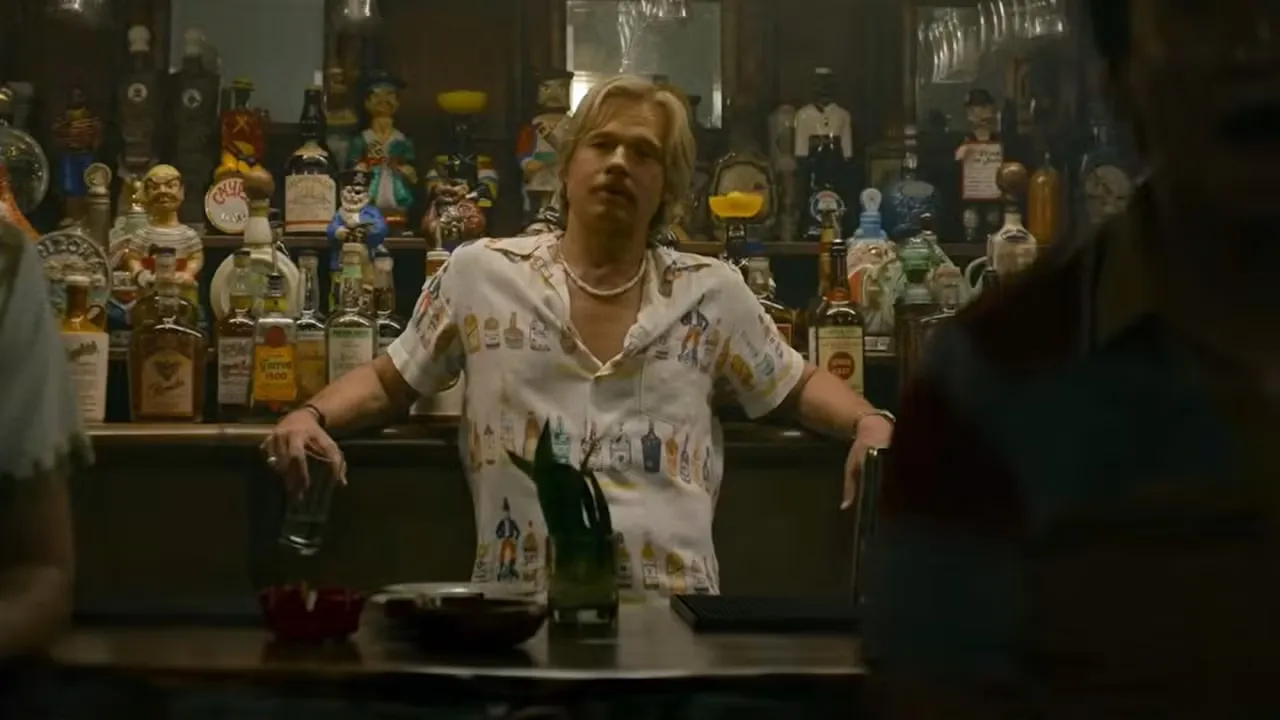
David Fincher, director of Netflix's 'The Further Mis-Adventures of Cliff Booth,' told the LA Times he is 'not a Luddite' and asked, 'Well, it exists. Should we not use it?' as reviewers accused the film of using generative AI. For executives, the episode shows that AI adoption now carries reputational and market risk that surfaces in credits, reviews, and stock prices well before any policy catches up.
David Fincher is not backing away from AI. In a Nov. 19 interview with the LA Times, the director of "The Further Mis-Adventures of Cliff Booth" said he is "not a Luddite, so I don't fear the unknown," then closed with a question that doubles as a challenge: "Well, it exists. Should we not use it?" The film, a sequel to "Once Upon a Time in Hollywood" written once again by Quentin Tarantino, with Brad Pitt reprising his role as stuntman Cliff Booth, hit reviewers this week. So did the accusation that it leans on generative AI. Fincher has not gone on the record confirming specific AI use, and Netflix did not immediately respond to TheWrap's request for comment.
The criticism was loud in tone, if not in detail. Indie filmmaker Patrick Tomasso tweeted on Nov. 19 that he was "completely gutted" after his screening. "What could have been a really great sequel is overshadowed by some of the most blatant and egregious AI use I've ever seen in a studio film," he wrote, adding, "Shocked it's not in everyone's reviews." Entertainment writer Louis Peitzman, in a Letterboxd review, wrote, "The use of generative AI depresses the hell out of me, though. Feels like we're fighting a losing battle." A Next Best Picture review called "Fincher's use of generative AI in key moments of the film" as "nothing but an eyesore." Neither review specified which scenes may have used AI. Peitzman noted that a generative supervisor was listed in the credits.
Fincher's defense is less about any single shot than about the direction of the craft. "Is everyone satisfied that we have figured this art form out enough that what we really need to do is go back to celluloid?" he asked. "How long have people painted? 40,000 years? We're talking about a thing that's a hundred years old and everyone's going, 'Stop. Pencils down. No more iterating. It's not necessary to have at your fingertips the ability to change the color of that person's eyes.'" Read closely, that is an argument about tooling, not about replacing people. It is also the argument every studio, agency, and production company is now having internally, usually without a script.
The timing is brutal. The criticism landed alongside a broader backlash against AI, and the market felt it. All major U.S. markets, the Dow Jones Industrial Average, the S&P 500, and the tech-heavy Nasdaq composite, sank heavily on Friday, with AI-adjacent chip stocks sold off. Anthropic, which had its IPO one day prior, sank 8.5%. That is the context in which a director's quote about eye color becomes a business story: AI sentiment is now a tradable input, and it moves fast in both directions.
For decision-makers, the "Cliff Booth" fight is a case study in a new kind of disclosure problem. The reviews did not name scenes. The credits named a role. That gap is where reputational risk lives. When audiences cannot verify what was generated and what was shot, they default to suspicion, and suspicion attaches to the whole title. For context, AI use in production has become one of the most contested issues in Hollywood labor and talent negotiations in recent years, which means the question is rarely only creative. It is contractual, and it is increasingly a marketing decision made months before release.
The commercial calendar raises the stakes further. "The Further Mis-Adventures of Cliff Booth" opens Nov. 25 in IMAX and arrives on Netflix on Dec. 23. That is a premium-format theatrical window followed by a streaming launch, a structure that depends on word of mouth holding through the holidays. A review cycle dominated by AI arguments can suppress the first variable that matters: whether people want to see it. Netflix has not commented, and silence is a strategy, though not a costless one when the credits already tell part of the story.
The second-order effects reach past one film. Talent representatives now have a concrete example to point to when negotiating AI clauses, approvals, and credit language. Studios have a reminder that a line item in the credits can become a headline. Investors have fresh evidence that AI sentiment cuts both ways, lifting chip names one week and punishing them the next. And directors have Fincher's framing, which is essentially this: the tools exist, the art form is young, and stopping is not the same as protecting.
The strategic takeaway for peers in similar seats is not to pick a side on AI. It is to decide, in advance, what you will say when someone asks. Fincher answered with a question and a shrug about the unknown. Most executives will not get that luxury. The ones who handle this well will have a clear internal standard for when AI is used, a clear external line about how it is disclosed, and a plan for the week the two do not match.
This story's Key Insights and Take-aways are locked.
Create a free account to unlock Executive Actions for one credit.
Register to UnlockAlways free for Executives Club members. Join the Club
More in Technology

Anthropic Mathematician Claims Claude Helped Prove Riemann Hypothesis in Six Weeks
Levent Alpöge says the AI tool helped him develop a solution to one of math's most important unsolved problems in about six weeks, a claim that, if verified, would reshape AI's role in research.

Anthropic mathematician claims Claude helped crack the Riemann hypothesis
If the proof holds, AI has toppled math's most famous open problem; if it does not, it is a case study in announcing breakthroughs before anyone verifies them.

AI's $4 Trillion Wipeout Erases Nasdaq's Gains for the Year
A brutal week took roughly $4 trillion off the AI sector and left the Nasdaq flat for the year, and the damage ran the full length of the supply chain.