

Ford hides $30,000 EV pickup in camo, then QR-codes the “unicorn” reveal
Camouflage during public testing conceals form and recruits an audience for Ford’s cheaper universal EV bet.

Ford’s camouflaged $30,000 EV pickup has been spotted in public testing with QR codes that route to an official Ford landing page. Alan Clarke, Ford’s vice president of advanced development projects, links the stunt to a broader EV reset built on Ford’s universal EV platform.
Ford’s next big EV bet is wearing camouflage in the real world. The company has been taking photos and videos of a disguised EV pickup during public testing, and the wrap is not just for hiding the shape. It includes tiny QR codes that send curious onlookers to an official Ford webpage featuring a line that declares, “Congrats, You Spotted a Unicorn.”
That landing page is not a dead end or a vague tease. It invites people to sign up for updates while showing clearer footage of the pickup undergoing snow testing and moving through production. Alan Clarke, Ford’s vice president of advanced development projects, appears in a video at the top of the site and tells visitors, “Chances are, you saw something on the road that piqued your interest, and you're here because you're curious.” He says the website will provide “exclusive insight into our progress.” The camouflage is doing two jobs at once: concealing the truck’s final lines and building an early audience before Ford officially pulls the covers back.
Why does this matter beyond marketing nerd satisfaction? Because the truck under the camo is part of a high-stakes correction to Ford’s EV strategy. Ford had earlier expectations for mass-market electrics around 2020, including the F-150 Lightning, a full-size electric pickup that started in the mid-$50,000 range. Ahead of launch, Ford touted nearly 200,000 reservations and set a goal of eventually building 150,000 electric trucks a year. Those ambitions did not survive contact with the market. Sales peaked in 2024 at 33,510 vehicles, far below the original target.
Ford eventually ended production of the original Lightning in late 2025 and recorded $19.5 billion in charges tied to its broader EV restructuring. In other words, this is not a minor product update. It is a reset after a first attempt stumbled, and the camouflaged pickup is positioned as the first test of the next approach.
Ford says that approach is built around its universal EV platform, developed by a roughly 350-person California skunkworks team led by Clarke. Clarke’s group targeted faster manufacturing, more aerodynamic designs, and dramatically fewer parts. The idea is to make the platform repeatable across vehicles, not a one-off experiment that forces a new bill of materials every time. Ford also says it can build up to eight different vehicles on the same battery infrastructure.
The camouflaged truck is so far unnamed publicly, but rumors and patent applications suggest Ford may be resurrecting the Ranchero nameplate. Ford says the EV pickup is scheduled to reach customers next year. It is also framed as a cheaper and more efficient generation of electric vehicles, coming after an all-electric F-150 Lightning recharge effort was discontinued when sales never reached Ford’s 150,000 unit-per-year goal.
Zoom out further and the timing looks even more urgent. Ford is trying to ward off Chinese EV-makers, and the U.S. market is also getting noisier with new entrants. Slate, a Jeff Bezos-backed startup, told Business Insider that the first units of its $24,950 electric pickup will reach customers this year. Fiat has also brought the sub-$15,000 Topolino to the US, though the tiny EV is closer to a golf cart than a daily driver.
But the biggest pressure point may be overseas. BYD became the world’s largest seller of battery-electric vehicles last year, reaffirming the competitive squeeze on established car companies. Ford CEO Jim Farley has repeatedly praised Chinese EVs for their technology, affordability, and build quality. When Ford unveiled its Universal EV Platform in 2025, Farley framed it as a response to a competitive attack from several directions, including Chinese companies and “new startups from around the world.” In his 2025 comments, he singled out BYD and said large technology players had ambition in auto, with legacy automakers facing pressure.
So the QR-coded “unicorn” moment is not random. It is Ford using a public testing phase to keep attention focused while the internal work, the platform changes, and the pricing pressure all catch up to the market reality. In exec terms, this is what you do when you need both product performance and narrative control. You protect the engineering details in public, then use the audience pipeline to prepare demand for a reset model.
For executives, investors, and board members watching Ford, the real takeaway is the dual track: cost and manufacturability upgrades through the universal EV platform, plus an aggressive push to manage customer awareness before launch. In a market where Chinese scale leaders like BYD, and faster-moving startups like Slate, are already taking bites at U.S. attention and price points, the winners will be the ones that shorten the distance between “we’re building it” and “customers want it.” Ford’s camouflage trick is a small piece of that larger, expensive reckoning.
This story's Key Insights and Take-aways are locked.
Create a free account to unlock Executive Actions for one credit.
Register to UnlockAlways free for Executives Club members. Join the Club
More in Business
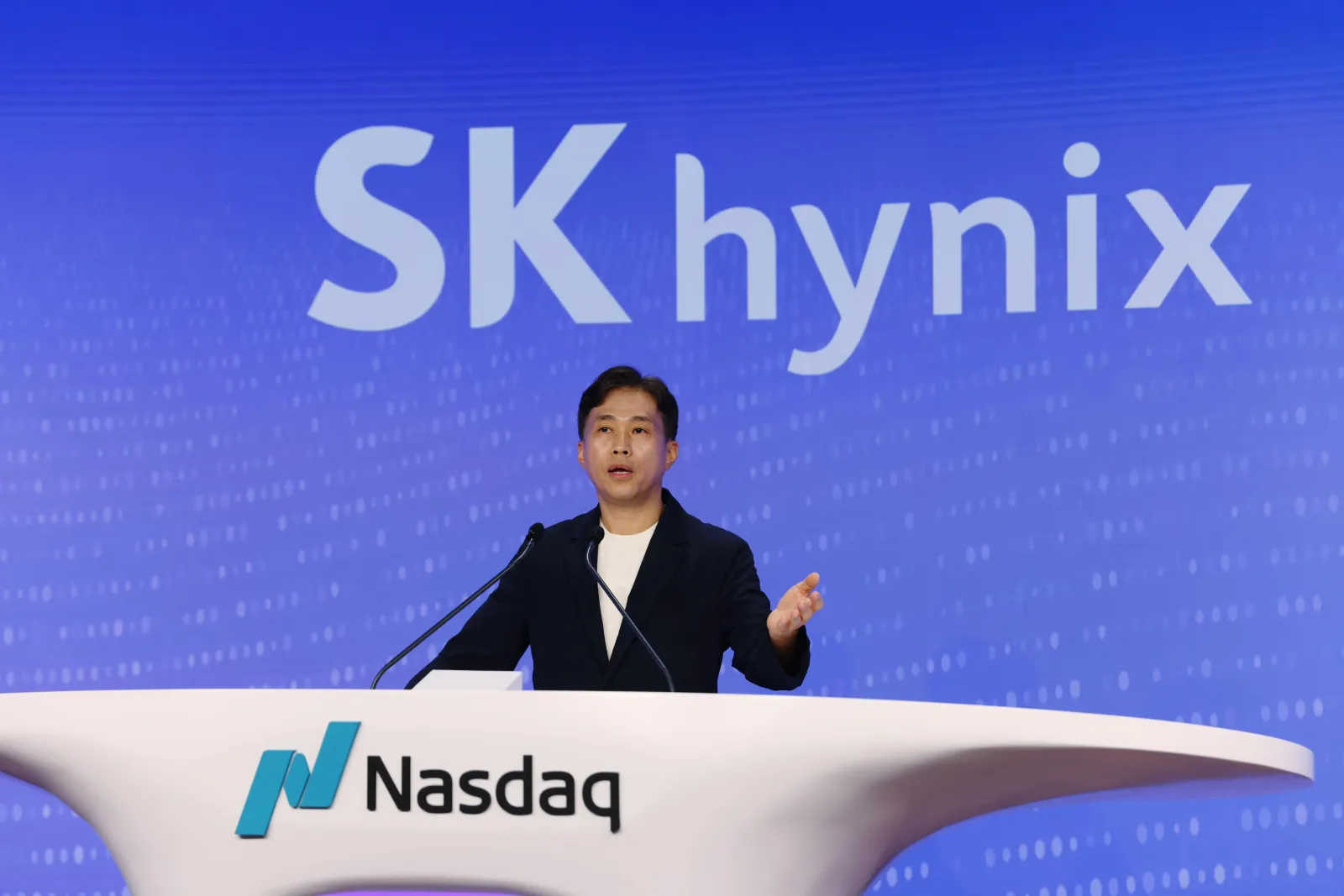
SK Hynix opens at $170, raises $26.5B, and tops foreign IPO records
In Friday's Wall Street debut, SK Hynix turns AI RAM demand into a $26.5B fundraising moment that rewrites comps.
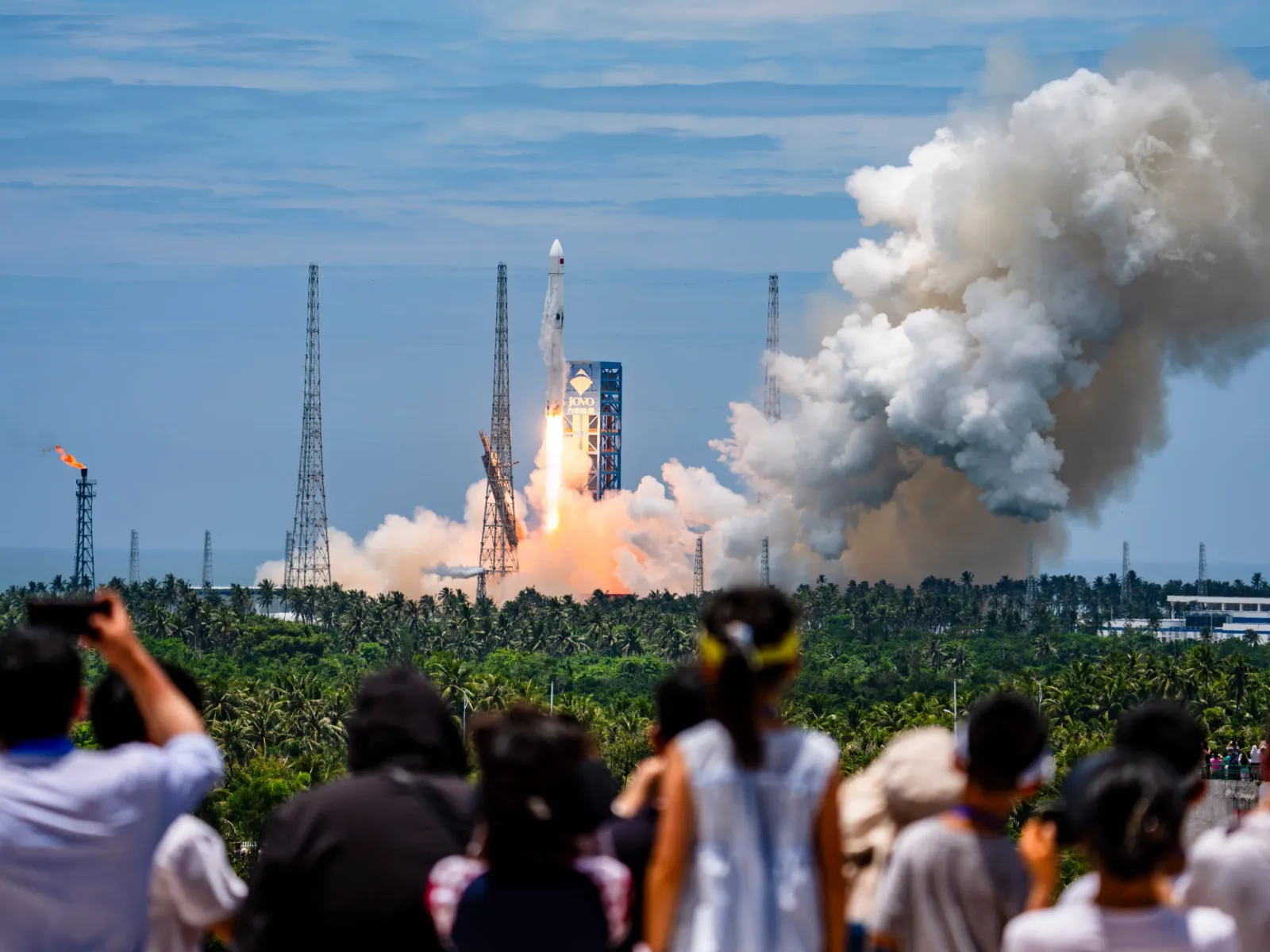
China lands a reusable Long March booster, a first that matches SpaceX and Blue Origin
A barge landing and net-based recovery move China from theory to proof, reshaping the reusability race and satellite ambitions.

AstraZeneca $27B wipeout as Wainua late trial misses cardiovascular target
A failed late-stage heart study triggered a swift market punishment, forcing investors and boards to reset timelines and risk.