

France launches terror probe after police find military-grade weapon in Jewish suburb
A gun discovery in a Paris neighborhood with a large Jewish population triggers a terror investigation, reshaping security and risk calculations.
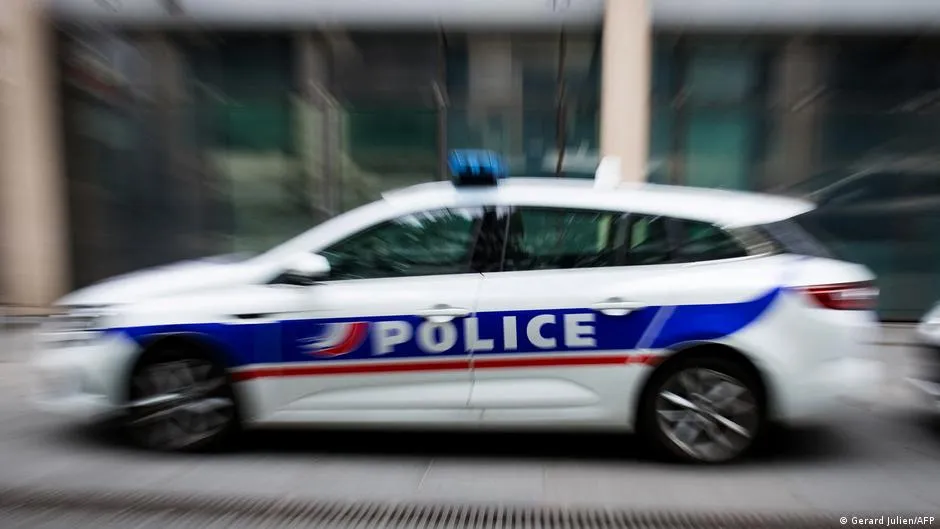
French police opened a terror probe after finding what they described as a "military-grade weapon" during a search of a suspicious car in a Paris neighborhood with a large Jewish population. For decision-makers, the case is a reminder that security incidents can rapidly escalate regulatory scrutiny and operational risk planning.
France has opened a terror investigation after police said they found a "military-grade weapon" during a search of a suspicious car in a Paris neighborhood with a large Jewish population. The development matters because it turns an already tense security landscape into a live, expanding legal and operational situation, with investigators moving from suspicion to a formal terror framework.
Here is the key fact straight from the scene: police discovered the weapon while searching the car. That one detail is the hinge. Once authorities characterize the find as "military-grade," the investigation is no longer just a criminal matter or a routine threat assessment. It signals a higher severity tier, which typically means more intensive investigative steps, broader inter-agency coordination, and faster consequences for public safety measures in the area.
For executives and boards, the lesson is not about the exact weapon. It is about what happens to decision-making when law enforcement escalates an incident. In a setting like Paris, with a neighborhood described as having a large Jewish population, the stakes include not only potential harm, but also the risk of community backlash, copycat threats, and disruptions to daily life that can hit businesses indirectly through staffing, demand, transit patterns, and local sentiment.
It also affects how risk is governed internally. Companies with offices, customers, or logistics footprints near sensitive areas typically already have security playbooks, but a terror probe is the moment those playbooks get tested under pressure. The practical questions get urgent: Are local security measures adequate? Are incident communications clear enough for employees? Can facilities teams quickly coordinate with external security partners? In many organizations, these decisions live at the intersection of legal, security, HR, and operations, with boards expecting an update even before any public outcome is known.
There is also a regulatory and compliance layer, even when the source story is focused on police action. Terror investigations can bring an immediate uptick in requests for information from authorities, heightened expectations around protective security, and a more formal audit posture for organizations operating in the jurisdiction. Even if a business is not directly implicated, the existence of an active terror probe can expand the scope of what regulators and law enforcement view as “reasonable” readiness, especially for sectors that rely on public access, large gatherings, or sensitive data.
Second-order impacts often show up in capital allocation and vendor management. If security vendors or facilities partners are involved, boards may ask whether contracts explicitly cover terror-level incidents, emergency staffing, and rapid upgrades. Procurement teams may need to confirm that authorization pathways allow faster action when the threat characterization changes. Meanwhile, risk teams can be pushed to revisit scenario models, particularly around time-to-detection and time-to-response. In other words, the question is not only what happened today, but how quickly an organization can adapt when the official framing shifts.
At the industry level, this kind of incident can also influence insurance and crisis communications. Insurers typically want to understand whether policyholders have appropriate safeguards and incident response procedures. Crisis communications teams, meanwhile, must balance transparency with restraint, because premature statements can inflame tensions in affected communities or create confusion around facts that investigators have not yet established.
Most of all, this story is a live reminder that security risk is dynamic. Police are already acting, and the investigation has moved to a terror probe after the "military-grade weapon" was reportedly found during the search. For peers in similar roles, the strategic stake is clear: boards need to ensure their risk governance can handle escalation, not just manage routine disruptions. When law enforcement draws a line into “terror,” the organization that responds fastest and most coherently is usually the one that limits downstream damage.
This story's Key Insights and Take-aways are locked.
Create a free account to unlock Executive Actions for one credit.
Register to UnlockAlways free for Executives Club members. Join the Club
More in Politics

Glacial collapse, not rain, killed 180 in Nepal's Himalayan flood
The Himalaya's extreme geography hid the true cause of Nepal's catastrophic flood, a glacial collapse that turned a geological battleground into a mass-casualty zone.

Iran’s Esmail Baghaei says Oman talks start shipping via Hormuz, not US talks yet
Temporary route plans with Oman aim to restart commerce while Tehran says Washington dialogue is not on the table.

Standards watchdog opens probe into Reform UK deputy leader Richard Tice over interests
The parliamentary standards commissioner says it began an investigation on 28 July into a possible undeclared interest.