

Ron Johnson questions whether Mitch McConnell’s hospital photo is new
A senior Republican casts doubt on the timing of a photo McConnell shared, raising credibility stakes for leaders.

Sen. Ron Johnson (R-Wis.) said he is not sure a hospital photo Sen. Mitch McConnell (R-Ky.) shared with his wife is recent. His uncertainty, based on “some other sources,” creates reputational and messaging pressure for GOP leadership.
Republican Sen. Ron Johnson (R-Wis.) on Monday cast doubt on the recency of a photo Sen. Mitch McConnell (R-Ky.) shared of himself in the hospital alongside his wife. Johnson told host Eric Bolling on Real America’s Voice’s “Bolling!” that he had “just heard from some other sources that was an older photo. So I really don’t know.”
That opening matters because in politics, “when” a message is delivered is often as important as “what” it says. A photo can function like a status update. If the image is newer than a public understands, it signals a different timeline for recovery and public activity. If it is older, it changes the story and raises questions about transparency, coordination, and how quickly leadership information is being managed.
The Johnson comment is not happening in a vacuum. For months, lawmakers and staff have been operating under intense scrutiny for how they handle health and schedule disruptions. When a top leader is absent, Congress does not pause. Staff calendars keep moving, committees keep meeting, and party operations keep trying to anticipate what the leadership vacuum will mean for votes, messaging, and legislative follow-through. In that environment, leadership communications become part of operational continuity. A photo, even a simple one, can affect how colleagues plan, how media frames the situation, and how donors and allies interpret capacity.
There is also a communications incentive at play: leadership offices want to project stability. That is especially true for a party trying to manage internal alignment and external pressure at the same time. If Johnson is right that the photo might be older, then the stability signal could be blunted by credibility questions. If Johnson is wrong, the broader risk is that the public sees a senior senator publicly undermining the clarity of leadership messaging. Either way, it elevates the stakes of verification, timing, and who controls the narrative.
Johnson is careful in his framing. He does not claim certainty. He says he has heard from other sources that it was older, and then repeats that he does not know. But the fact that he raised it on air still turns a single uncertainty into a talking point. That can ripple quickly through political ecosystems because audiences often demand consistency. Once questions are introduced, every subsequent update gets read through the lens of “is this current?” rather than “is this helpful?”
Zooming out, this kind of dispute can have second-order effects on how boards and executives think about internal governance, even though this is political news. In corporate settings, similar dynamics show up when executives share information externally and stakeholders later discover timing mismatches. The problem is rarely the existence of a message. It is the gap between what was implied and what was true. That gap can trigger trust erosion, internal friction, and more costly future communication. Here, the stakeholders are party colleagues, media outlets, political allies, and voters.
For leaders, trust is operational leverage. Senate leadership is not just about messaging. It is about agenda setting, negotiating leverage, whip operations, and the ability to coordinate across committees. When credibility becomes contested, it becomes harder to unify around a single operational plan. Even if no policy position changes, the bandwidth leaders need to spend on defending timelines and clarifying facts grows. That takes attention away from legislative priorities.
And because the exchange happened on a specific media platform and during a live discussion with host Eric Bolling, the comments also highlight how modern political information moves. The audience is not waiting for official statements. It is consuming immediate interpretations, then spreading them. That means leadership offices face a faster feedback loop. A photo posted by a top figure can generate multiple interpretations within hours, and a senior senator can amplify uncertainty before a direct clarification is issued.
So what should peers and decision-makers take from this? The key stake is not just a hospital photo. It is the credibility cost of ambiguous timelines. When Johnson says he does not know and relies on hearsay from “some other sources,” he is still creating uncertainty in public view. For political leaders, executives, and board-level decision-makers alike, that is a reminder that every outward signal, especially one about health or readiness, comes with expectations about accuracy and timeliness. Once those expectations are questioned, the conversation shifts from policy and process to trust and verification. And in politics, that shift can be as consequential as any headline legislative fight.
This story's Key Insights and Take-aways are locked.
Create a free account to unlock Executive Actions for one credit.
Register to UnlockAlways free for Executives Club members. Join the Club
More in Politics
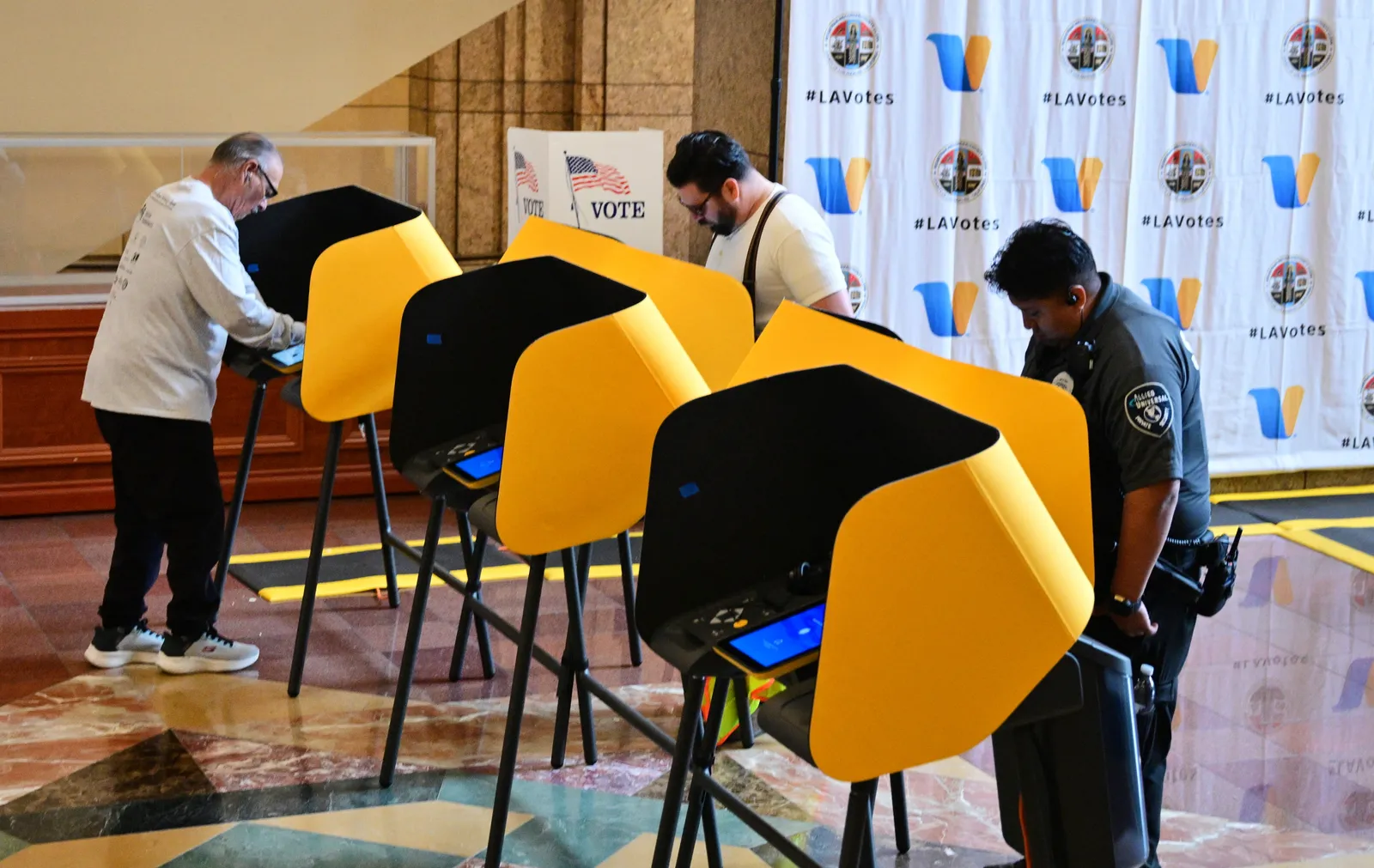
LA County: DOJ's 20,000 'noncitizen' voter list is 'unreliable,' includes U.S.-born
Preliminary review by Los Angeles County election officials finds errors in the federal list, raising the stakes for voter roll integrity ahead of November.
Trump's $1.5B Pentagon chip investment lands in North Carolina
A $1.5 billion defense infusion for North Carolina chipmaking signals a new era of Pentagon-backed reshoring - here's what it means for the industry.

Nigeria confirms first Ebola case in Abuja, a woman just off a Uganda flight
Health Minister Muhammad Ali Pate says the patient flew in from Uganda, putting Africa's latest outbreak on Nigeria's doorstep.