

Fungi lock away 13B tons of CO2 yearly - a third of global emissions
The brainless trading network beneath your feet is one of Earth's biggest carbon sinks - and a strategic asset executives are only beginning to price.
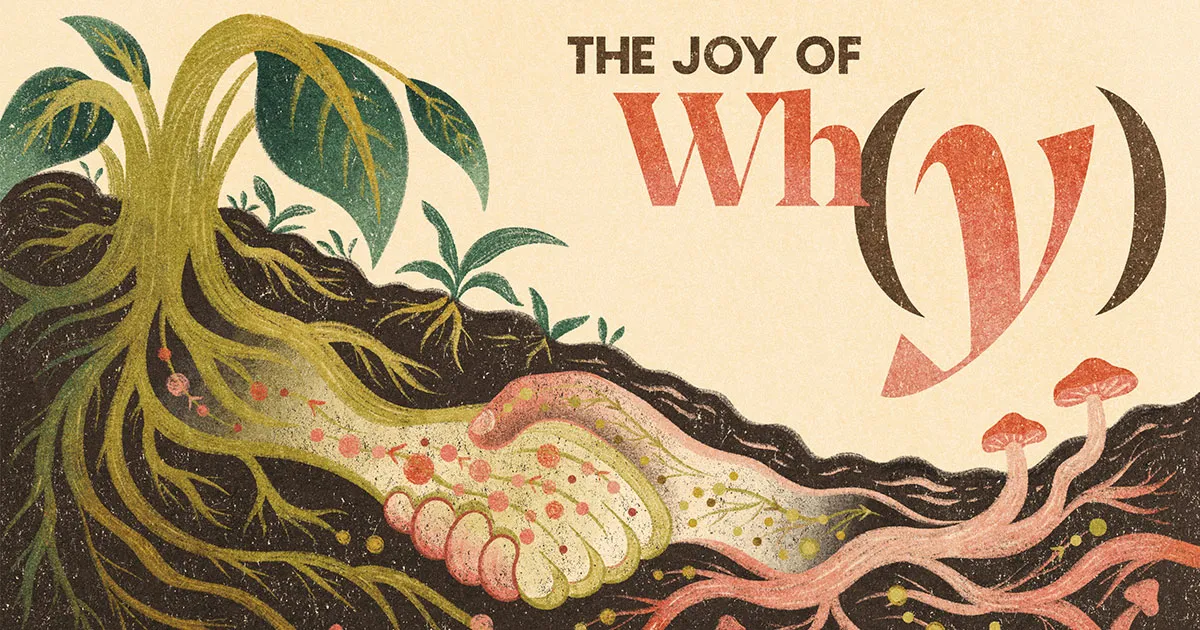
Evolutionary biologist Toby Kiers explains how mycorrhizal fungi trade nutrients with plant roots, sequestering 13 billion tons of CO2 annually - roughly one-third of global fossil-fuel emissions. For decision-makers, the finding reframes soil as critical climate infrastructure and a strategic asset for carbon strategy.
Thirteen billion tons. That is how much atmospheric carbon dioxide mycorrhizal fungi pull underground every year - roughly one-third of the world's fossil-fuel emissions, according to Quanta Magazine. The number is so large it is easy to miss what it means: the most effective carbon-capture system on the planet is not a machine, a tax credit, or a startup. It is a brainless network of fungus trading minerals with plant roots beneath your feet.
Evolutionary biologist Toby Kiers studies exactly how that trade works. Her research, featured in Quanta, explains how fungal networks in soil exchange nutrients with plants, keep carbon locked underground, and strike bargains without having a brain. No central planner, no conscious decision-maker, no quarterly earnings call. Just millions of individual exchanges between fungi and roots, each one a deal: minerals for sugars, carbon for phosphorus and nitrogen.
The mechanics matter because they reveal a market operating at planetary scale. Plants photosynthesize carbon-rich sugars and push a share of them into the soil. In return, the fungi deliver minerals the plants cannot easily reach on their own. The arrangement enriches the soil, feeds the plants, and - critically - keeps a meaningful share of that carbon out of the atmosphere. For context, mycorrhizal fungi form symbiotic relationships with the vast majority of land plants, making this one of the most widespread biological partnerships on Earth. The elegance of the system is that nobody is in charge. The fungi do not consciously choose to be generous; they trade because the exchange has worked over deep evolutionary time. Plants are not altruistic either. They allocate more sugars to the fungal partners that deliver more minerals, a dynamic that researchers describe as bargaining. That bargaining, in turn, shapes the chemistry of the soil itself, improving its structure and its ability to hold water and nutrients.
The climate math is the part executives should sit with. Thirteen billion tons of CO2 sequestered annually is equivalent to one-third of global fossil-fuel emissions. That is a scale engineered carbon capture, for context, has not come close to matching - at a cost that is effectively zero because nature is already doing the work. For companies building net-zero strategies, this reframes the conversation: the cheapest carbon infrastructure may already be running, hidden in the soil, and the question is whether we protect it or degrade it.
That question is urgent because soil is not a static asset. Historically, intensive agriculture, land conversion, and development have put pressure on soil health worldwide. Scientists are still working to understand exactly how fungal networks respond to disruption and which practices preserve their carbon-storing capacity. Kiers' work is part of a broader push to map these underground economies before they are further damaged - a research agenda with direct implications for anyone whose business depends on productive land. For context, climate models have historically treated soil as a relatively simple carbon reservoir; the emerging picture is far more dynamic. The better scientists understand fungal networks, the more accurately they can project how much carbon will stay underground - and how much will return to the atmosphere.
For decision-makers, the stakes are practical. Food producers depend on soil fertility that fungi help maintain. Landowners sit on a carbon asset that markets are only beginning to price. And regulators, as they design climate policy, are increasingly looking at nature-based solutions as a complement to industrial ones. Carbon markets, for context, have historically struggled to price soil carbon because it is hard to measure and easy to reverse. A deeper understanding of fungal networks could change that calculus, turning soil from a vague concept into a measurable, verifiable asset. A company that understands its exposure to soil health - and its opportunity to protect it - is ahead of a curve that is only bending one way.
The deeper lesson from Kiers' research is that biological systems can allocate resources efficiently without any central coordination. That is a useful provocation for executives who assume markets require oversight, and a reminder that the most powerful infrastructure on Earth is not built by humans at all. The natural world is not a backdrop to the economy; it is the economy's oldest and largest infrastructure provider. The fungi were here first. They are still doing the heavy lifting.
This story's Key Insights and Take-aways are locked.
Create a free account to unlock Executive Actions for one credit.
Register to UnlockAlways free for Executives Club members. Join the Club
More in Science

France euthanized Félicette, the first cat in space, two months after her flight
Félicette's 1963 flight made France a space-race player, but her euthanasia and a crowdfunded statue reveal how high-risk programs are remembered.
Ultracold atoms just created a 'fractional Fermi sea' that breaks quantum rules
A new quantum state challenges decades of theory and hints at 'super-Fermions,' with real stakes for quantum computing and materials science.

Bangladesh's 202,000 measles cases are a 'real warning' to other nations
The world's worst measles outbreak is spreading as routine vaccination falters. Here is why every country's immunization program should pay attention.