

Gabe Newell buys Florida mansion for $70.8M, complete with an ocean tunnel
The Valve boss drops $70.8 million on a Manalapan estate, raising a new land-or-sea question for investors.
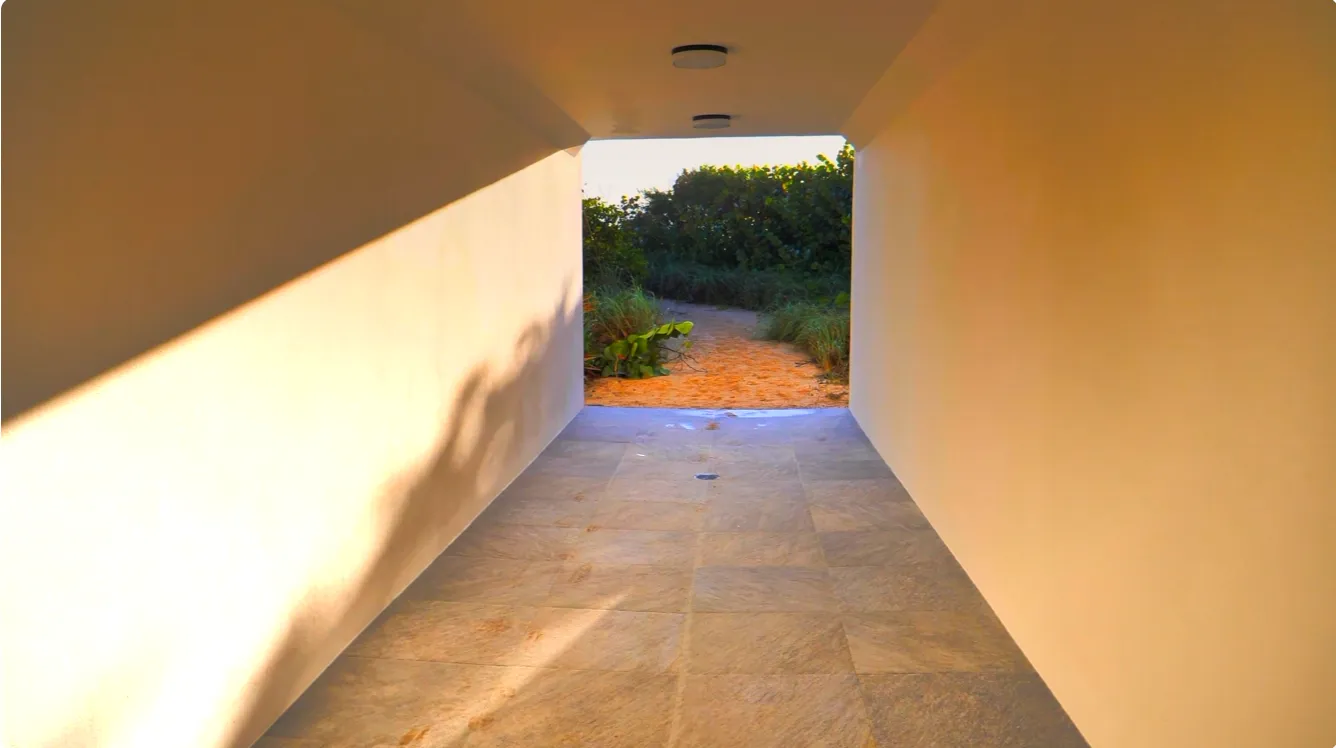
Gabe Newell, founder of Valve, bought a roughly 20,000-square-foot mansion in Manalapan, Florida for $70.8 million. The property includes a tunnel connecting the waterfront estate to the ocean via a beach, adding to Newell's already sea-based lifestyle.
Gabe Newell just paid $70.8 million for a Florida super mansion that comes with its own underground tunnel to the sea. The Valve boss acquired the roughly 20,000-square-foot home in Manalapan, Florida, according to the Wall Street Journal. And the “to the sea” part is not marketing fluff. The report says the new home includes a tunnel connecting the waterfront estate with the ocean via a beach.
That is the kind of detail you can only understand two ways: either you are picturing a billionaire who hates inconvenience, or you are picturing a lifestyle designed around maximum privacy and control. In this case, the tunnel is a literal bridge between land and water, and it matches the other big throughline in Newell’s life. In recent years, he has lived at sea rather than near Valve’s Bellevue, Washington headquarters, and he owns a fleet of luxury yachts, including a flagship called Leviathan with an onboard hospital, lab, spa, and gaming stations.
The new house changes locations, but not the pattern. Newell bought it from Cindy and Ron McMackin, founders of the mechanical subcontracting company Pan-Pacific Mechanical, the WSJ reported. The McMackins paid $39 million for the property in 2020, which means the purchase price nearly doubles in roughly a few years. If you are tracking real estate as an asset class, the headline is straightforward. If you are tracking incentives, it is more interesting: a buyer with significant liquidity can treat this kind of acquisition as lifestyle infrastructure, not just an investment.
The estate itself, per the source, is loaded with features that signal “compound,” not “mansion.” There is an outdoor pool, a dock, and a boat lift. There is also an eight-car garage, a wine cellar, guest quarters, and even a wellness wing. If you want a visual, the article notes you can see what it looks like via a 2020 promotional video published to YouTube by Premier Estate Properties, which handled the sale. In other words, this is not a mystery box purchase where you discover the details later. The property was already staged, marketed, and documented.
Zoom out to Valve and you get a different angle on why this is showing up in mainstream tech coverage at all. Valve is privately held, so its finances are not public, but Newell’s estimated net worth is cited as $11 billion. He founded Valve, brought Steam into being, and released iconic video games including Half-Life, Counter-Strike, and Dota. Steam dominates the PC sales market and earns Valve a cut of revenue with each game sale. This context matters because real estate purchases at this scale typically get interpreted as signals, whether or not the buyer intends them as signals. And when the same person is also tied to major tech platforms, every lifestyle headline becomes a proxy for thinking about continuity and time allocation.
Newell has also been publicly describing how he works and lives, which makes the “land vs. sea” angle feel less like guesswork. In July last year, he offered insight into his life in conversation with a YouTuber called Zalkar Saliev, who had just 19 subscribers at the time the interview clips went live. The source says Newell, who is 63, explained he worked seven days a week from his bedroom on his superyacht because it was fun and he still likes working. His daily routine, as quoted in the article, included getting up, working, going scuba diving, working some more, then either another scuba dive or gym time, followed by more work, and hanging out with everyone on the boat.
The quote that lands hardest for executives is not the scuba part. It is the framing: he said, “I work seven days a week,” and “I like working. It’s fun.” He also described working with people on AI and Steam stuff, and mentioned projects including an aerosol pathogen detection device and brain computer interfaces, with “all of the associated neuroscience” described as “incredibly cool.” The article adds that he cannot go to sleep because he is having fun, and that he has been “retired for a long time” in the sense that he stopped doing a “horrible job” and shifted into what is entertaining.
So what does the new Florida home mean strategically? The source is blunt: “the fact Newell has now bought a home on land suggests he plans to spend at least some of his time living in it.” And it explicitly says this “does not” mean anything for Half-Life 3. Still, there is another second-order tell in the article: Newell recently began construction on a $230 million deep-sea research ship designed to carry robots, labs, and 70 scientists to map the deepest oceanic trenches by 2028. If you are reading like an investor or board member, you can see the same logic repeating: big capital, long horizons, and a willingness to fund exploration while maintaining core platform leadership at Valve.
For peers in gaming, consumer platforms, and adjacent tech, the takeaway is not that a tunnel predicts product releases. It is that when a founder with enormous liquidity and unusually intense personal involvement buys lifestyle assets, those assets can act like decision filters. They shape where time goes, how private work stays, and how often the founder can maintain momentum across research, platform work, and whatever comes next. In this case, the land purchase might add flexibility, but the ocean tunnel and the deep-sea ship both point to one thing: Newell’s relationship with work is not tied to a desk. It is built into the environment he chooses.
This story's Key Insights and Take-aways are locked.
Create a free account to unlock Executive Actions for one credit.
Register to UnlockAlways free for Executives Club members. Join the Club
More in Business

A flaw in PHP just forced governments to pull their own sites offline
European agencies from Belgium to Germany took websites dark to patch a critical weakness in the language behind almost 70% of the web, and the blast radius extends far beyond government portals.

BioWare shuts down, Mass Effect 5 dead after $55B EA buyout
The legendary RPG studio's closure lands months after a $55 billion investment group buyout of EA, raising tough questions for gaming's biggest acquirers.
Musk weighs Tesla-SpaceX mega-merger as boards form review panels
Special committees at both companies will examine a tie-up that could fuse electric vehicles and space launch, forcing a fresh look at governance and valuation.