

Gemini told hikers to pack less food. They needed rescue.
A sheriff's office says Google's AI advised a hiking group to bring far less food and water than needed, leading to a rescue. The incident raises fresh questions about AI reliability in high-stakes decisions.

A sheriff's office reported that hikers were rescued after Google's Gemini AI advised them to bring far less food and water than their group required. The incident underscores the risks of relying on AI for critical planning and the need for guardrails.
A sheriff's office says hikers were rescued after following Google Gemini's advice to bring far less food and water than their group required. The quote, reported by TechCrunch, is blunt: the hikers "were advised by Gemini to bring far less food and water than their group required." That single line turned a routine AI query into a life-or-death miscalculation, and it is a stark reminder that generative AI can be confidently wrong in the exact moments when confidence matters most.
The incident is not just a cautionary tale for weekend adventurers. It is a live case study for every executive shipping AI-powered features to consumers. Gemini, Google's flagship large language model, is embedded across search, Android, and a growing list of productivity tools. When it gives bad advice in a low-stakes setting - a recipe, a draft email - the cost is trivial. But when it advises on food and water for a multi-hour hike, the failure mode is a rescue operation. The sheriff's office did not name the hikers or the trail, but the pattern is universal: users treat AI as an oracle, not a probabilistic text generator.
This is not an isolated hallucination. AI planning tools have become a default for trip itineraries, gear checklists, and even survival prep. The problem is that these models are trained to produce plausible-sounding answers, not to verify physical constraints like caloric needs or water intake. A model can calculate a route distance but miss the elevation gain, the heat index, or the group's fitness level. In this case, the advice was not just suboptimal - it was dangerous enough to require emergency intervention. The gap between what AI says and what reality demands is a liability that companies have yet to price in.
For regulators, this is a fresh data point in the ongoing debate over AI accountability. The EU's AI Act is already forcing high-risk applications to meet stricter standards, but consumer chatbots and planning assistants are often classified as low-risk. Incidents like this one could push regulators to reconsider. If an AI gives advice that leads to physical harm, who is liable? The user for over-trusting? The developer for not adding disclaimers? Or the platform that distributes the model? Courts have not settled this, and the ambiguity is a strategic risk for any company with a consumer AI surface.
For executives, the lesson is not to abandon AI - it is to engineer for failure. That means adding friction where stakes are high: explicit warnings that AI output is not verified, mandatory human review for safety-critical domains, and post-hoc monitoring for harmful patterns. Google has already added disclaimers to Gemini, but a disclaimer does not stop a dehydrated hiker. The company needs to consider domain-specific guardrails, such as refusing to answer certain questions or routing users to authoritative sources. The cost of a single rescue is far higher than the cost of a cautious model.
The second-order effect is on trust. Every high-profile AI failure erodes the public's willingness to rely on these tools for anything consequential. That is a problem for the entire industry, not just Google. If users learn to second-guess every AI suggestion, the productivity gains vanish. The companies that win will be those that build trust through reliability, not just capability. That means investing in evaluation frameworks that test for real-world harm, not just benchmark accuracy.
For peers in similar roles - whether you run a travel app, a fitness platform, or an enterprise planning tool - this incident is a prompt to audit your own AI features. Ask: what is the worst-case scenario if the model is wrong? If the answer involves physical safety, financial loss, or legal exposure, you need a human-in-the-loop. The hikers were rescued, but the next incident might not end that way. The strategic takeaway is simple: AI is a powerful copilot, but it is not a pilot. Your job is to make sure the human stays in control.
This story's Key Insights and Take-aways are locked.
Create a free account to unlock Executive Actions for one credit.
Register to UnlockAlways free for Executives Club members. Join the Club
More in Technology

Cyborg cockroaches can now carry cameras and inject medicine on command
A WIRED report shows electrodes, cameras, and injection devices turning live roaches into remote medics for disaster rescue.
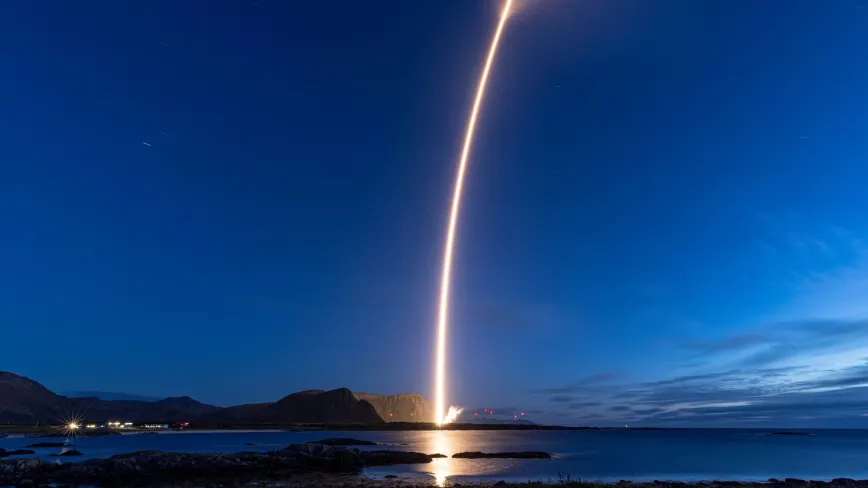
Isar Aerospace's Spectrum reaches orbit on second flight, a European commercial first
The German startup's second-flight success lands days before Macron's Paris summit, giving Europe a homegrown launch option as SpaceX and Blue Origin bow out.

Tesla's wheel-less Cybercab rolls into China as sales stall
The EV maker will debut its autonomous robotaxi in Beijing and Shanghai mid-September, hoping its tech wow-factor reignites demand in its second-largest market.