

Germany's industrial giants pivot to arms as China's carmakers close in
The same forces that made German automakers dominant now push their suppliers toward defense contracts. Here is what the shift means for the industry.
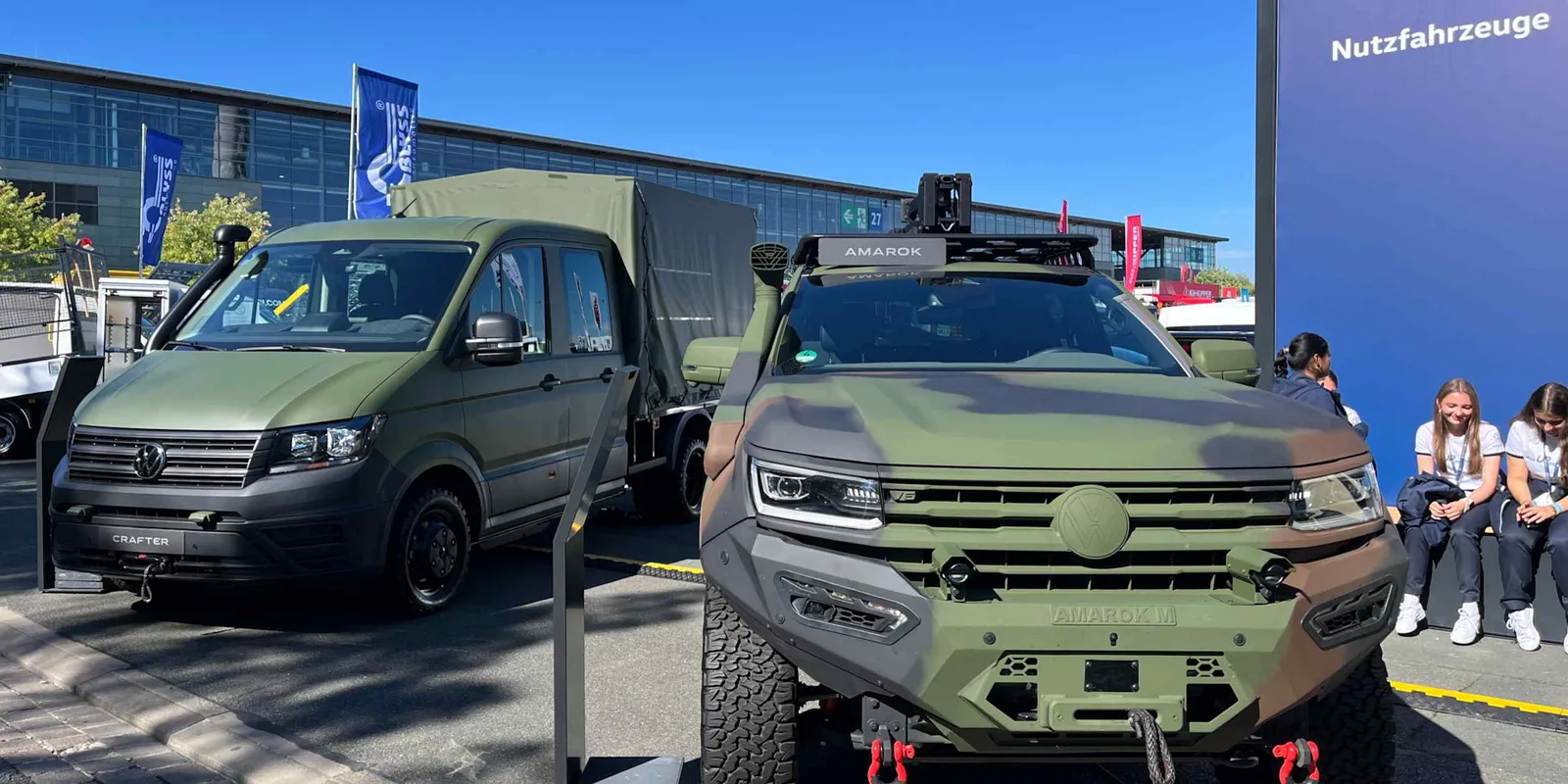
German industrial groups, squeezed by China's rise in automaking, are increasingly turning to arms production for growth. The pivot signals a strategic realignment for Europe's manufacturing core and creates new competitive dynamics in defense.
Germany's industrial giants are pivoting toward arms production as China's rise in automaking erodes their traditional stronghold. The shift, reported by Nikkei Asia, captures a strategic realignment in Europe's manufacturing core: companies that built their fortunes on precision engineering for cars are now applying those same capabilities to defense. It is a quiet but consequential turn, driven by a simple arithmetic of declining auto profits and surging military budgets.
For decades, German industrial groups were the backbone of the global automotive supply chain, from transmission components to high-end machinery. But China's aggressive push into electric vehicles and its growing dominance in automaking have squeezed those margins. As Chinese automakers scale and vertically integrate, German suppliers face thinner orders and tougher price negotiations. The response, according to the Nikkei report, is a deliberate move into arms: defense contracts offer longer horizons, fatter margins, and a geopolitical tailwind that the auto sector no longer provides.
The pivot is not happening in isolation. It comes as European governments, led by Germany, are ramping up military spending in response to Russia's war in Ukraine and broader security concerns. Berlin's announcement of a €100 billion special fund for the Bundeswehr, followed by a pledge to reach NATO's 2% of GDP defense spending target, has created a demand shock that German industry is well positioned to serve. The same engineering culture that made German cars the global benchmark is now being redirected toward tanks, drones, and ammunition.
This is a significant reversal for a country that has long been wary of its military-industrial complex. Germany's post-war identity was built on economic might rather than military power, and its industrial champions were celebrated for their civilian products. The turn to arms therefore marks not just a business strategy but a cultural shift. Companies that once avoided defense work for reputational reasons are now openly courting it, and the stigma that long surrounded the sector is fading under the pressure of geopolitical necessity.
The implications for the automotive supply chain are profound. As German suppliers reallocate capital, engineering talent, and production capacity toward defense, the auto industry could face a slow but steady drain of its most advanced capabilities. That would accelerate the very decline that pushed these companies toward arms in the first place, creating a self-reinforcing cycle. For automakers like Volkswagen, BMW, and Mercedes-Benz, the challenge is not just losing a supplier to a competitor, but losing it to an entirely different industry with different priorities and timelines.
For the defense sector, the influx of German industrial expertise is a potential game-changer. These companies bring decades of experience in precision manufacturing, quality control, and complex supply chain management, skills that are directly transferable to military production. The result could be faster innovation and lower costs in European defense, which has long struggled with inefficiency and overruns. But it also raises questions about capacity: can the same factories serve both civilian and military customers without bottlenecks, and what happens to automotive innovation if the best engineers are building weapons instead of cars?
The strategic stakes extend beyond Germany. Europe's broader industrial policy is being reshaped by the same forces, as the continent tries to balance its economic relationship with China against its security needs. The turn to arms is one answer to a dilemma that has no easy solution: how to maintain industrial strength in a world where the old certainties of free trade and open markets are giving way to strategic competition. For executives across the continent, the German example offers both a template and a warning. The template is clear: adapt to the new reality or watch your margins erode. The warning is equally clear: the pivot to defense is not a return to the past, but a bet on a future that is still being written.
For decision-makers in any industry that depends on global supply chains, the lesson is that competitive advantage is never permanent. China's rise in automaking did not just threaten German carmakers; it set in motion a chain reaction that is now reshaping the defense industry. The companies that survive are those that see the shift early and reposition before the window closes. Germany's industrial giants are doing exactly that, and the rest of the world is watching to see whether the bet pays off.
This story's Key Insights and Take-aways are locked.
Create a free account to unlock Executive Actions for one credit.
Register to UnlockAlways free for Executives Club members. Join the Club
More in Business

A flaw in PHP just forced governments to pull their own sites offline
European agencies from Belgium to Germany took websites dark to patch a critical weakness in the language behind almost 70% of the web, and the blast radius extends far beyond government portals.

BioWare shuts down, Mass Effect 5 dead after $55B EA buyout
The legendary RPG studio's closure lands months after a $55 billion investment group buyout of EA, raising tough questions for gaming's biggest acquirers.
Musk weighs Tesla-SpaceX mega-merger as boards form review panels
Special committees at both companies will examine a tie-up that could fuse electric vehicles and space launch, forcing a fresh look at governance and valuation.