

Giant crabs may have eaten Amelia Earhart. A new search is on.
A fresh expedition is hunting for Earhart's remains on an island where coconut-cracking crabs could have scattered the evidence.
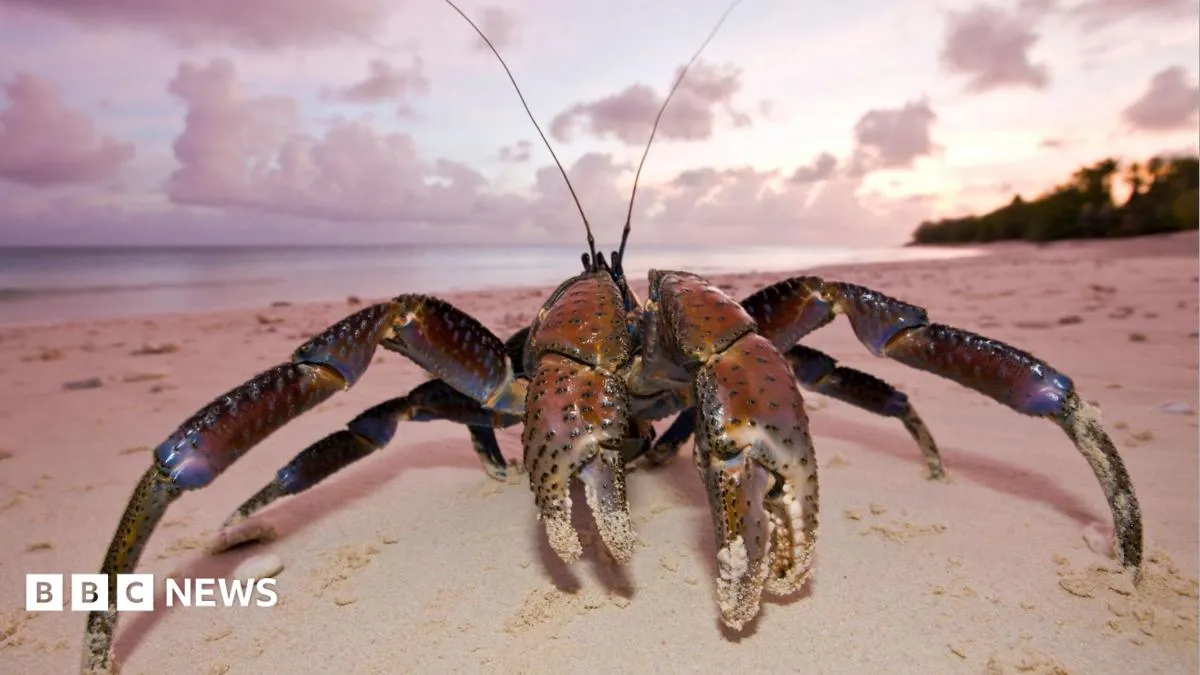
A research team has arrived on Nikumaroro to search for Amelia Earhart's remains, sleeping on their ship to avoid giant coconut crabs that can lift heavy objects and crack coconuts. The expedition's findings could reshape one of aviation's greatest mysteries and test how forensic teams handle extreme taphonomic environments.
A new search for Amelia Earhart has landed on a remote Pacific island where the prime suspects in her disappearance are not human, but giant coconut crabs. Researchers on Nikumaroro, part of the Republic of Kiribati, will sleep on their ship rather than camp ashore, because the island's coconut crabs can lift heavy weights, split open coconuts, and may have played a role in Earhart's demise. The expedition is the latest attempt to solve the 1937 mystery of Earhart and navigator Fred Noonan, who vanished during their attempt to fly around the world. The crabs, which can grow to over a meter across and weigh several kilograms, are the largest land arthropods on Earth, and their scavenging behavior has long been a gruesome footnote in the Earhart case. The team's decision to avoid sleeping on the island is a practical acknowledgment that these crustaceans are not just a curiosity, but a potential taphonomic force that could have moved, scattered, or consumed human remains decades ago.
This story's Key Insights and Take-aways are locked.
Create a free account to unlock Executive Actions for one credit.
Register to UnlockAlways free for Executives Club members. Join the Club
More in Science

France euthanized Félicette, the first cat in space, two months after her flight
Félicette's 1963 flight made France a space-race player, but her euthanasia and a crowdfunded statue reveal how high-risk programs are remembered.

Ultracold atoms just created a 'fractional Fermi sea' that breaks quantum rules
A new quantum state challenges decades of theory and hints at 'super-Fermions,' with real stakes for quantum computing and materials science.

Bangladesh's 202,000 measles cases are a 'real warning' to other nations
The world's worst measles outbreak is spreading as routine vaccination falters. Here is why every country's immunization program should pay attention.