
Giant exoplanet may tug back: a magnetic link flips the one-way star-planet assumption
New research suggests a giant exoplanet can hold its host star with a magnetic grip, not just the other way around.
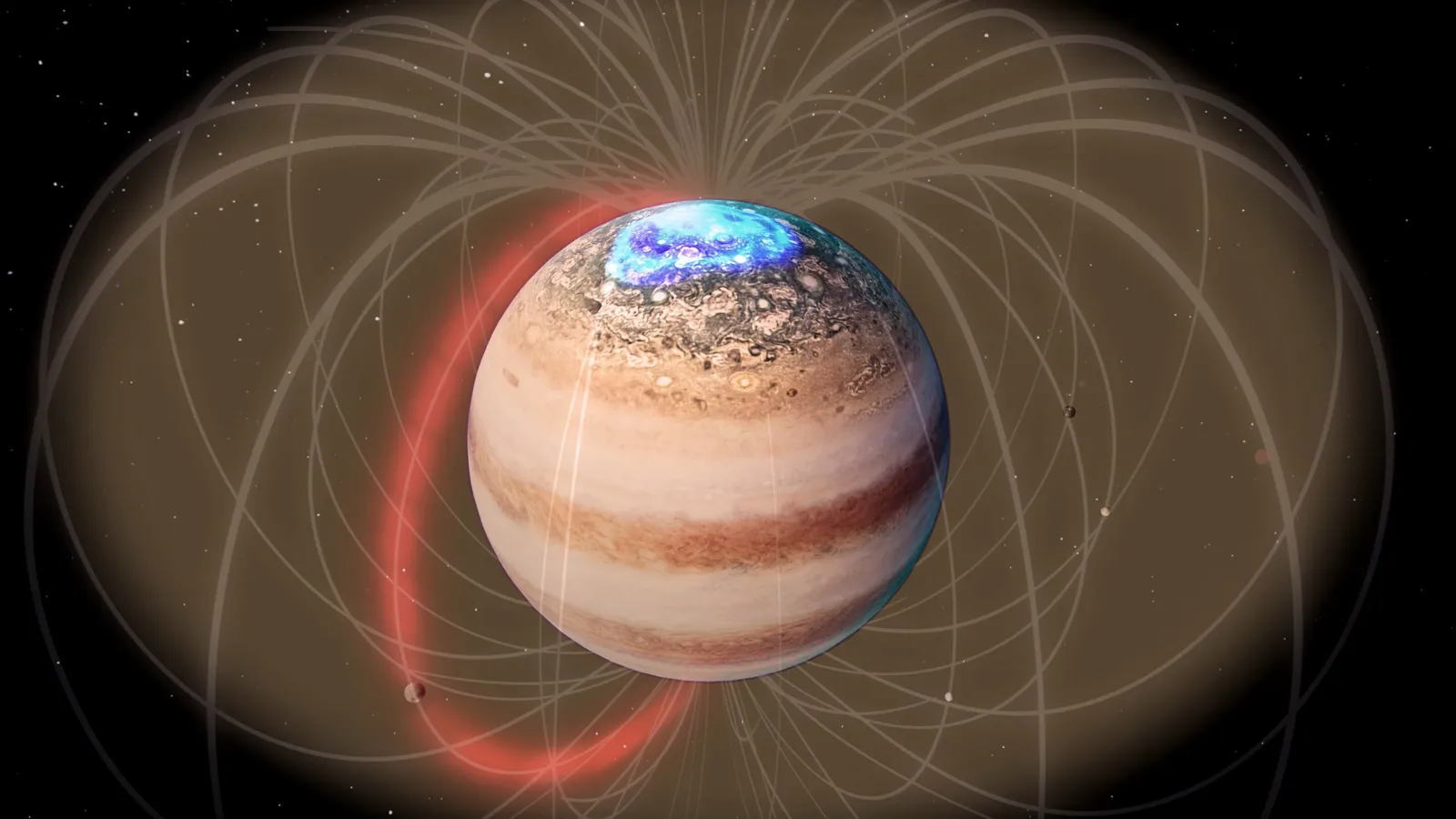
Researchers argue that within planetary systems, the usual “one-way street” idea is incomplete because magnetic forces may run both directions. For decision-makers watching how space physics models evolve, it signals a shift in how star-planet interactions should be interpreted.
Within their planetary systems, stars are continuously shaping their orbiting planets through gravity, radiation, and magnetic forces. For a long time, that relationship has appeared to be a one-way street: the star influences the planet, but the planet mostly responds.
A new study challenges that framing by pointing to a giant exoplanet that may hold a magnetic grip on its host star. The core implication is simple and high-stakes for how scientists model these systems: magnetic forces may not be limited to one direction of influence. Instead, the planet could actively affect the star’s behavior through magnetism, creating a feedback loop rather than a linear cause-and-effect chain.
This matters because “how we think it works” drives “how we measure it.” Gravity and radiation have long been used as the dominant explanatory levers in interpreting exoplanet systems. Magnetic forces are harder to detect and characterize because they can be subtle, time-variable, and entangled with a lot of other signals. When the community treats star-to-planet influence as the default, models can bias what counts as evidence and how researchers interpret the data. A magnetic planet that tugs back forces a re-check of assumptions that have been baked into analysis pipelines.
Zoom out, and this is also a story about incentives in science and funding. Observational astronomy, like other technical fields, tends to follow the strongest signal. If the strongest expectation is that the star drives the planet, researchers prioritize star-led explanations first. But if magnetism can operate as a two-way interaction, the “search space” expands. That means new observing strategies, new analysis methods, and potentially new interpretations of existing measurements.
There is also an interdisciplinary ripple effect. Space weather research, which studies how magnetic interactions between stars and planets can affect environments, typically focuses on the consequences of stellar activity on planetary systems. If planets can magnetically influence their host stars, then star-planet dynamics may need to be integrated more tightly, not treated as separate compartments. That is second-order, but it is not abstract. Better physics models improve the reliability of derived parameters, like how intense a system’s magnetic environment may be, and that in turn can affect how researchers estimate risks to planetary atmospheres, habitability conditions, and long-term evolution.
And yes, it can echo into the commercial and policy side too, even though this headline is about exoplanets. Space industry planning, from mission design to communications reliability and sensor calibration, depends on accurate models of the space environment. Regulators and policymakers do not usually regulate magnetism in a lab, but they do regulate the outputs of science and engineering: spectrum use, mission licensing, safety frameworks, and the standards that shape what instruments are considered fit for purpose. If scientific understanding of magnetic star-planet coupling evolves, the upstream assumptions that inform mission requirements can shift over time.
Strategically, for boards and executives who fund frontier research, the takeaway is not that investors suddenly need to bet on exoplanet magnetism. The takeaway is about model discipline and optionality. When a field revises a foundational assumption, the winners are often the teams that can adapt quickly: those with flexible analytics, diverse measurement approaches, and governance that encourages challenging “default narratives” without derailing delivery.
In other words, this is less about one planet being special and more about a relationship being more complicated than we thought. If giant exoplanets can hold a magnetic grip on their host stars, then star-planet systems may be governed by feedback, not only influence. That shift, once incorporated, could change how scientists interpret signals across many systems, and it is a reminder that in complex systems, one-way stories are often where surprises breed.
This story's Key Insights and Take-aways are locked.
Create a free account to unlock Executive Actions for one credit.
Register to UnlockAlways free for Executives Club members. Join the Club
More in Science

Alaska's 1,580-foot tsunami had warning signs. Scientists just found them.
Rapid glacier retreat, heavy rainfall, and thousands of tiny tremors preceded Alaska's 1,580-foot tsunami, a warning for every coastal community in a warming world.

The rare mutation that lets high-risk brains dodge Alzheimer's
Scientists found a natural defense against protein buildup, opening a new path to preventive treatments.

3,000 steps a day may halve Alzheimer's decline, study finds
New research links a modest daily walk to less tau buildup and nearly half the cognitive and functional decline, even for those with early signs.