
GM just delivered Patriot missile parts 22 days after signing
America's biggest carmaker is now a munitions supplier, and its defense unit is on track for nearly $700 million in revenue this year.
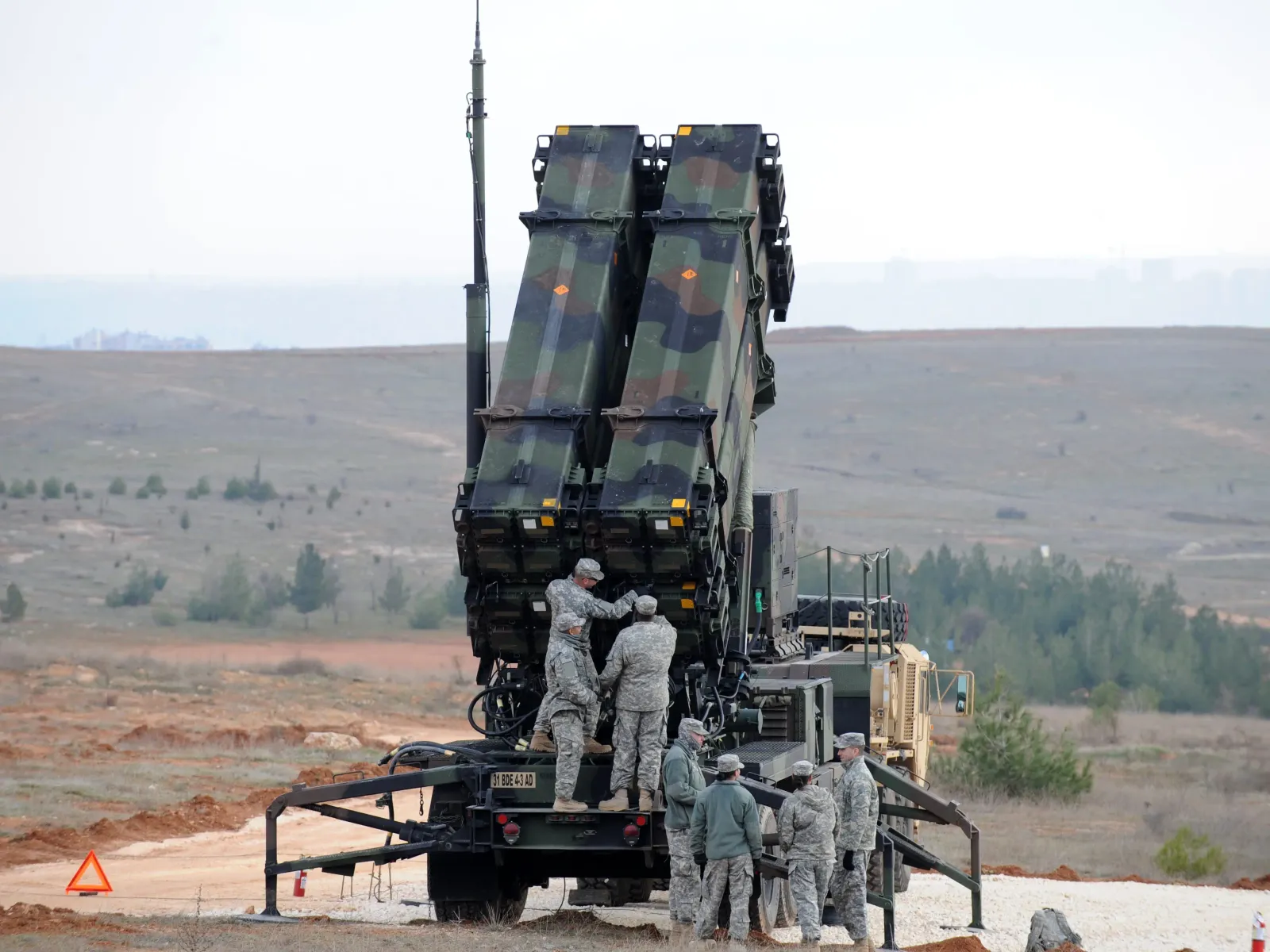
General Motors, through its GM Defense subsidiary, delivered housing components for Lockheed Martin's PAC-3 MSE Patriot interceptor just 22 days after signing a contract. The rapid turnaround signals a broader industrial shift as defense primes pull commercial automakers into munitions production to address stockpile shortfalls.
General Motors just proved it can move like a defense contractor when the contract is urgent enough. On Thursday, Lockheed Martin announced that GM Defense, the automaker's military subsidiary, delivered housing components for the PAC-3 Missile Segment Enhancement interceptor, the advanced missile used in the Patriot air-defense system. The companies signed a formal contract on August 6, and the first batch of components reached Lockheed 22 days later. Tim Cahill, Lockheed Martin's president of missiles and fire control, called it an "extraordinary 22-day turnaround." For a company whose core business is rolling cars off assembly lines, the speed is the story: it shows what happens when a commercial manufacturer with deep production expertise gets pulled into the defense supply chain at a moment of acute demand.
That demand is not hypothetical. Patriot interceptors, particularly the PAC-3 MSE built for complex threats, have been consumed at a staggering rate as the wars in Ukraine and against Iran strain US and allied inventories. Over recent months, media reports and think tank assessments have raised concerns about US munition stockpiles, including Tomahawk land-attack cruise missiles and Patriot interceptors. The Pentagon and the White House have dismissed concerns about the status of the US stockpiles, but a newly released Department of Defense Inspector General report said that "munitions expenditure in [Operation Epic Fury] has resulted in strategic inventory shortfalls and revealed industrial base bottlenecks for munitions resupply." The report did not specify which kinds of munitions, but the timing of GM's entry into missile-component production is not a coincidence.
GM is not building the entire interceptor. The housing components it is making are a piece of the PAC-3 MSE, not the whole weapon. But the contract is a notable expansion for a defense business better known for military vehicles than for munitions. During a July earnings call, Mary Barra, GM's CEO, called defense a "growth business" and said the company was targeting nearly $700 million in defense revenue this year. "GM Defense is another compelling growth opportunity that enables us to deliver defense solutions faster with better economics for the US taxpayer," she said. For a company that generates over $170 billion in annual revenue, $700 million is small, but the strategic direction matters more than the current number: the largest US automaker is deliberately building a second revenue stream tied to national security.
GM is not alone in this pivot. Ford CEO Jim Farley said during a July earnings call that his company is "continuing to discuss additional Defense-related projects with the US government." The fact that both of America's legacy automakers are publicly signaling defense ambitions suggests a broader industrial trend: the Pentagon needs manufacturing capacity that the traditional defense industrial base cannot scale fast enough on its own, and commercial automakers have exactly that capacity. They have assembly lines, supply chains, quality-control systems, and a workforce accustomed to producing complex machinery at volume. The defense industry has historically been a closed loop of specialized primes and tiered suppliers, but the stockpile crunch is forcing the loop open.
Lockheed Martin and GM said they plan to apply their partnership to other munitions programs and future defense systems. That is a meaningful signal. Lockheed is investing between $8 billion and $9 billion to scale production of weapons, including the PAC-3 MSE, and expects its munitions production and warehouse space to grow by nearly 50%. Bringing GM into that expansion means the automaker is not a one-off supplier but a potential long-term partner in the Pentagon's effort to rebuild industrial capacity. The US defense industry is also expanding munition production in partnership with the Pentagon, and the GM-Lockheed deal is a concrete example of how that expansion is taking shape.
Stephen duMont, the president and CEO of GM Defense, wrote in a press release: "We're proud to support production of this country's critical defense capabilities. We look forward to putting these strengths to work in support of our nation's security and the people who protect it." The language is standard defense-contractor boilerplate, but the substance is not. A company that spent a century building cars is now a link in the chain that keeps Patriot batteries armed. The 22-day turnaround is the kind of proof point that primes will remember when they are choosing partners for the next urgent contract.
For executives watching from other industries, the lesson is straightforward: the defense supply chain is opening to companies that were never traditional defense primes. The combination of strategic stockpile shortfalls, a DoD Inspector General report acknowledging industrial base bottlenecks, and the Pentagon's push to expand munitions production means the government is actively looking for new manufacturing partners. Automakers are the most visible example, but the same logic applies to any company with scalable precision manufacturing, advanced electronics, or battery and propulsion expertise. The question is not whether the defense market will grow, but which commercial manufacturers will move fast enough to capture the contracts when the urgent calls come.
The strategic stakes for peers are clear. The US is rebuilding its munitions industrial base after years of drawing down inventories, and the companies that position themselves now as fast, reliable suppliers will be embedded in the supply chain for years. GM's 22-day delivery was not just a logistical achievement; it was a signal to the Pentagon and to Lockheed that commercial manufacturing speed can be applied to national security. For CEOs considering whether to pursue defense work, the GM example offers a template: start with components, prove the speed, and let the contracts grow. The demand is real, the funding is flowing, and the window for new entrants is open.
This story's Key Insights and Take-aways are locked.
Create a free account to unlock Executive Actions for one credit.
Register to UnlockAlways free for Executives Club members. Join the Club
More in Business

Royal Caribbean just spent $3B to own half of Sandals
The cruise giant is buying a 50% stake in the all-inclusive resort chain for $3 billion, a bet that land-based vacations are the next growth engine.

Paramount's Ellison: Merger Clearance Done, WBD Deal by Oct 1
David Ellison says the Paramount-WBD merger has full clearance after settling with state AGs, clearing the path for an October 1 close.

Paramount settles with 12 states, $110B Warner merger clears final hurdle
David Ellison's studio avoids a March trial and a $7M-a-day ticking fee by settling with state AGs over local job losses.