

Goldman Sachs keeps HKEX at buy, citing Beijing tailwinds for H2 trading
The bank points to policy support and potential AI-driven activity, with implications for revenue and board oversight.
Goldman Sachs reaffirmed its “buy rating” on Hong Kong Exchanges and Clearing (HKEX), led by analysts Thomas Wang and Simone Chen. It expects “multiple tailwinds to ADT [average daily turnover] and revenue growth” in the second half of the year, tied to Beijing’s policy support.
Goldman Sachs just handed HKEX a clean vote of confidence, reaffirming its “buy rating” and arguing that Beijing’s policy support could translate into concrete trading momentum. In a Wednesday research note, analysts Thomas Wang and Simone Chen wrote, “We see multiple tailwinds to ADT [average daily turnover] and revenue growth” in the second half of this year.
That matters because HKEX is not a company that gets judged only on long-term strategy. It gets judged on what the market is doing right now, measured in activity. Average daily turnover (ADT) is the simple, ruthless metric at the center of this call. If more investors trade more often, exchanges tend to capture the economic tailwind through higher volumes and related revenue components. Goldman’s thesis is basically: if the policy environment keeps nudging flows, HKEX’s numbers in H2 should benefit.
The timing is the other big piece. Goldman framed its expectations explicitly around the second half, which signals it sees near-term catalysts rather than waiting for a distant cycle. That framing lines up with the broader logic behind support for international financial centers: policymakers want liquidity, listings, market-making depth, and investor confidence to cluster in one place. When that happens, exchanges typically benefit because they sit in the plumbing of capital markets.
The source ties the upgrade-style sentiment to Beijing’s ramping up policy support aimed at cementing Hong Kong’s role as an international financial centre. In other words, this is not presented as a purely HKEX-specific story. It is a macro and policy story that ends at the exchange door. For executives and boards, that distinction matters because it affects how risks are modeled. Policy tailwinds can be powerful, but they also tend to be politically and strategically managed, which means the “why” behind support can evolve even if the “what” looks stable.
Goldman’s mention of an “AI stock boost” in the headline is the kind of market dynamic that often shows up first in trading activity and then in listed-product turnover. The source indicates this context alongside the Beijing policy support narrative. Even without additional detail in the excerpt, the implication is straightforward: when technology-linked sentiment lifts trading interest, it can pull on ADT. Exchanges feel those shifts quickly because volumes move faster than fundamentals.
For HKEX stakeholders, the board-level question is not whether exchange revenues are influenced by policy and sentiment, but how reliably those tailwinds convert into actual results. ADT is a flow metric, and flow metrics can be cyclical. That is why a “buy rating” built around H2 tailwinds often becomes a management storyline: executives are expected to deliver on the operational side that turns trading activity into durable financial performance.
The source also hints at the backdrop that analysts are working with. It notes “weak share...” in the original body, suggesting that HKEX shares had not been on the strongest footing going into the research note. If share performance is soft but a major bank is reaffirming a buy, that sets up a classic market gap: investors may be pricing disappointment, while the brokerage sees forward activity improvement. In practical terms, that can influence how capital markets participants interpret HKEX’s next quarter numbers, and how quickly sentiment can re-rate if trading improves.
Second-order, this kind of research note rarely stays inside Goldman’s spreadsheet. It can affect how other investors and institutions position themselves around H2. If larger allocators view ADT and revenue growth as more likely, they may adjust exposure to HKEX, especially if they believe Beijing’s support provides a steadier runway for liquidity. In that scenario, the exchange becomes a sort of macro proxy, and HKEX board oversight shifts from “execution of strategy” to “timing of catalysts” and “resilience under shifting volumes.”
Ultimately, Goldman’s reaffirmation is a bet on a simple chain: policy support lifts activity, activity lifts ADT, ADT drives revenue growth in the second half. For decision-makers across exchanges, brokers, and capital markets infrastructure, the takeaway is that the story is not only about technology or listings. It is about whether governments and regulators can actively shape market liquidity, and whether exchange operators can harvest that liquidity when it arrives.
This story's Key Insights and Take-aways are locked.
Create a free account to unlock Executive Actions for one credit.
Register to UnlockAlways free for Executives Club members. Join the Club
More in Business

Epic and Google drop settlement bid, forcing rival Android app stores by July 22
Google told the court it is ready to carry third-party app stores starting Wednesday, July 22.
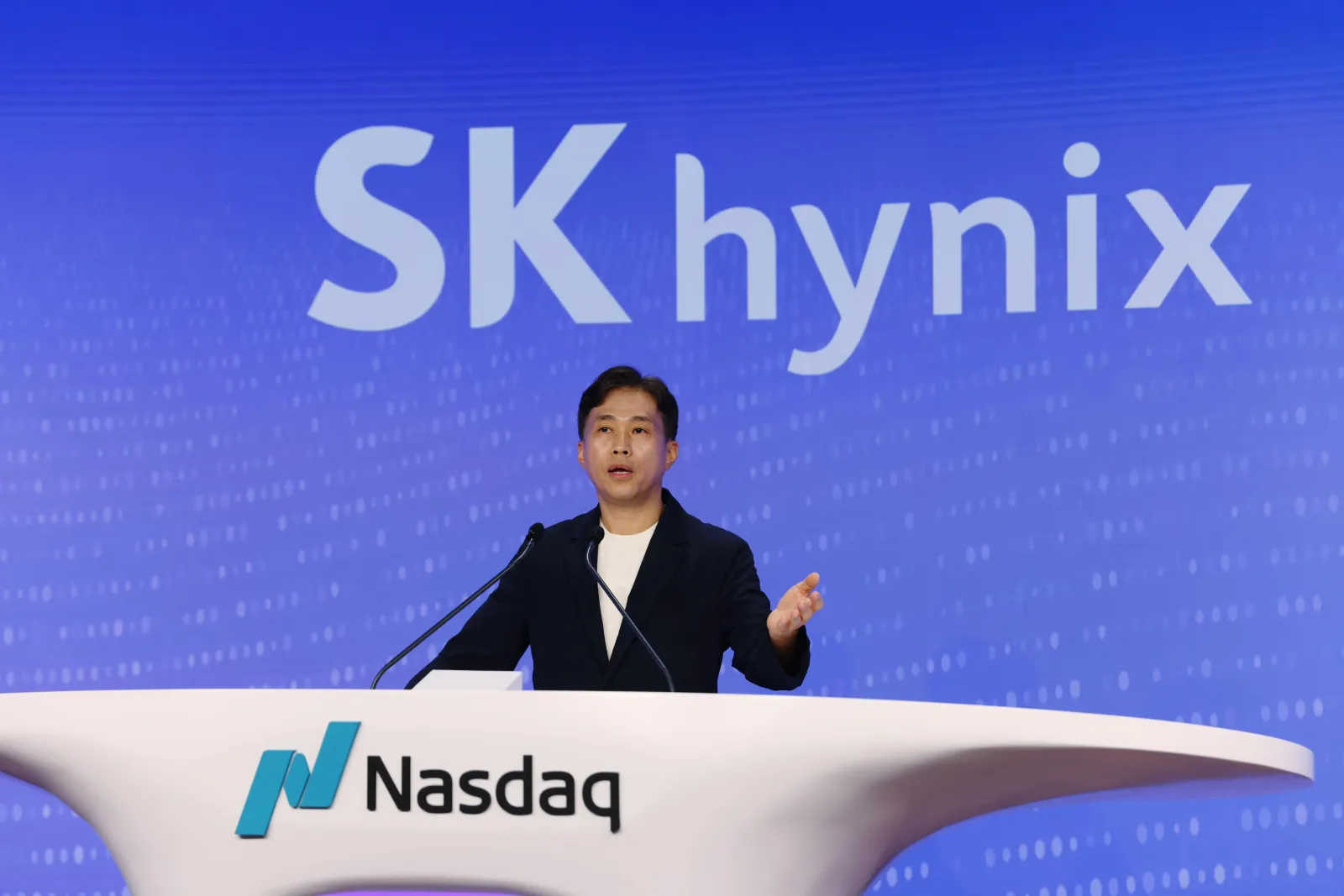
SK Hynix opens at $170, raises $26.5B, and tops foreign IPO records
In Friday's Wall Street debut, SK Hynix turns AI RAM demand into a $26.5B fundraising moment that rewrites comps.

China lands a reusable Long March booster, a first that matches SpaceX and Blue Origin
A barge landing and net-based recovery move China from theory to proof, reshaping the reusability race and satellite ambitions.