

Goldman Sachs publishes AI model rankings for China to steer client bets
The framework, issued Friday, signals how the bank thinks competitive Chinese AI models should be positioned.

Goldman Sachs released a Chinese AI model competitive positioning framework on Friday. The move gives investment teams a playbook for how to evaluate AI model choices and related bets in China.
Goldman Sachs picked up a sheet of paper and decided which Chinese AI models matter most. On Friday, the investment bank released its “Chinese AI model competitive positioning framework,” a document meant to help clients understand how different models stack up and how to think about competitive dynamics.
That might sound like just another analyst exercise, but the real value is in what a framework changes inside investment processes. A positioning guide becomes a shared reference point for internal debates, diligence questions, and where money gets directed. When Goldman releases a framework, it is not simply describing the market. It is shaping how the market can be discussed in boardrooms and investment committees, especially for clients trying to translate fast-moving AI developments into something investable.
To understand why this matters, you have to remember how competitive “positioning” works in markets like AI. Models are not just products. They are platforms for applications, inference, data pipelines, developer ecosystems, and the distribution relationships that decide who wins customers. In China, where AI adoption is accelerating across industries, the competitive story is often less about a single benchmark and more about the surrounding system: performance at deployment, costs at scale, integration with enterprise workflows, and the ability to improve quickly. A competitive positioning framework tries to reduce that complexity into a more decision-friendly view.
There is also the regulatory backdrop, and it is part of the reason executives pay attention to bank frameworks. AI in China sits within a broader ecosystem of rules and oversight that can affect model development, commercialization, data usage, and what qualifies as acceptable deployment. Even when frameworks do not explicitly debate regulation, they typically influence what teams underwrite as “safer” or “more viable” over time. That becomes second-order important because diligence teams do not just ask “can it work?” They also ask “can it be deployed, scaled, and sold in the environment that actually exists?”
So what does Goldman’s timing tell us? It released this framework on Friday, and that is not an arbitrary detail. Friday releases often land as internal teams begin the next week’s planning, portfolio reviews, and client conversations. In practice, these documents can become the basis for how investment bankers frame deals and how research desks support coverage, even if the underlying market keeps moving. Think of it as pre-positioning the narrative before the next wave of announcements, funding rounds, and model updates.
For executives, especially those on investment committees or in strategy roles, the biggest implication is not that Goldman declares a winner. It is that a major investment bank is formalizing a way to compare models that clients can reference. That can compress decision timelines, reduce debate noise, and create a common language across teams that might otherwise be arguing from different benchmarks, different assumptions about deployment, or different interpretations of what “competitive” really means.
There is another subtle effect: frameworks can influence who gets the benefit of the doubt. When institutional buyers have a structured lens, they may overweight factors that the framework emphasizes and underweight factors it does not. That can affect capital allocation patterns, partnership discussions, and how quickly companies are asked to validate their competitive edge. In AI markets, where progress can be incremental but extremely valuable, the narrative around “position” can matter almost as much as the engineering itself.
For peers trying to navigate similar questions, the strategic stake is clear. Goldman’s framework is a signal that competitive positioning for Chinese AI models is now something that gets packaged, distributed, and used as an input to investment thinking. Executives who move early with a coherent evaluation approach can avoid getting stuck in reactive mode, where each new model release forces a fresh argument. By turning competition into a structured comparison, Goldman is effectively offering a shortcut from hype to deliberation, and it is likely to shape how clients plan their next AI-related bets.
This story's Key Insights and Take-aways are locked.
Create a free account to unlock Executive Actions for one credit.
Register to UnlockAlways free for Executives Club members. Join the Club
More in Business
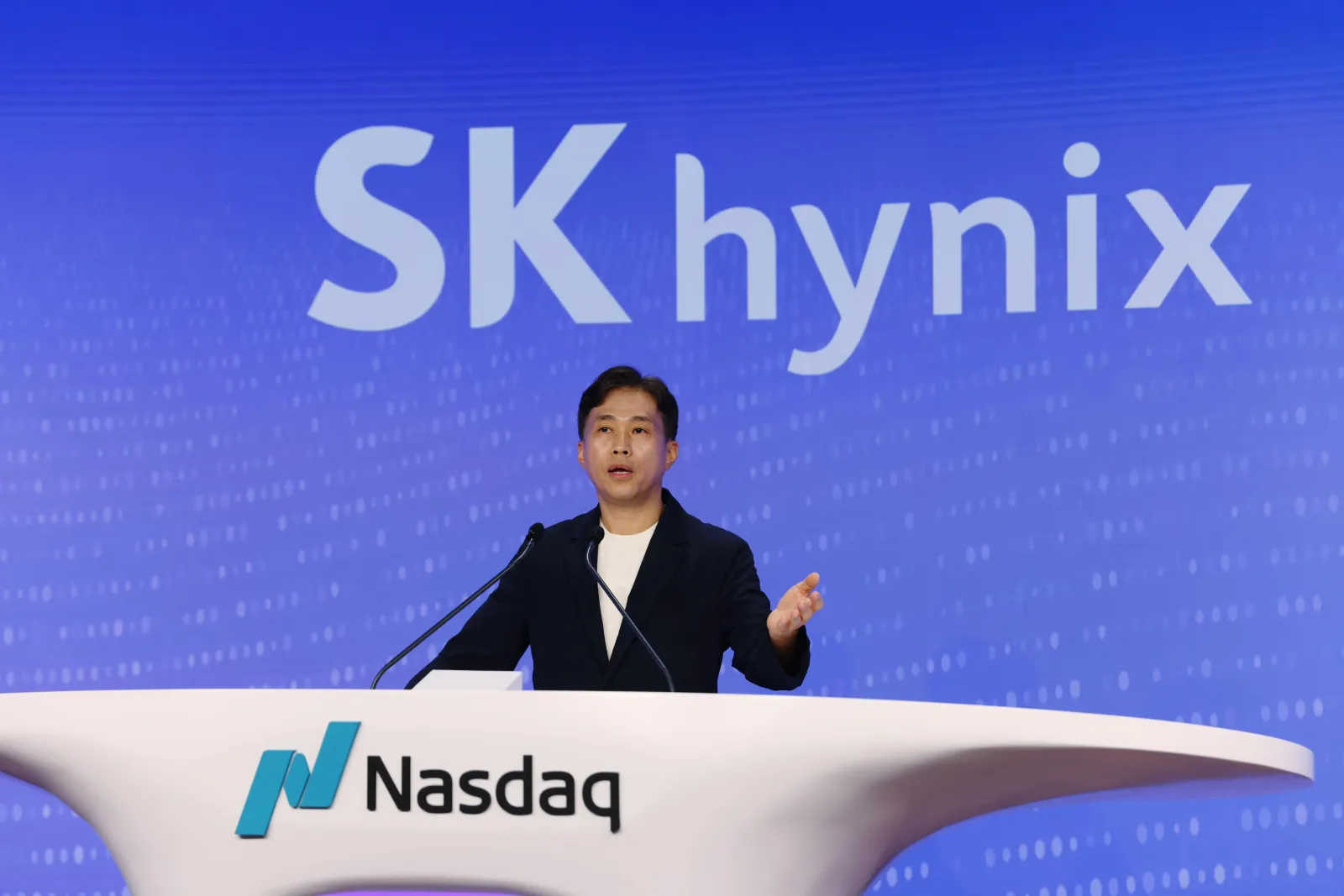
SK Hynix opens at $170, raises $26.5B, and tops foreign IPO records
In Friday's Wall Street debut, SK Hynix turns AI RAM demand into a $26.5B fundraising moment that rewrites comps.

China lands a reusable Long March booster, a first that matches SpaceX and Blue Origin
A barge landing and net-based recovery move China from theory to proof, reshaping the reusability race and satellite ambitions.

AstraZeneca $27B wipeout as Wainua late trial misses cardiovascular target
A failed late-stage heart study triggered a swift market punishment, forcing investors and boards to reset timelines and risk.