
Google.org pledges $50M to train 300,000 electricians and welders for AI buildout
The AI boom is colliding with a skilled-trades shortage. Google’s philanthropic answer is a large-scale training push across 20+ states.

Google’s philanthropic arm, Google.org, is committing $50M to prepare more than 300,000 skilled-trade workers across over 20 US states. For decision-makers, the move signals that scaling AI is increasingly constrained by labor and training pipelines, not just capital.
The AI boom has a problem no amount of money can bulldoze on its own: there are not enough electricians, welders, and pipefitters to physically build the infrastructure the models run on. Google is trying to solve that bottleneck the unglamorous way, by funding training at scale. According to The Next Web, Google.org said it is committing $50M to prepare more than 300,000 skilled-trade workers across over 20 US states.
That headline number is the point. Training 300,000 people is not a small pilot designed to generate press. It is an attempt to expand the pipeline of workers who can install power systems, fabricate and connect industrial hardware, and help deliver the facilities that AI depends on. When the shortage is this specific, procurement timelines and project schedules stop being “engineering issues” and start being workforce issues. And workforce issues have a way of turning into budget surprises, delivery delays, and contractual pain if you ignore them.
Why does Google have to do this at all? Because “AI demand” does not translate into “AI capacity” with a simple checkbook. AI systems run on data centers and power-hungry infrastructure, and those facilities are built using trades that are both regulated and apprenticeship-heavy in many places. Electricians, welders, and pipefitters are not plug-and-play hires. They require training, certifications, and on-the-job experience to become fully productive. When labor is scarce, the constraint shifts from model development to construction reality. In other words, the bottleneck moves from GPUs and software into the people who wire, weld, and pipe the physical world.
Google’s approach also matters because it comes from a philanthropic arm, not a traditional procurement or vendor contracting plan. Google.org committing $50M frames the labor pipeline as a social and economic readiness issue, not just a supply-chain inconvenience. That is a notable signal to other organizations building at speed. If a company with enormous purchasing power still leans on training, it is basically acknowledging that market forces alone may not close the gap fast enough for near-term rollout.
The geographic detail is another clue. The Next Web reports training across over 20 US states. That suggests Google is not only aiming to fund a single region with a quick fix. Instead, it is trying to spread capacity where labor demand is likely to be broad, because the workers needed to build AI-adjacent infrastructure will be required in multiple markets. For executives, this is a reminder that “AI expansion” is not one timeline. It is many parallel local timelines, each governed by local workforce availability, training capacity, and the time it takes for apprenticeships or credential pathways to produce qualified staff.
There is also a second-order implication here that boards should pay attention to: labor constraints can become a risk multiplier across the entire value chain. When skilled trades are short, contractors may prioritize certain sites, leading to schedule reshuffling. Costs can rise due to premium labor, overtime, and higher utilization of the limited crews that exist. Even if financing is available, project delivery can stall. And when delivery slips, other downstream systems are affected, from power readiness to equipment installation to commissioning and compliance steps.
For decision-makers tracking AI infrastructure scaling, Google.org’s $50M commitment is a practical benchmark. It suggests that the “AI boom” narrative is evolving: the next competitive edge may come from organizations that can coordinate training, hiring, and project execution as aggressively as they procure compute. The companies that treat workforce capacity as a first-class constraint, alongside hardware and capital planning, will be better positioned to avoid the very delays that labor shortages can cause.
The takeaway is blunt. AI is not just a software story. The physical buildout runs on electricians, welders, and pipefitters. By pledging $50M to prepare more than 300,000 workers across over 20 US states, Google.org is betting that scaling the human pipeline is how you keep the machine moving. If you are an executive planning infrastructure, capacity expansion, or major build programs, this is a warning that you need a workforce strategy, not only a capital strategy.
This story's Key Insights and Take-aways are locked.
Create a free account to unlock Executive Actions for one credit.
Register to UnlockAlways free for Executives Club members. Join the Club
More in Business

SpaceX IPO: Wedbush calls a Tesla merger “holy grail,” Morningstar pegs $63 fair value
Trading starts June 12 at $135, but analysts are split over a $72-per-share “option premium” on orbital AI dreams.

10% of large employers will drop obesity drug coverage next year as costs rise
As use surges, a growing share of big employers plan to end coverage, shifting the bill and the politics of benefits.
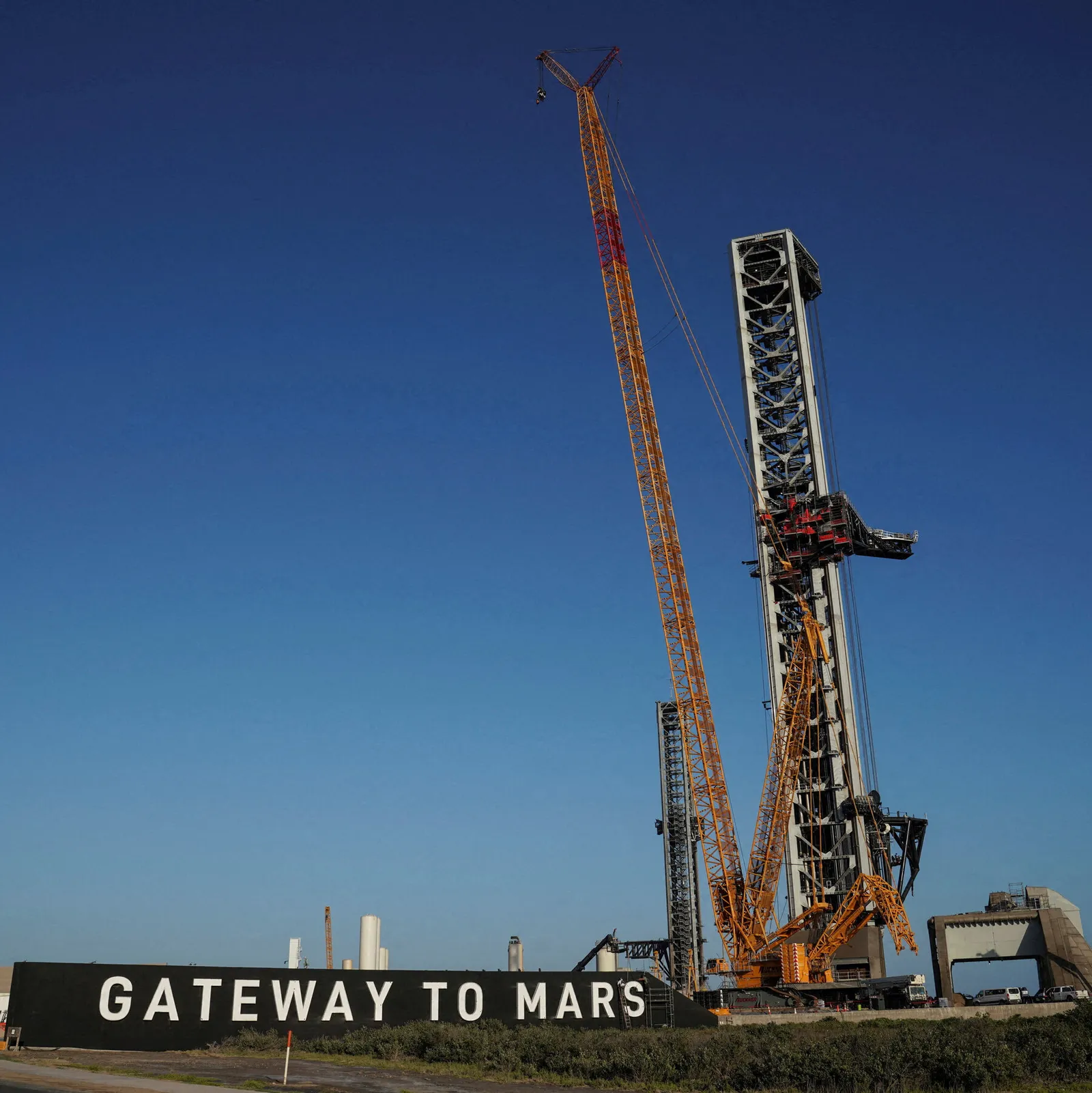
SpaceX IPO looms as A.I. spending frenzy triggers tougher questions on rocket economics
DealBook frames the go-public moment as scrutiny grows over the sector's spending spree and what it means for investors.