
Google rolls Gemini natural-language search into Gmail, now in beta
Gmail can answer in plain English using Gemini, turning your inbox into a searchable database.
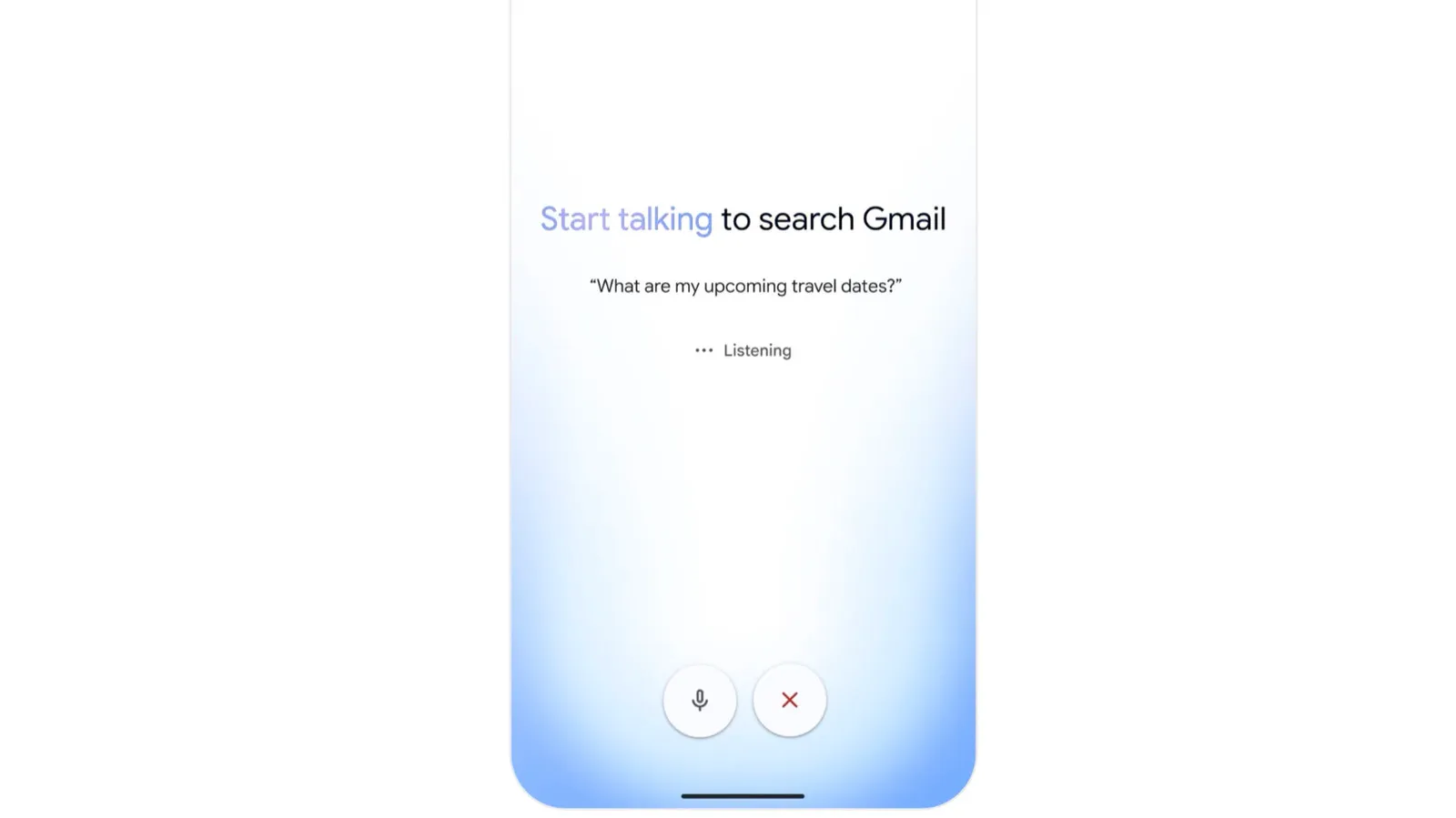
Google has made a new Gmail feature that lets you use Gemini to quickly search your inbox with natural language. For decision-makers, it signals how fast AI assistants are moving from “chat” to “workflow,” changing expectations for productivity tools.
Google has turned Gemini into an inbox search feature inside Gmail, and it is now available in beta. The basic pitch is simple but meaningful: instead of typing keywords or clicking through filters, you can use natural language to ask questions and quickly find what you need in your Gmail inbox.
In other words, Gmail is starting to behave less like a folder system and more like a query engine. This beta matters because Gmail is not a niche app. It is the daily work surface for millions of people, and it sits in the center of how teams communicate. When AI upgrades the inbox search experience, it effectively upgrades the front door to corporate memory: the email threads, receipts, approvals, customer conversations, and coordination that make operations run.
To understand why this is more than a convenience feature, zoom out. Email has always been searchable, but it has required you to think like a search engine. You know the exact terms you used, the right sender, the right subject line, or the approximate date range. Natural language changes that. If Gemini can interpret what you mean, you can search based on intent. That reduces the “mental overhead” of remembering how information is stored.
This is also the moment where AI stops being a side conversation and starts becoming part of the workflow. In the past year, most AI assistant rollouts have looked like chat interfaces: you ask, it answers, you decide what to do next. Here, the tool is being embedded into Gmail, which means the AI is not just responding. It is helping you locate and surface the relevant bits that already exist in your work system. That matters because productivity gains are not only about intelligence. They are about friction. Less friction turns into more usage, and more usage turns into more data signals about what people actually ask for.
There is a regulatory and trust angle, too, even if today’s update is framed as “beta.” Gmail touches extremely sensitive business communication. It includes personal messages, HR details, legal back-and-forth, and customer data. In the EU and elsewhere, regulators have been paying close attention to how AI interacts with personal data and how companies justify processing it. While this feature is specifically about searching your inbox, any shift that increases how third-party-like intelligence reads and interprets content, even for a user-facing search function, tends to raise the bar for transparency and user controls.
Boards and leaders should think about this in two layers. First, there is the operational layer: if employees can find information faster, less time is spent digging through email archives and more time goes into responding. That can improve responsiveness, customer support quality, and internal decision cycles. Second, there is the governance layer: companies need to know what gets processed, how it is handled, and what policies should govern usage. Even if organizations do not build custom models, enabling new capabilities inside popular tools can change the risk profile of day-to-day behavior.
There is also a competitive dimension. Gmail and similar platforms compete on reliability, security posture, and productivity. AI-assisted search is a capability upgrade that rivals will notice quickly. Once users experience natural-language inbox search, the baseline expectation shifts. Competitors can match features, but not instantly. That can create a short-term advantage for the platforms that can deploy AI reliably and at scale.
Finally, there is the second-order implication for how teams structure their work. If the “search” experience becomes intent-driven, employees may stop relying on strict tagging, naming conventions, and workflow discipline that make information easy to retrieve. That can be good, because it removes some busywork. It can also create a new kind of dependency: if the AI layer becomes the primary retrieval method, organizations will care more about continuity, accuracy, and explainability. In a world where search becomes conversational, users will notice quickly when results feel wrong or incomplete.
For decision-makers, the strategic takeaway is straightforward: this beta is a signal that AI is moving deeper into core productivity systems, not just into standalone apps. When that happens, it reshapes how work gets stored, found, and reused. The competitive winners in the enterprise will be the ones that balance faster workflows with clear governance, solid controls, and trust that scales beyond the demo.
This story's Key Insights and Take-aways are locked.
Create a free account to unlock Executive Actions for one credit.
Register to UnlockAlways free for Executives Club members. Join the Club
More in Technology

Nvidia's $89B data center quarter: the 9 companies cashing in
The AI buildout is minting fortunes beyond GPUs, and memory, cloud, and cooling suppliers are riding the same wave.

Google quietly links your phone number to every Android account on your SIM
Adding a SIM now ties your phone number to all Google accounts - and future accounts inherit it. Here's the security and privacy stakes.

Hijacker AI 'Skynet mode' runs 100,000 attack steps against exposed models
Symantec caught a criminal AI agent that borrows other models, steals data, and mines crypto; the only relief is no confirmed victims yet.