
Riverside adds AI newsletter publishing from recordings, betting podcast creators want an owned audience
The podcasting platform Riverside is moving into newsletters, letting users generate newsletters from their recordings with AI.
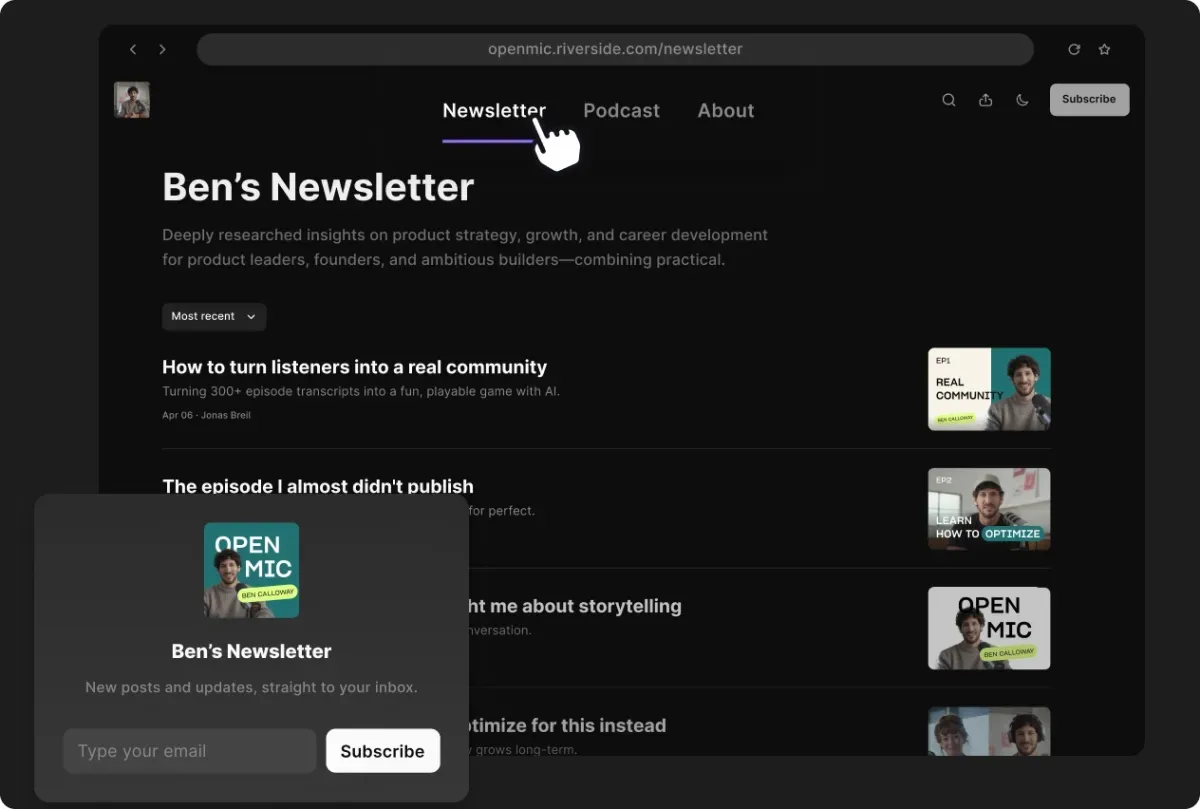
Riverside, a podcasting platform, is entering the newsletter publishing business with AI-generated newsletters based on user recordings. For decision-makers, it signals a shift in how creator platforms monetize attention, turning content into repeatable distribution assets.
Riverside, the podcasting platform, is officially stepping into newsletters. According to TechCrunch, users will be able to use AI to create newsletters based on their recordings. In other words, the company is not just helping people publish audio. It is trying to help them manufacture a second output from the same source material, without forcing creators to start writing from scratch.
For podcast creators, that is a big deal because newsletters are one of the most direct ways to “own” distribution. Instead of relying on platforms that control reach (and change rules when it suits them), a newsletter list is closer to an asset. Riverside’s bet is that AI can lower the friction between recording something and building an owned audience, and that this bridge is worth building inside the workflow, not as an external tool.
To understand why this matters commercially, look at how podcasting and creator publishing typically work. Podcasts have long had a split between production tools and distribution channels. Recording software can help capture great audio, but it does not automatically translate into recurring reader engagement. Newsletters, meanwhile, require sustained writing, formatting, and publishing cadence. Even when creators understand the value, the time cost is often the limiter.
AI newsletter generation based on recordings attacks that bottleneck. If Riverside’s users can turn an audio session into a newsletter, the platform moves closer to being the end-to-end machine: create the content, convert it into text, publish it, and potentially keep the creator in the same ecosystem. That matters for retention. Switching tools is annoying when it is just editing audio. Switching becomes more painful when the tool is integrated into a repeatable output pipeline.
There is also a subtle competitive angle. Many “creator platforms” try to win by adding new destinations for output, but newsletters are especially attractive because they can connect content to monetization. Sponsorships, affiliates, paid subscriptions, and direct selling are all easier when the creator controls the audience relationship. By enabling AI-generated newsletters from recordings, Riverside is effectively trying to make its users more valuable to themselves. That can lead to stickier usage and more reason to stay.
Second, this move sits inside a broader product pattern across media and software: turning one artifact into multiple distribution formats. Audio becomes text. Long-form content becomes short posts. A single recording can feed multiple channels if the platform can automate the conversion. The “conversion” layer is where new winners often form, because automation reduces marginal effort. Even if the newsletter output is not perfect, the workflow advantage can still win, especially for creators who want to publish consistently.
On the regulatory and compliance side, newsletter creation has a different set of considerations than podcast distribution, even if the source material is the same. For example, newsletters implicate issues around content accuracy, attribution, and how AI-generated text is presented to readers. Riverside does not mention specific policy details in the TechCrunch source excerpt provided, so it is worth treating this as a “watch closely” area rather than assuming the product fully addresses every concern. Still, when AI is used to transform recorded speech into written content, the risk profile includes misleading summaries, missing context, or unintended claims that were not present in the original recording.
Boards and executives thinking about similar moves should also consider the operational reality: newsletter publishing is not just text generation. It involves templates, deliverability, cadence, and analytics, plus the user experience of editing and approving outputs. The platform that makes this feel seamless can capture more of the creator’s lifecycle. The one that makes it feel like extra work will struggle.
Bottom line: Riverside’s entry into newsletter publishing, powered by AI that generates newsletters from recordings, is a clear attempt to turn podcast workflows into owned-audience outcomes. If the conversion from audio to newsletter lowers the effort enough to increase posting frequency, creators get a compounding distribution advantage. And for the platforms watching this space, the message is hard to miss: the next wave of creator tools may be judged less on whether they help you record, and more on whether they help you repeatedly distribute, without relying on someone else’s algorithm.
This story's Key Insights and Take-aways are locked.
Create a free account to unlock Executive Actions for one credit.
Register to UnlockAlways free for Executives Club members. Join the Club
More in Technology

Nvidia's $89B data center quarter: the 9 companies cashing in
The AI buildout is minting fortunes beyond GPUs, and memory, cloud, and cooling suppliers are riding the same wave.

Google quietly links your phone number to every Android account on your SIM
Adding a SIM now ties your phone number to all Google accounts - and future accounts inherit it. Here's the security and privacy stakes.

Hijacker AI 'Skynet mode' runs 100,000 attack steps against exposed models
Symantec caught a criminal AI agent that borrows other models, steals data, and mines crypto; the only relief is no confirmed victims yet.