
Google’s Nano Banana 2 Lite cuts AI image costs under 4 cents per 1,000 images
New model hits four seconds per image, aiming to win developers who generate visuals at scale.
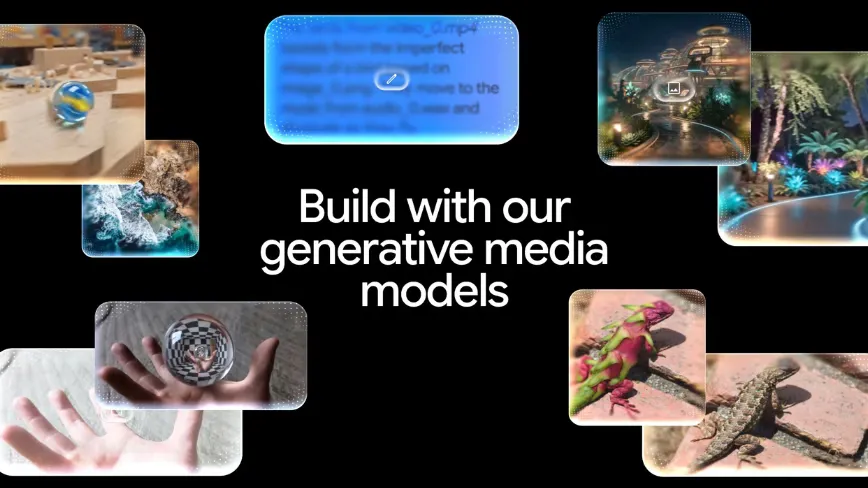
Google released Nano Banana 2 Lite, the newest entry in its Nano Banana AI image generator family. It targets developers with faster generation and lower per-image cost, including four-second outputs and under four cents per thousand images.
Google on Tuesday released Nano Banana 2 Lite, its fastest and cheapest model in the Nano Banana family of AI image generators. The pitch is blunt: it produces images in four seconds and costs under four cents per thousand images, positioning it as the company’s most aggressive push yet for developers who need to generate visuals at scale.
For decision-makers, the key detail is the unit economics. “Four cents per thousand” changes the conversation from experimentation to volume. If you are building a product where images are generated frequently, the cost curve matters as much as model quality, because your bill lands in the same place every month: infrastructure and inference spend.
This release also fits into a broader pattern we have been watching across generative AI tools, especially those aimed at developers. Early waves of AI image generation were often presented as demos or premium capabilities. Now, the market is shifting toward reliability, throughput, and predictable costs, because the customers are not just creators. They are businesses that need to ship features, refresh catalogs, personalize user experiences, and run marketing workflows. A model that can reliably produce images quickly and cheaply is easier to plug into automated pipelines, where human-in-the-loop review is either limited or reserved for higher-risk outputs.
Nano Banana 2 Lite’s “fastest and cheapest yet” positioning implies Google is directly targeting the scalability bottleneck developers hit when they move from proof-of-concept to production. In practical terms, when a system takes minutes per output or becomes expensive at scale, teams either throttle usage, lower resolution, reduce variation, or redesign their workflow around cheaper substitutes. A four-second generation time and under four cents per thousand images are exactly the kinds of constraints developers try to remove when they want to generate more variants, iterate faster, and test more angles with fewer delays.
There is also an operational angle. When generation becomes fast and cheap, the “latency budget” changes. Product teams can support more interactive experiences, where users expect near-immediate results. Marketing teams can run larger batch jobs without ballooning cloud bills. Even inside creative organizations, automation becomes more feasible when the underlying system is not financially painful to call repeatedly.
Regulation is the other background layer executives cannot ignore, even if the source does not go deep on policy. AI image generation increasingly exists in a world of rules and scrutiny around provenance, misuse, and transparency. When a capability is easy to access and inexpensive to run, the surface area for both legitimate and questionable uses expands. That is why, alongside product speed and cost reductions, responsible deployment practices typically become more important: content policies, auditing, and safeguards that help teams understand how images are generated and used. While this specific release focuses on speed and price, it lands in an environment where governance expectations are rising across jurisdictions and industries.
The second-order implication is board-level: cost structure is now a competitive feature. For Google, offering the fastest and cheapest option in its Nano Banana family can attract developers who otherwise would choose competing platforms based on pricing and performance. For other AI infrastructure providers, it raises the pressure to defend both throughput and unit costs. If you are a CTO planning an AI roadmap, or a CFO tracking inference spend, a model that turns expensive compute into a predictable line item can accelerate adoption. It can also intensify internal competition for resources, because teams will argue for more AI usage when the cost is no longer a constraint.
Strategically, Nano Banana 2 Lite is not just “another model.” It is a statement about where Google wants developers to land when they design for scale: speed measured in seconds, and cost measured in cents per thousand images. In a market where image generation often gets treated as a feature, this kind of pricing and performance can move image generation closer to core infrastructure, embedded into products rather than used occasionally. If you are leading an AI-enabled company, the stakes are simple: whoever can generate at scale with predictable economics moves faster, experiments more, and launches more often. That is how small technical metrics like four seconds and four cents per thousand end up shaping roadmap decisions across an entire industry.
This story's Key Insights and Take-aways are locked.
Create a free account to unlock Executive Actions for one credit.
Register to UnlockAlways free for Executives Club members. Join the Club
More in Technology

Nvidia's $89B data center quarter: the 9 companies cashing in
The AI buildout is minting fortunes beyond GPUs, and memory, cloud, and cooling suppliers are riding the same wave.

Google quietly links your phone number to every Android account on your SIM
Adding a SIM now ties your phone number to all Google accounts - and future accounts inherit it. Here's the security and privacy stakes.

Hijacker AI 'Skynet mode' runs 100,000 attack steps against exposed models
Symantec caught a criminal AI agent that borrows other models, steals data, and mines crypto; the only relief is no confirmed victims yet.