

Google turns quantum error correction data into on-the-fly recalibration for processors
Instead of stopping the machine to recalibrate, the system can use the same error-correction signals to keep drifting hardware in line.
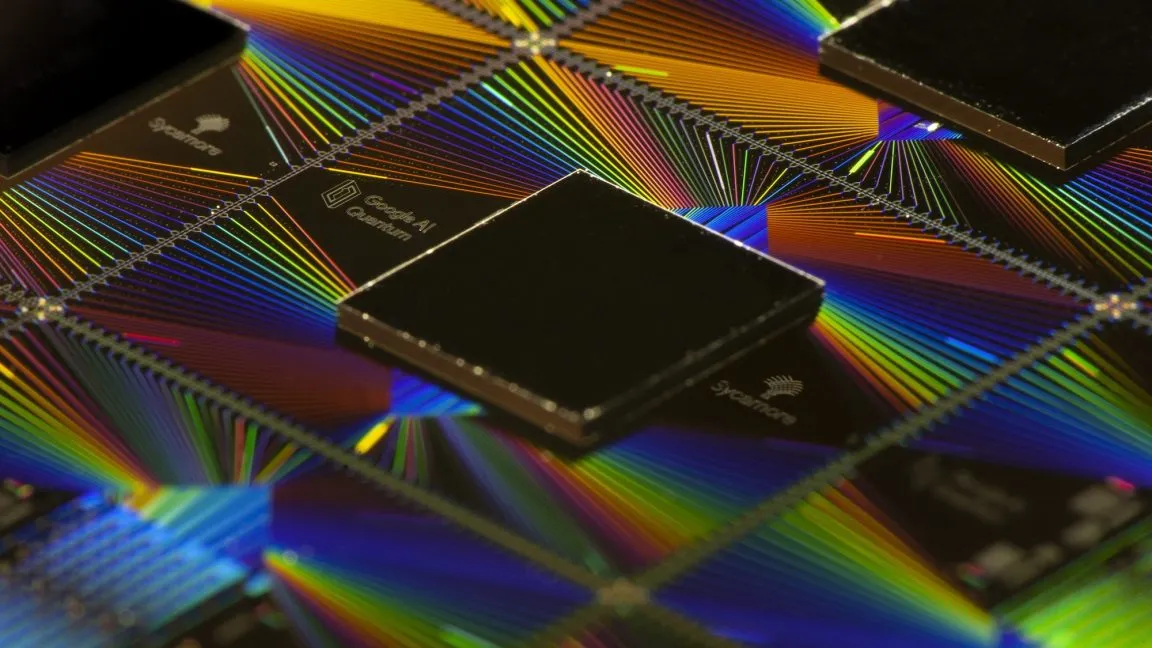
Google has figured out a way to recalibrate certain quantum processors using the same data generated during quantum error correction. For decision-makers, that could reduce a major operational bottleneck that currently makes long quantum computations harder to run.
Quantum computing’s biggest bottlenecks often sound like hardware fairy tales: enough high-quality qubits, connected into the error-corrected “logical qubits” that can actually run useful algorithms, plus the right quantum states to enable universal computation. But beneath those headline issues sits a quieter problem that hits only certain machines and can still derail real progress: calibration.
The catch is brutally practical. For devices Google and others build, where qubits are implemented using superconducting hardware, individual qubits can vary subtly from one another. Unlike qubits stored in something like an atom, where the qubit’s environment is different, superconducting qubits depend on microwave control pulses that can drift. That means the processor cannot rely on one fixed set of settings forever.
To compensate, current workflows put the device through calibration before computation. Engineers test different frequencies and amplitudes of the microwave pulses used to control the qubits. They search for the combination that produces the lowest error rates, then save those settings for use during calculations. It is a sensible loop. It also breaks down the moment you need long, complicated algorithms.
Why? Because you generally cannot perform the typical calibration process while the processor is actively running computation. Calibration involves actively testing pulse parameters, which conflicts with the idea of executing a single coherent algorithm from start to finish. Over time, drift becomes an issue. In other words, the system can be calibrated correctly at time zero, and then slowly fall out of calibration while the algorithm is still running. For quantum computing, where errors are already the rule and not the exception, that drift can make the error-corrected story harder to sustain for deep computations.
Here is where Google’s approach matters. The development described in the source is that calibration can be done using the same data used for error correction. The idea is straightforward in concept: error correction already measures and surfaces information about what the quantum system is doing wrong. If you can leverage that feedback directly to adjust your control settings, you can recalibrate without stopping the computation for a separate calibration routine.
The “how” described at a high level is reinforcement learning. Reinforcement learning uses error information to adjust control algorithms. In this context, the processor continues running, the error-correction machinery collects data about errors, and that information feeds into a learning loop that updates the control strategy. Instead of treating calibration as a pre-flight checklist, the approach treats it like a live control system that can constantly recalibrate as conditions drift.
This is only possible for certain types of hardware, because calibration challenges differ depending on the qubit platform. The source is explicit that the constant recalibration idea only affects some hardware types. Superconducting qubits are the key example because they involve microwave pulses that can drift. For other platforms where the qubit itself is held by different physical mechanisms, the drift dynamics and calibration constraints may be different, which is why the advantage is not universal.
From a business and governance perspective, this is exactly the kind of operational improvement boards should pay attention to. Investors and leadership teams often focus on headline performance metrics, like error rates and the number of physical qubits. But the ability to keep the machine stable during long jobs is an execution bottleneck. Long computations are where quantum systems most need error correction to do its job, and also where calibration drift can undermine the effort. Reducing interruptions and making the control loop more resilient can change how realistic end-to-end demonstrations feel.
Regulatory framing is not central in the source, but the practical implication is still relevant. Quantum computing is not regulated like a chemical plant where you file process documents for each run. Still, stakeholders across industry and government care about repeatability and reliability, especially when results might influence funding decisions or downstream commercialization. A system that can recalibrate continuously using error-correction data is a step toward more consistent operation, which can help teams argue that progress is not fragile.
There is also a strategic second-order implication for competing platforms and capital allocation. Even if a rival has similar hardware progress, a weaker operational loop could turn the same theoretical error correction gains into weaker real-world performance for long algorithms. If one player can constantly recalibrate without halting computation, they can spend more time doing useful work and less time in pre-run tuning. For decision-makers comparing technical roadmaps, that difference can matter as much as incremental improvements in qubit counts.
Put plainly: between today’s lab operations and useful quantum computing sits calibration, drift, and the fact that you cannot usually run calibration while computing. Google’s reported method uses reinforcement learning to turn error correction data into on-the-fly recalibration. If it generalizes to more systems and grows robust enough for production-grade workflows, it could help quantum processors stay in tune long enough to make error correction more than a promise.
This story's Key Insights and Take-aways are locked.
Create a free account to unlock Executive Actions for one credit.
Register to UnlockAlways free for Executives Club members. Join the Club
More in Technology

Meta yanks Instagram Muse Image after privacy and copyright backlash
The Instagram A.I. tool is pulled within days, forcing executives to rethink product risk, legal exposure, and trust.
Phia faces ‘cookie stuffing’ accusations that could misdirect affiliate commissions and credits
A Bloomberg investigation says Phia credited itself for purchases it did not earn, raising trust and compliance stakes.

Meta turns off Instagram tagging that enabled AI deepfakes of public accounts
After backlash, Meta disables the feature that let anyone generate AI images from public Instagram accounts via @-mentions.