
Gulf council slams Iran’s strikes as “war crimes” while US hits for a seventh straight night
The Strait of Hormuz fight is turning into a civilian protection reckoning, with Kuwait’s desalination plant among the hardest hit.

The Gulf Cooperation Council condemned Tehran’s attacks on civilian sites as “war crimes” while the United States and Iran continued exchanging strikes on Saturday. US Central Command carried out a seventh consecutive night of attacks as Iran struck neighboring Gulf states, with significant damage reported at a water desalination plant in Kuwait.
On Saturday, the United States and Iran kept exchanging strikes as tensions over control of the Strait of Hormuz escalated, and the Gulf Cooperation Council publicly condemned Tehran’s actions. In the same moment that US Central Command carried out a seventh consecutive night of attacks targeting military infrastructure and maritime capabilities, the Gulf bloc described Iran’s strikes on civilian sites as “war crimes.” The message to the region is not subtle: this is no longer just about vessels and waterways. It is now about who claims legitimacy when the collateral damage shows up.
The most significant damage reported in the broader escalation was at a water desalination plant in Kuwait, a detail that matters far beyond the battlefield. Water and power are infrastructure the civilian economy runs on. When desalination gets hit, you are not just dealing with a repair job. You are potentially affecting supply reliability, public health risk, and household and industrial continuity, especially in Gulf states where desalination is a core source of potable water. That kind of disruption tends to trigger fast political pressure, emergency procurement, and operational continuity planning, even if the military actions are happening somewhere else.
Operationally, the rhythm of the conflict is clear in the source. US Central Command carried out a seventh consecutive night of attacks, and its targets were described as military infrastructure and maritime capabilities. That implies a focus on shaping the ability of forces to operate at sea or project power from key assets. Iran’s side, meanwhile, launched strikes on neighboring Gulf states, widening the geographic footprint of the tit-for-tat. When both sides keep striking across domains like that, you get an escalation dynamic where each night’s actions become the justification for the next, compressing time for diplomacy.
Zoom out one level and you can see why the Gulf Cooperation Council’s language is strategically charged. Calling attacks “war crimes” is a legal and reputational escalation, not just a political insult. It positions the Gulf states for international advocacy and potentially influences how they frame evidence, document incidents, and coordinate with partners. For executives and boards in the region, that matters because these words affect how regulators, insurers, contractors, and counterparties interpret risk. Once the framing shifts from “security incident” to “civilian harm,” compliance expectations around humanitarian impact, facility resilience, and incident reporting often rise quickly.
There is also a market angle hiding inside that Kuwait desalination detail. Desalination plants are high-dependability assets that typically rely on a mix of imported equipment, specialized maintenance services, and supply chains that can be disrupted by the very kind of maritime instability both sides are contesting. Even if the damage is localized, the perception of vulnerability can widen into higher insurance costs, revised shipping schedules, and stricter procurement controls for anything considered “critical infrastructure adjacent.” That can ripple into budgets and timelines for industrial operators, utilities, and infrastructure developers, especially those who depend on steady water supply to keep operations running.
For US and Iran decision-makers, the incentives are also uneven. US Central Command’s described focus on maritime capabilities signals an attempt to preserve freedom of action in the region's shipping lanes while pressuring military assets. Iran’s strikes on neighboring Gulf states, as characterized in the source, appear designed to impose costs beyond purely naval contests. When those approaches collide, you get the worst kind of feedback loop for civilian systems: attacks designed to be strategically meaningful can still translate into operational disruption at civilian facilities like water infrastructure. That is exactly where the Gulf Cooperation Council’s condemnation lands with force.
The second-order implication for peers in similar roles, especially executives overseeing infrastructure, logistics, or regulated utilities, is how quickly “security” becomes a governance issue. When a water desalination plant is among the most significant damage reported, boards should treat resilience as a fiduciary topic, not a technical footnote. That includes asking how quickly operations can transition if critical systems are offline, how incident documentation will be handled, and whether vendors and insurers can support continuity under heightened scrutiny. In escalation scenarios, the organizations that navigate the next steps best are usually the ones that already have playbooks for critical infrastructure continuity, regulatory documentation, and stakeholder communications.
Bottom line: Saturday’s developments are not just another round of strikes. A seventh consecutive night of US attacks and Iran’s strikes on neighboring Gulf states have reached civilian infrastructure with significant reported damage at a water desalination plant in Kuwait. The Gulf Cooperation Council’s “war crimes” framing tells you the reputational and governance consequences are landing now, which means the strategic stakes for decision-makers are immediate, not theoretical.
This story's Key Insights and Take-aways are locked.
Create a free account to unlock Executive Actions for one credit.
Register to UnlockAlways free for Executives Club members. Join the Club
More in Politics

LA County: DOJ's 20,000 'noncitizen' voter list is 'unreliable,' includes U.S.-born
Preliminary review by Los Angeles County election officials finds errors in the federal list, raising the stakes for voter roll integrity ahead of November.
Trump's $1.5B Pentagon chip investment lands in North Carolina
A $1.5 billion defense infusion for North Carolina chipmaking signals a new era of Pentagon-backed reshoring - here's what it means for the industry.
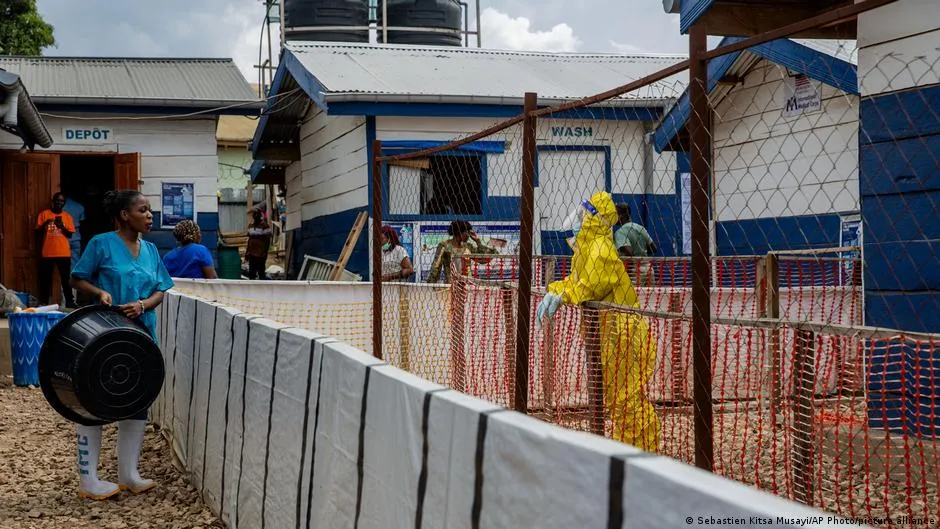
Nigeria confirms first Ebola case in Abuja, a woman just off a Uganda flight
Health Minister Muhammad Ali Pate says the patient flew in from Uganda, putting Africa's latest outbreak on Nigeria's doorstep.