

Halliday’s G2 reboots its smart glasses after Engadget’s 54/100 review
Priced from $499 and shipping in September, Halliday is trying to recover a first impression built on camera-free meetings.
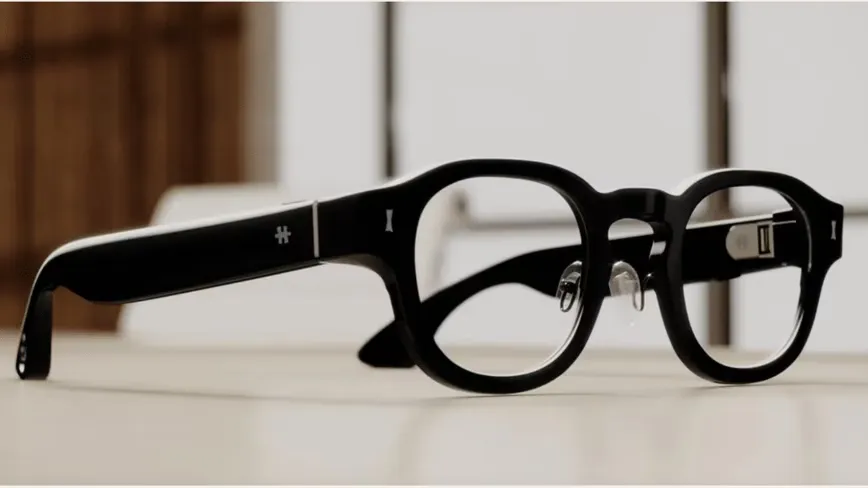
Halliday has unveiled the G2 smart glasses, a camera-free redesign aimed at meetings, priced from $499 and shipping in September. The company is making a second attempt after the original model was panned by reviewers including Engadget, which scored it 54 out of 100.
Halliday is doing something hardware founders rarely get to do: resetting a first impression before the market fully moves on. On Tuesday, the company unveiled the G2 smart glasses, priced from $499 and shipping in September. The “why now” is obvious in the product story itself, because the original glasses were not just “mixed.” They were panned, with Engadget awarding 54 out of 100, which the publication described as one of its lowest marks.
That rating is the core problem Halliday is trying to solve, and it matters precisely because hardware launches do not get many do-overs. Once people form a mental model, it sticks. If the first device reads as disappointing, every future iteration has to fight the memory of the old one, not just the expectations of the new. The G2 is built around a clear pivot: camera-free glasses aimed at meetings. In other words, Halliday is not betting its comeback on “look at me” spectacle. It is trying to win an everyday use case where practicality and comfort can outweigh wow-factor.
To understand why this pivot is strategically sharp, look at how smart glasses typically get judged. Reviews often blend product design, usability, battery and performance, and the question of whether the device meaningfully helps with real tasks. For meeting-focused wearables, the bar is different. People do not want to feel like they are wearing a gadget that invites questions mid-discussion. They want something that fades into the environment while supporting a workflow. By positioning the G2 as camera-free, Halliday is directly addressing a recurring friction point in this category: camera presence can trigger discomfort, privacy concerns, and social awkwardness even when the technology might not be used aggressively.
This is where regulatory background starts to matter, even if the company is not leading with it in the product pitch. When a device includes cameras, it tends to attract more scrutiny in workplaces and public spaces, and it increases the burden on users and organizations to set rules and expectations. Camera-free design does not erase privacy concerns entirely, but it reduces the specific “always watching” anxiety that can derail adoption. For enterprise-style use cases like meetings, the difference between “can it record?” and “can it assist?” is often the difference between being a tool and being a liability.
There is also a capital and credibility angle. A crowdfunded hardware startup usually lives or dies by trust. Backers and early customers are effectively making a wager on execution, not just design. When a product gets a low review score like 54 out of 100 from a major outlet such as Engadget, the second-order effect is not merely bad press. It becomes harder to convert interest into purchases, harder to secure partnerships, and harder for future launches to clear scrutiny. The G2 unveiling is therefore more than a spec refresh. It is a credibility repair job, and it is happening on a tight timeline: priced from $499, shipping in September, in a market where “late and disappointing” is a faster death than “early and imperfect.”
Halliday is also implicitly acknowledging a harsh truth about first impressions in consumer hardware. Early critics often shape what mainstream buyers think the product is “for.” If reviewers see it as failing to deliver on fundamentals, the device gets relegated to a novelty shelf. The fastest way back from that shelf is a product message that is easy to understand and easy to justify. “Camera-free comeback aimed at your meetings” is about as plain as it gets. It tells buyers what it is for, what it is not for, and why it could fit into a routine.
For executives and boards watching similar ventures, the subtext is equally important. Second launches are opportunities, but they also expose governance questions. Hardware roadmaps are difficult, and pivoting after a widely negative reception can be a sign of resilience or a sign of mismatch between early planning and market reality. The best boards treat a comeback launch like an audit of assumptions: Was the original value proposition wrong, or was execution lacking? Was the intended buyer unclear? Did the product address real constraints, like privacy and usability in meetings, or did it assume people would tolerate friction?
The G2 is Halliday’s attempt to answer those questions in public, with a concrete product and a concrete commercial plan: $499 pricing, September shipping, and a camera-free meeting focus meant to defuse the most emotionally charged objections around smart glasses. If it lands, Halliday gets a chance to turn a low-score legacy into a new beginning. If it misses, it is not just another release. It is another confirmation that in hardware, the market remembers, and it does not wait.
This story's Key Insights and Take-aways are locked.
Create a free account to unlock Executive Actions for one credit.
Register to UnlockAlways free for Executives Club members. Join the Club
More in Technology
Musk's 'adieu' and 'blow torch' posts cost him the Twitter bird trademark
A federal judge ruled Musk's own tweets about retiring the Twitter brand are evidence that killed the iconic logo trademark.
Blacklisted Inspur Still Got Nvidia's Best AI Chips via a Subsidiary
Washington blacklisted Inspur for military ties, but its subsidiary kept shipping Nvidia's top AI chips to China's leading firms - exposing a compliance gap with huge stakes.

Cyborg cockroaches can now carry cameras and inject medicine on command
A WIRED report shows electrodes, cameras, and injection devices turning live roaches into remote medics for disaster rescue.