

Hamas agreed to disarm under Trump ceasefire plan, but Israel will not withdraw first
A US-backed roadmap hinges on weapon handover, yet the military pullback is explicitly blocked until full disarmament.
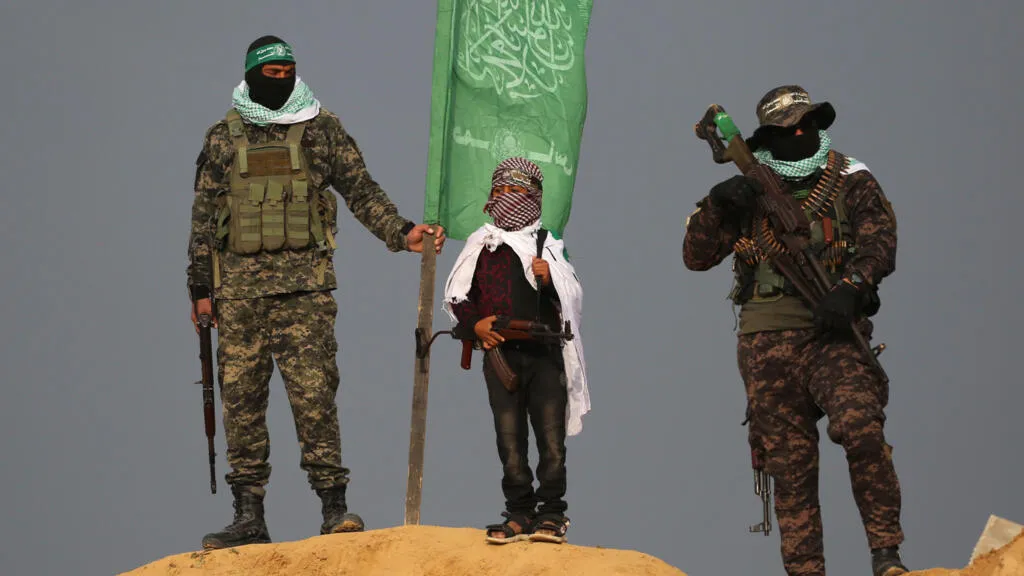
Hamas said it agreed to hand over its weapons to a Palestinian governing committee as part of a US-backed roadmap tied to a gradual Israeli withdrawal from Gaza. For decision-makers, the deal structure locks in a high-stakes sequencing dispute with real operational and financing knock-on effects.
Hamas says it has agreed to hand over its weapons to a Palestinian governing committee. The catch, according to Israel, is that Israel will not withdraw from Gaza until the militant group is fully disarmed.
That sequence is the entire story, and it is why this “agreed to disarm” headline is not the same as “withdrawal begins tomorrow.” The dispute is not about whether disarmament is mentioned in the roadmap, but about who moves first, what “full” means in practice, and how enforcement works when the party waiting to act has already stated it will not pull back until it is satisfied.
To understand why this matters beyond the headlines, you have to look at how ceasefire roadmaps are usually structured: they rely on step-by-step reciprocity. One side grants a security concession, the other side grants a territorial or military concession. When the security concession is framed as “hand over weapons” but the territorial concession is conditioned on “fully disarmed,” the incentives tilt toward delay, verification fights, and escalatory risks. Hamas is signaling willingness to transfer weapons to a Palestinian governing committee. Israel is signaling it will not accept anything less than complete disarmament before it changes its posture in Gaza.
The Palestinian governing committee becomes a key junction in this design. A transfer to a governing body implies an attempt to move from a purely militant control model to an institutional one. That is politically consequential because committee control is inherently about legitimacy and governance. But it also makes the mechanics of disarmament harder to resolve: committees are affected by internal Palestinian politics, administrative capacity, and the practical challenge of secure custody, oversight, and monitoring. Even without adding new facts, the structural problem is clear: weapon handover is one action; durable control is another.
Then there is the US-backed element. The source describes the roadmap as “US-backed,” which typically implies American involvement in shaping sequencing, messaging, and the political framework around the steps. For investors, operators, and executives who track risk, “US-backed” matters because it signals a degree of international engagement rather than a purely bilateral ceasefire. But US backing does not automatically solve enforcement. Roadmaps can be negotiated at the diplomatic level and still fail operationally when the parties do not agree on verification or timing.
This is also a compliance and risk-management story, even if it is not dressed in the language of compliance. When conflicts generate sudden changes in control, logistics, and security conditions, they can quickly affect sanctions exposure, payment rails, shipping routes, and humanitarian supply chains. Organizations that operate in the region, or have counterparties with links there, tend to update risk controls when political arrangements like this shift. The “gradual Israeli military withdrawal” phrase in the source highlights an expected change in operational conditions, but Israel’s stated refusal to withdraw until “fully disarmed” signals that the timeline may be contested.
Boards and senior leadership teams should treat the sequencing dispute as a leading indicator. If full disarmament becomes the gating condition and if parties disagree on what counts as compliance, then the “gradual withdrawal” can stall. That means uncertainty around stability, infrastructure access, and governance transitions. Second-order effects can show up in insurance pricing, project schedules, and the underwriting assumptions behind any deal touching Gaza or adjacent logistics corridors.
Finally, this development reshapes negotiating dynamics for everyone watching. Hamas is putting a disarmament offer on the table by stating it has agreed to hand over its weapons. Israel is hardening the condition by stating it will not withdraw until full disarmament. The result is a roadmap with a built-in choke point: verification and sequencing. In conflict resolution, the side that can slow movement without appearing to break the agreement often holds leverage. Here, Israel’s explicit stance positions “withdrawal” as the lever it controls, while Hamas positions “handover” as the lever it claims to have completed or is ready to complete.
For executives in adjacent sectors, the key question is not just whether disarmament is agreed to, but how quickly and credibly “fully disarmed” can be established. If that threshold cannot be met to Israel’s satisfaction, the roadmap stays on paper. If it can, the region could move into a different operational reality. Either way, decision-makers should read this as an enforcement test, not a victory lap.
This story's Key Insights and Take-aways are locked.
Create a free account to unlock Executive Actions for one credit.
Register to UnlockAlways free for Executives Club members. Join the Club
More in Politics
Obama Defends Ilhan Omar After Agents Search Her Home in Trump Inquiry
The former president's intervention raises the stakes in a federal probe into immigration paperwork that has put a prominent progressive lawmaker in the crosshairs.

Blair-era minister: cut welfare to fund youth job support
Alan Milburn's call for welfare cuts to fund employment support opens a Labour fight over benefits and the Neet crisis.

Hot September CPI: energy costs surge, voters feel the squeeze before midterms
The latest inflation print lands as Trump campaigns for GOP control of Congress, putting cost-of-living worries at the center of the midterm fight.