

Harvard builds a silicon DNA-writing chip that runs on electricity and enzymes
Dozens of DNA sequences at once, using water-based enzymes, pointing to cleaner manufacturing and new storage paths.
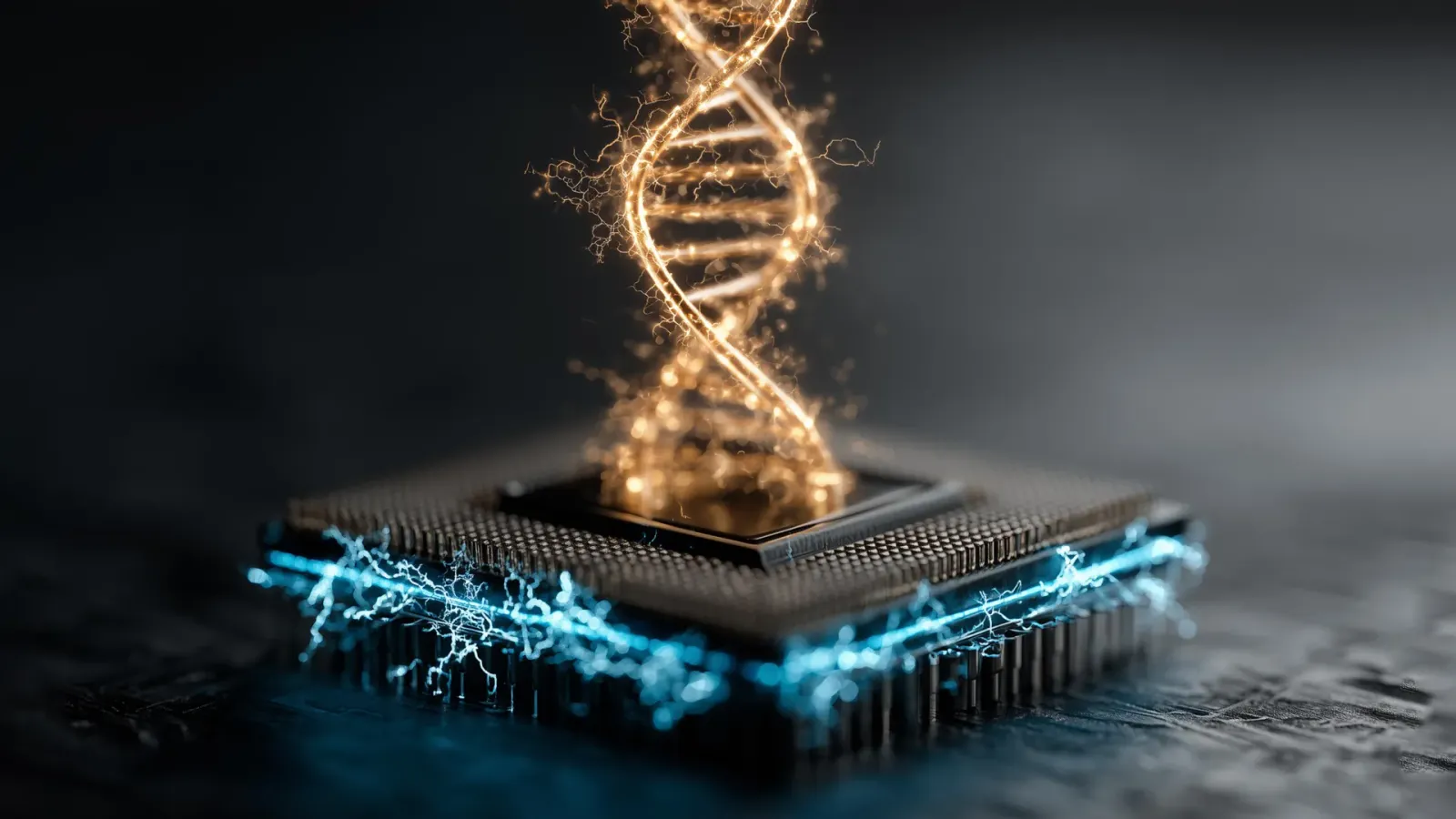
Harvard scientists created a silicon chip capable of writing dozens of DNA sequences simultaneously by using electricity and water-based enzymes. For decision-makers, it signals a potentially cleaner route to DNA manufacturing that could later enable portable DNA-writing devices and DNA data storage.
Harvard scientists have turned a silicon chip into a DNA writing machine. The chip can write dozens of DNA sequences simultaneously, using electricity plus water-based enzymes. That matters because conventional DNA manufacturing typically involves more complex, messier chemistry. This new approach aims to be cleaner, and the “chip” part hints at a workflow that could scale and even travel, rather than staying trapped in specialized labs.
Put simply: the breakthrough is not “a new DNA idea.” It is a hardware-and-chemistry system that can perform multiple DNA writes in parallel. That “dozens at once” capability is the real headline, because it attacks one of the bottlenecks that makes DNA manufacturing expensive and operationally painful. If you can compress writing into something closer to chip-style execution, you can start thinking about different product shapes, from device-like DNA writing to large-scale storage formats that need volume.
To understand why executives should care, zoom out to what DNA can be used for. DNA is being explored as an information storage medium because it can theoretically store huge amounts of data in a compact format, and it is intrinsically addressable at the sequence level. But turning “theoretical storage density” into an operational business depends on the ability to write and manipulate DNA reliably, at scale, and with manageable cost and environmental burden. A cleaner manufacturing approach is not just a green talking point; it can change unit economics, throughput planning, and supply chain complexity.
There is another incentive layer here: hardware companies and manufacturing operators tend to prefer processes that can be standardized. A silicon chip architecture suggests modularity, repeatable conditions, and the possibility of parallelization. The source also makes clear that this system relies on electricity and water-based enzymes. For context, enzymes are the biological workhorses that can catalyze reactions in aqueous environments. Pairing them with a chip can make the process more controllable than approaches that depend on more intensive chemical handling.
Of course, the path from “chip in a study” to “industry system” is rarely smooth. The source explicitly flags that new chemistry will be needed to scale the technology further. That is the part that should keep boards honest. Even if the device concept is exciting, scaling in DNA manufacturing often means overcoming limits in reaction efficiency, fidelity, stability, and how well the system performs across many sequences. In other words, today’s platform may be a proof of concept for parallel writing, but growth depends on chemistry upgrades that can support higher throughput, longer runs, and consistent outputs.
Regulatory framing is likely to come later, but it is not irrelevant. DNA manufacturing touches areas that regulators watch closely: biosafety, handling practices, and quality controls. The source does not mention regulators or approvals, so there is no need to invent timelines. Still, executives should note that “cleaner” processes can reduce certain operational headaches, even if they do not eliminate the need for rigorous quality systems. If a portable DNA-writing device ever becomes real, the compliance conversation will shift. Devices intended for broader deployment usually trigger more scrutiny around user workflows, containment, and traceability.
Now for the second-order implication executives should actually put on a risk register: if DNA writing becomes more chip-like and potentially cleaner, it can change who gets leverage in the supply chain. Today, DNA writing is often dominated by specialized manufacturing ecosystems. If future systems allow portable DNA-writing devices, the value chain could fragment, with more capability moved closer to end users or nearer to where data is generated. And if massive DNA data storage is on the table, the winners are likely to be those who can pair efficient writing with robust readout and error management, because storage is only valuable if it is retrievable and reliable.
In plain terms, this Harvard development is a signal. It says the field is starting to hybridize biology and electronics in practical ways, not just lab experiments. The near-term milestone is writing dozens of DNA sequences simultaneously using electricity and water-based enzymes on a silicon chip. The longer-term stakes are big: portable DNA-writing devices and massive DNA data storage. For leaders in biotech, data infrastructure, and manufacturing, the strategic question is whether your organization is positioned for a world where DNA writing could look more like computation and less like chemistry-only craft.
This story's Key Insights and Take-aways are locked.
Create a free account to unlock Executive Actions for one credit.
Register to UnlockAlways free for Executives Club members. Join the Club
More in Science

Alaska's 1,580-foot tsunami had warning signs. Scientists just found them.
Rapid glacier retreat, heavy rainfall, and thousands of tiny tremors preceded Alaska's 1,580-foot tsunami, a warning for every coastal community in a warming world.

The rare mutation that lets high-risk brains dodge Alzheimer's
Scientists found a natural defense against protein buildup, opening a new path to preventive treatments.

3,000 steps a day may halve Alzheimer's decline, study finds
New research links a modest daily walk to less tau buildup and nearly half the cognitive and functional decline, even for those with early signs.