

Hegseth and Gen. Dan Caine testify Tuesday on Iran supplemental after 3 deaths
Why the Senate hearing on the White House funding request matters for war planning and oversight.

Defense Secretary Pete Hegseth and Chairman of the Joint Chiefs of Staff Gen. Dan Caine will testify Tuesday before the Senate on the White House’s supplemental funding request. The hearing comes days after an escalation in the U.S.-Iran war left three service members dead.
Defense Secretary Pete Hegseth and Chairman of the Joint Chiefs of Staff Gen. Dan Caine are set to testify Tuesday before the Senate on the White House’s supplemental funding request, according to The Hill. This is not happening in a calm, procedural bubble. It comes just days after an escalation in the U.S.-Iran war left three service members dead, a detail that immediately raises the stakes for how lawmakers evaluate the request and how quickly the military needs money to respond.
Hegseth and Caine will appear alongside Agriculture Secretary Brooke Rolling as part of the package related to the supplemental, making the hearing broader than a narrow defense discussion. In other words, this is a political and operational moment at the same time: the White House is asking for additional funds, while Congress is effectively asking, “What changed, what do you need next, and why?” The timing matters because, in national security funding, the clock runs faster than the paperwork. When deaths follow escalation, the scrutiny hardens. When lawmakers feel urgency, they push for speed. When they feel risk, they push for accountability.
To understand why decision-makers should care, it helps to remember how supplemental funding works. Supplemental requests typically arrive when existing budgets cannot cover emerging needs, which means Congress has to decide in real time whether the new requirements are truly outside the original planning assumptions. That is a high-pressure standard, and it becomes even more sensitive during contested, fast-moving conflicts where requirements can shift week to week. A supplemental request can be a lifeline for readiness, but it also triggers the “justify the delta” question: why the original plan was insufficient, and what precisely the additional money will enable.
The Hegseth-Caine testimony also matters because it is coming from the two top decision centers inside the military chain of command. Hegseth brings the civilian defense perspective, while Gen. Dan Caine represents the operational posture and joint force perspective. In hearings like this, senators typically want the same thing from both roles, even if they phrase it differently. They want clarity on the threat and the response plan. They also want a credible bridge between strategy and spend. In plain English: not just “we need more,” but “here is what we will do differently with more.”
And then there is the unusual appearance of Agriculture Secretary Brooke Rolling. The source notes Rolling will be part of the group testifying alongside Hegseth and Caine. That detail suggests the supplemental funding request may touch areas beyond direct kinetic operations, and it signals that the administration is treating the escalation as a multi-sector issue. In these moments, second-order effects tend to show up quickly. Agencies that do not normally dominate defense hearings can still get pulled in when disruptions spill into supply chains, domestic impacts, or other operational needs. For executives and boards watching the public policy environment, the takeaway is that “national security” is rarely a single-lane story. When Congress sees cabinet-level breadth, it often expects breadth in the justification.
The oversight dynamic is also worth flagging. After three service members were killed following an escalation in the U.S.-Iran war, lawmakers are unlikely to treat the supplemental request as a routine budget adjustment. Even if the hearing is focused on funding mechanics, the human reality of those deaths sits behind every question about urgency and execution. That can lead to tighter controls on how funds are allocated, more demands for reporting, and sharper attention to timelines and measurable outcomes.
For other leaders in government contracting, defense-adjacent sectors, and the broader capital markets that track federal budgets, this hearing can act like a signal flare. It indicates that the administration is seeking additional resources now, not later. It also signals that Congress is actively preparing to test the request, which can influence implementation schedules and procurement planning downstream. Even for organizations far from the Senate chamber, supplemental funding hearings can indirectly affect demand, contract sequencing, and regulatory expectations as budgets shift and scrutiny intensifies.
Strategically, the key moment here is Tuesday's testimony, driven by the combination of a White House supplemental request and a fresh escalation with three service members dead. If Hegseth and Gen. Dan Caine can align threat assessments with specific needs, it can accelerate congressional buy-in. If lawmakers view the request as too vague or insufficiently tied to operational changes, the supplemental could face friction. Either way, for anyone operating near the intersection of national security policy and funding, this hearing is a reminder that money decisions and battlefield realities are increasingly coupled, and Congress is where that coupling gets tested.
This story's Key Insights and Take-aways are locked.
Create a free account to unlock Executive Actions for one credit.
Register to UnlockAlways free for Executives Club members. Join the Club
More in Politics

LA County: DOJ's 20,000 'noncitizen' voter list is 'unreliable,' includes U.S.-born
Preliminary review by Los Angeles County election officials finds errors in the federal list, raising the stakes for voter roll integrity ahead of November.
Trump's $1.5B Pentagon chip investment lands in North Carolina
A $1.5 billion defense infusion for North Carolina chipmaking signals a new era of Pentagon-backed reshoring - here's what it means for the industry.
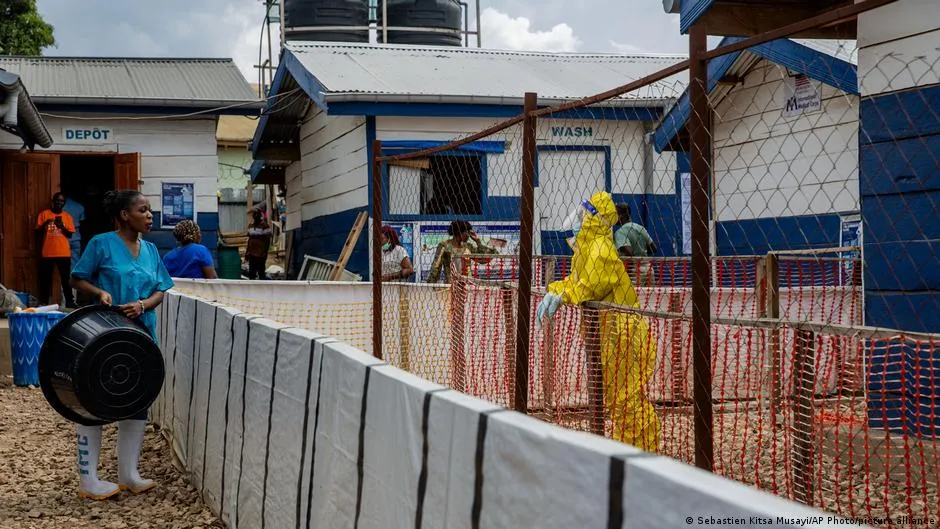
Nigeria confirms first Ebola case in Abuja, a woman just off a Uganda flight
Health Minister Muhammad Ali Pate says the patient flew in from Uganda, putting Africa's latest outbreak on Nigeria's doorstep.