
Homo floresiensis scavenged Komodo leftovers, not big-game hunting or fire mastery
A goat-to-Komodo experiment and thousands of ancient bones reshape the playbook for what “hobbit” species actually did.
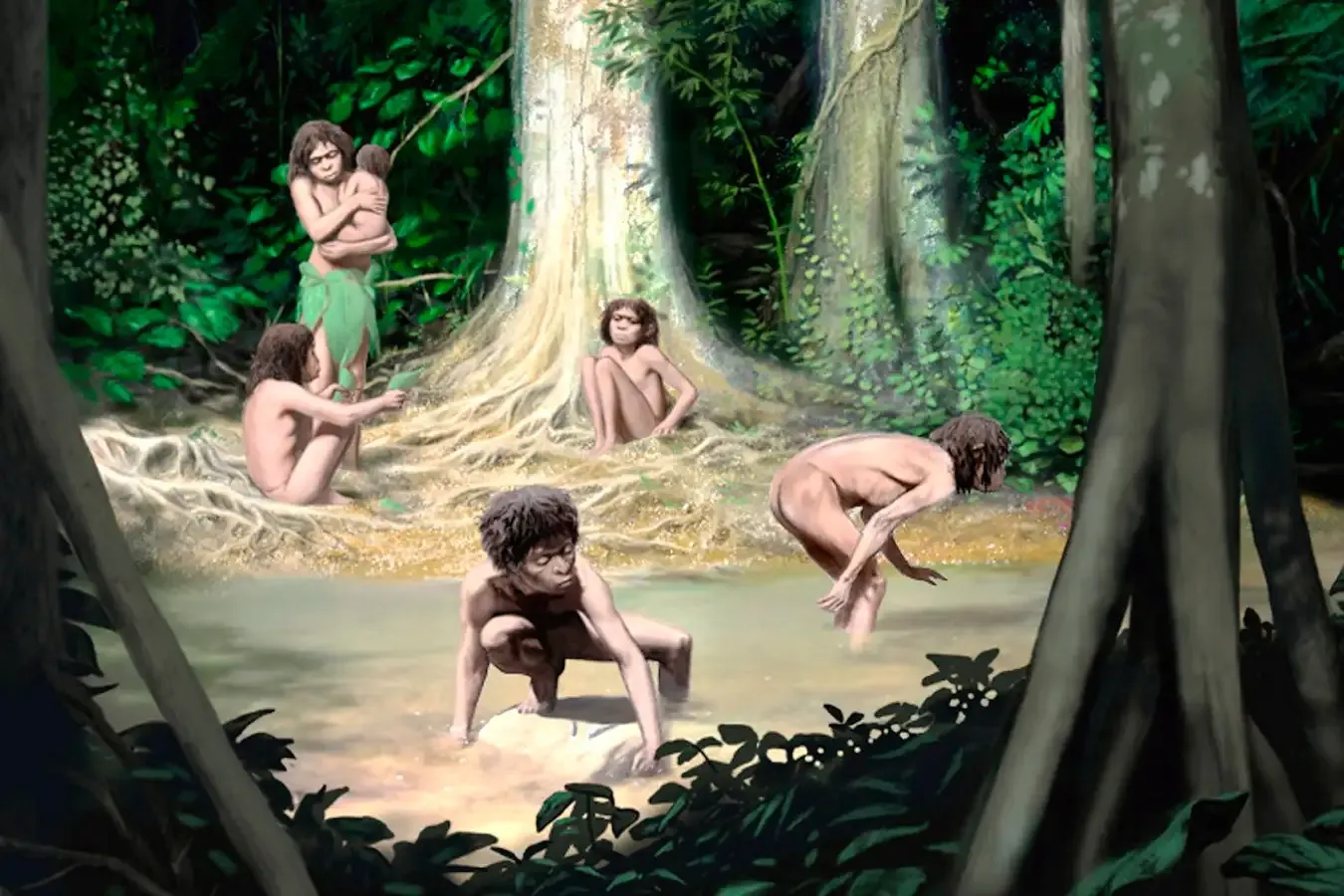
Researchers used a feeding experiment with a dead goat and a Komodo dragon, then analyzed thousands of ancient bones. The combined evidence suggests Homo floresiensis was neither a skilled hunter of big game nor a master of fire.
A “hobbit” species, Homo floresiensis, may have been closer to a scavenger than a super hunter. New Scientist reports that an experiment feeding a dead goat to a Komodo dragon, paired with an analysis of thousands of ancient bones, points to a simple but consequential idea: Homo floresiensis was not systematically hunting big game, and it was not a master of fire.
That conclusion matters because it attacks two of the most tempting storylines in human evolution. If you picture early hominins as the kind of creatures that bring down large animals on purpose and then cook the results with fire, the new findings pull the rug. Instead, the evidence suggests they were getting meat by exploiting what predators left behind. In other words, the “meat pipeline” may have run through opportunism and leftovers, not coordinated big-game hunting and fire-based processing.
To understand why the goat-and-Komodo experiment is such a big deal, think like an investigator, not a tourist. Scientists took a dead goat and fed it to a Komodo dragon. This is essentially a controlled way to ask: when a large predator consumes an animal, what kinds of physical signatures does it leave behind? In the real world, bones and feeding traces can be messy. But if you can generate a known baseline by observing how bones are damaged under specific circumstances, then you can better interpret what ancient bone assemblages might represent.
Then comes the other half of the evidence: the analysis of thousands of ancient bones. The scale is important. Single finds can mislead. Thousands can reveal patterns. New Scientist’s report frames the combined approach as strong enough to suggest Homo floresiensis was neither practiced at hunting large prey nor capable of reliably using fire. That is a reversal of sorts, because fire and big-game hunting are often treated as big milestones that separate “advanced” survival strategies from more limited ones.
From an executive perspective, the lesson is about inference and diligence. When a hypothesis has become culturally sticky, the burden of proof rises. Here, the researchers did not just argue from one line of reasoning. They used both experimental observation and a large-scale bones dataset to evaluate whether the likely sources of meat in Homo floresiensis life were hunting or scavenging, and whether fire was present as a consistent tool. If the bone damage patterns and the broader archaeological record align with predator leftovers rather than purposeful hunting, the “how” of survival changes.
That changes second-order implications too. If Homo floresiensis was not a master of fire, then assumptions about food processing, warmth, and cooking-based nutrition that often accompany evolutionary narratives become harder to justify for this species. If it was not a skilled big-game hunter, then the energy budget and risk profile of survival also shift. Hunting large animals typically implies specialized behaviors, coordination, and a certain degree of tool or technique sophistication. Scavenging, by contrast, shifts emphasis toward mobility, timing, and the ability to exploit opportunities when predators move on.
Now zoom out to why this even belongs in a business-style briefing. Evolutionary claims, like market strategies, often get oversimplified into neat trajectories: step one, step two, step three. The New Scientist framing is a reminder that reality is usually less linear. And that has a governance angle for anyone who deals with high-stakes decisions under uncertainty. When evidence is mixed, the winning move is triangulation. Use experiments to model mechanisms, use large datasets to test whether those mechanisms match the record, and do not anchor to the most emotionally satisfying story.
For boards, founders, and investors who routinely face “big milestone” narratives in product, biotech, or deep tech, the strategic stake is clear. The world rarely rewards tidy myths. It rewards the version of events that best fits physical evidence. In this case, the evidence suggests Homo floresiensiensis relied on leftovers from Komodo dragons rather than mastering fire and big-game hunting. The takeaway is not just what Homo floresiensis did. It is how quickly accepted narratives can unravel when experiments and thousands of bones tell a different story.
This story's Key Insights and Take-aways are locked.
Create a free account to unlock Executive Actions for one credit.
Register to UnlockAlways free for Executives Club members. Join the Club
More in Science

Alaska's 1,580-foot tsunami had warning signs. Scientists just found them.
Rapid glacier retreat, heavy rainfall, and thousands of tiny tremors preceded Alaska's 1,580-foot tsunami, a warning for every coastal community in a warming world.

The rare mutation that lets high-risk brains dodge Alzheimer's
Scientists found a natural defense against protein buildup, opening a new path to preventive treatments.

3,000 steps a day may halve Alzheimer's decline, study finds
New research links a modest daily walk to less tau buildup and nearly half the cognitive and functional decline, even for those with early signs.