

Huawei's new optical standard takes direct aim at Nvidia, Broadcom
The Chinese tech giant is moving to break the US duopoly's grip on the high-speed interconnects that power AI data centers.

Huawei has unveiled a new optical technology standard that directly challenges Nvidia and Broadcom, the US chipmakers that dominate AI networking. The move signals Huawei's intent to offer an alternative to the proprietary interconnects that link AI accelerators, with implications for data center operators and the broader AI supply chain.
Huawei has unveiled a new optical technology standard, a direct challenge to Nvidia and Broadcom, the two US chipmakers that control the high-speed networking gear connecting AI data centers. The announcement, reported by Nikkei Asia, positions Huawei as a would-be alternative in a market where the two American companies have become the de facto gatekeepers for moving data between AI accelerators.
For anyone building or operating AI infrastructure, the stakes are immediate. Nvidia's NVLink and InfiniBand, and Broadcom's Tomahawk and Jericho switch chips, are the plumbing that lets thousands of GPUs work as one. Huawei's new standard is an attempt to offer a different pipe, one that could give Chinese cloud providers and enterprises a domestic option that does not rely on US technology.
Huawei has been under US export controls since 2019, which cut it off from advanced chips and design tools. That pressure forced the company to build its own silicon, including the Ascend AI processors and the Kunpeng server chips. The new optical standard is the latest piece of that self-sufficiency push, aimed at creating a full-stack alternative to the US-dominated AI ecosystem.
Optical interconnects use light to move data between chips and servers, and they have become a bottleneck in AI systems. As models grow, the time spent moving data can exceed the time spent computing. Nvidia and Broadcom have invested heavily in proprietary optical and copper-based solutions, and their standards are tightly integrated with their own hardware. Huawei's standard is an attempt to create an independent alternative that could be adopted by other Chinese vendors. Historically, optical standards have been set by industry groups like the IEEE and the Optical Internetworking Forum, but Nvidia and Broadcom have also pushed proprietary approaches. Huawei's move could be an attempt to create a de facto standard through its own ecosystem.
The AI networking market is large and growing. Nvidia's data center revenue alone exceeded $47 billion in its most recent fiscal year, and a significant portion comes from networking. Broadcom's networking revenue has also surged on AI demand. A new standard from Huawei is unlikely to displace either company in Western markets, where Huawei is effectively banned from 5G and other infrastructure. But in China, where Huawei remains a dominant supplier, the standard could gain traction quickly.
The move also raises the stakes in the broader US-China technology rivalry. Washington has tried to limit China's access to advanced AI chips and networking gear. If Huawei can develop a credible optical standard and the silicon to support it, it could reduce China's dependence on US technology and give Chinese AI companies a path forward even under export controls. That does not mean Huawei will match Nvidia's performance, but it could be good enough for many domestic workloads.
For executives at cloud providers, AI startups, and hardware vendors, the takeaway is that the AI networking layer is becoming a strategic battleground. Choosing a standard is not just a technical decision; it is a bet on which ecosystem will win. Western buyers will likely stay with Nvidia and Broadcom for now, but Huawei's move is a reminder that the AI supply chain is fragmenting along geopolitical lines. Companies that rely on a single vendor or standard may need to plan for a world where there are two distinct AI technology stacks.
The immediate impact may be limited, but the direction is clear. Huawei is not waiting for permission to compete. It is building the pieces it needs to offer an end-to-end AI infrastructure, and optical networking is the latest front. For decision-makers, the question is not whether Huawei will challenge Nvidia and Broadcom, but how quickly the challenge becomes a real alternative in the markets that matter.
This story's Key Insights and Take-aways are locked.
Create a free account to unlock Executive Actions for one credit.
Register to UnlockAlways free for Executives Club members. Join the Club
More in Business
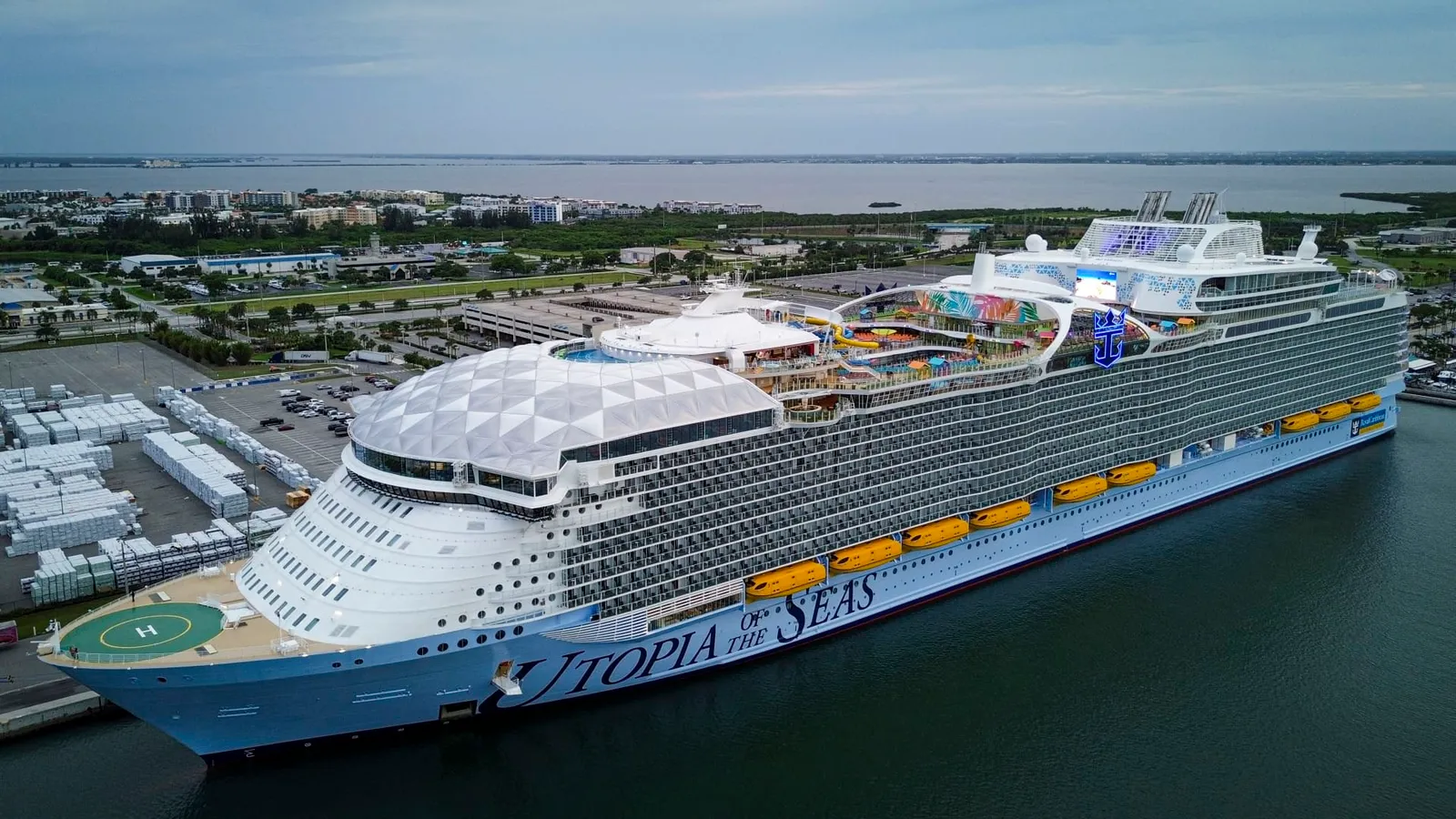
Royal Caribbean just spent $3B to own half of Sandals
The cruise giant is buying a 50% stake in the all-inclusive resort chain for $3 billion, a bet that land-based vacations are the next growth engine.

Paramount's Ellison: Merger Clearance Done, WBD Deal by Oct 1
David Ellison says the Paramount-WBD merger has full clearance after settling with state AGs, clearing the path for an October 1 close.

Paramount settles with 12 states, $110B Warner merger clears final hurdle
David Ellison's studio avoids a March trial and a $7M-a-day ticking fee by settling with state AGs over local job losses.