
Ian Dahl explains SpaceX's AI1 satellite: cheap, light radiators for orbital data centers
SpaceX moves from “million-satellite dream” to one specific design question: how do you cool radiators in orbit?

SpaceX founder Elon Musk and Ian Dahl, director of satellite engineering, discussed in June a first iteration of an orbital data center called the AI1 satellite. Their promotional video finally shared the satellite's size and power capabilities, alongside the engineering focus of making space radiators cheap and light.
SpaceX is betting big on orbital data centers. Not in theory. In engineering artifacts, like the AI1 satellite and its biggest Achilles heel: cooling. In a June promotional video, Elon Musk and Ian Dahl, director of satellite engineering for SpaceX, said the company is focused on making the radiators used on orbit “cheap and light.” The reason is brutally practical. The ISS radiators are expensive and heavy, and if you want an orbital data center you cannot just accept an ISS-style radiator bill of materials for every deployment.
Dahl’s framing matters because it turns a glossy concept into a manufacturing and economics problem. SpaceX has pinned much of its future value on launching and maintaining a constellation of 1 million satellites that can generate 120 GW. Musk has described these satellites as capable of powering tens of millions, and potentially up to 100 million, frontier-class GPUs for data center services. But that scale only becomes real if you can build the supporting components, not just the headline GPU dream. Radiators are one of those components that can quietly decide whether your constellation is viable or a planet-sized cost sink.
Here is the context that most people miss. Cooling in space is not like cooling in a data center with fans, chillers, and easy maintenance. Radiators have to reject heat into deep space, and mass and complexity are expensive. The ISS radiators reference in the source is doing more work than it might seem, because it points to a known baseline of cost and weight in space systems. SpaceX is essentially saying: that baseline is not a path to a million-satellite business.
This is also why June’s reveal is strategically timed. Musk previously revealed plans for the orbital data center constellation months ago, but until recently the scope of the individual satellites was largely unknown. The promotional video is the first time the company provided numbers about the satellite's size and power capabilities in relation to the first iteration, AI1. When the unit design becomes clearer, it stops being a PowerPoint slide and starts becoming a supply chain forecast. For decision-makers, that shift is the difference between “interesting” and “investable.”
SpaceX’s investors and partners are not just underwriting a science project. They are underwriting a manufacturing model. A constellation of 1 million satellites means you cannot treat every unit like a bespoke spacecraft. Even “first iteration” has to be designed with repetition in mind, because any per-unit cost blowup gets multiplied until it dominates your economics. Cooling hardware is a prime example. If radiators remain heavy and expensive, you do not just pay more for launch and integration. You also pay more for every maintenance and replacement cycle, and you constrain what power levels you can realistically sustain.
There is also a regulatory and operational backdrop, even when the video does not talk about it directly. A constellation meant for data center services implies persistent space operations and a large number of objects in orbit. That raises the practical importance of how reliably you can build, launch, and operate satellites at scale. In the U.S., satellite operators typically interact with licensing and spectrum processes for communications, and they also have to think about space traffic management expectations. While the source does not add new regulatory claims, the second-order implication for boards is straightforward: the more objects you launch, the more your execution risk shifts from “technical feasibility” toward “systems engineering at scale,” including reliability and compliance costs.
Finally, consider the competitive message. SpaceX has pinned future value on the constellation concept, but it needs each element of the system to pencil. GPU power without thermal stability is just theoretical energy. By highlighting a specific engineering focus, radiators, SpaceX is telling the market where it expects the hard work to live. If SpaceX can make radiators cheap and light, it improves the odds that 120 GW is not just a headline number, but something you can actually deliver over many satellites.
For executives watching this space, the strategic stakes are clear. If SpaceX can turn the radiator problem into a repeatable, economical subsystem, orbital data centers move from “maybe someday” to “someone is building it now.” And once one player demonstrates a workable path, the rest of the industry has to decide whether to follow, partner, or reposition, because the thermodynamics of orbit do not care which company you invested in.
This story's Key Insights and Take-aways are locked.
Create a free account to unlock Executive Actions for one credit.
Register to UnlockAlways free for Executives Club members. Join the Club
More in Business

Epic and Google drop settlement bid, forcing rival Android app stores by July 22
Google told the court it is ready to carry third-party app stores starting Wednesday, July 22.

SK Hynix opens at $170, raises $26.5B, and tops foreign IPO records
In Friday's Wall Street debut, SK Hynix turns AI RAM demand into a $26.5B fundraising moment that rewrites comps.
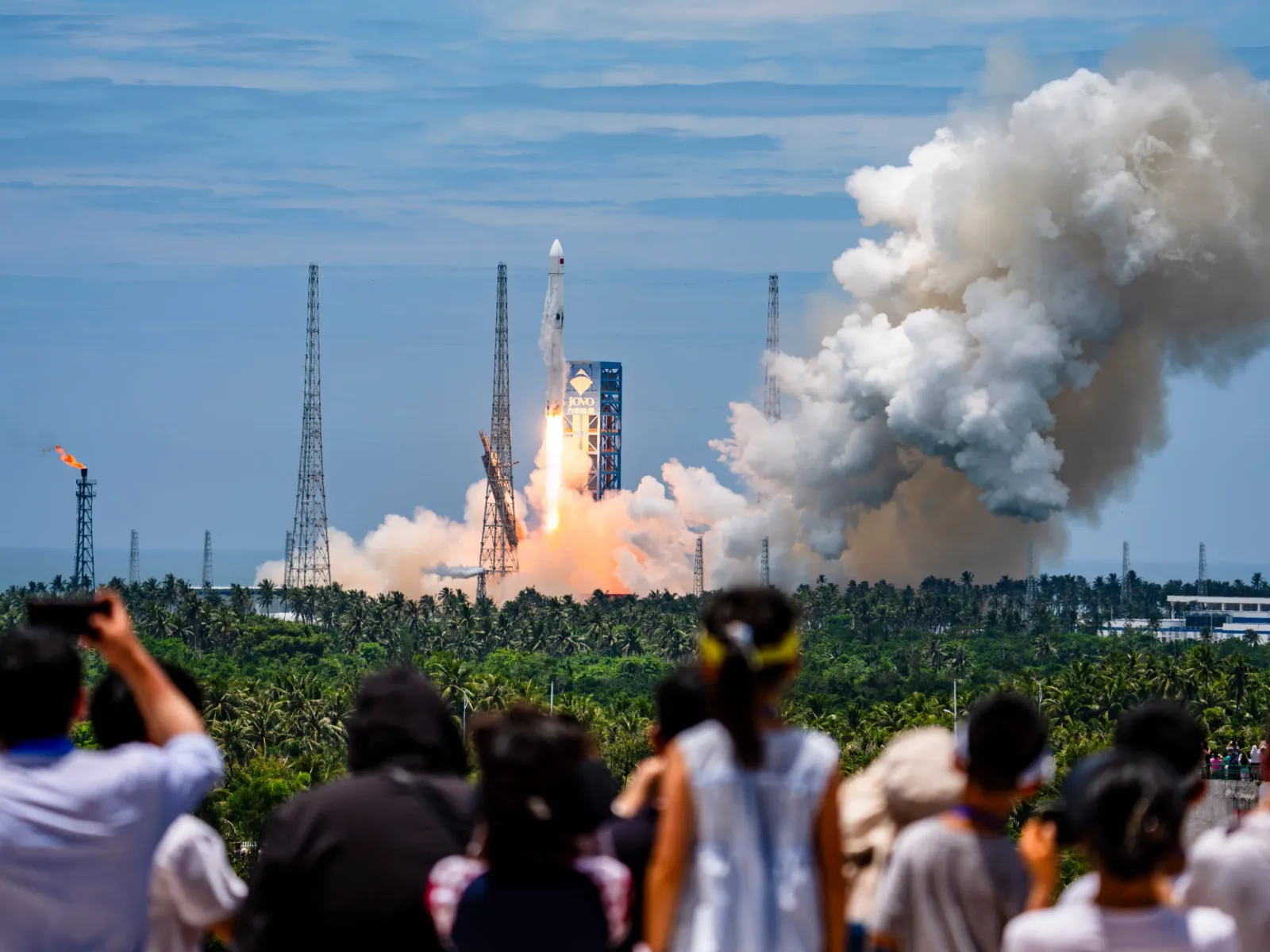
China lands a reusable Long March booster, a first that matches SpaceX and Blue Origin
A barge landing and net-based recovery move China from theory to proof, reshaping the reusability race and satellite ambitions.