

IBM CEO insists AI is not killing mainframes after stock crash from weak sales
After IBM’s stock fell on poor mainframe warnings, the CEO says AI disrupted budgets temporarily, reshaping enterprise planning.
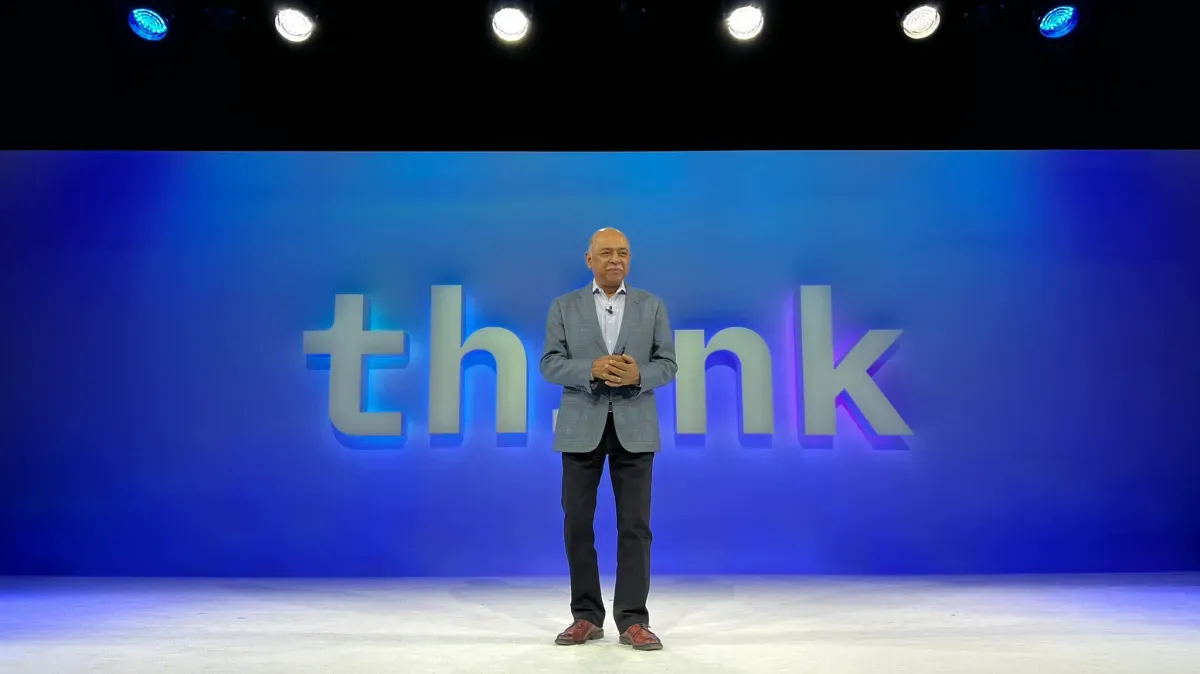
IBM's CEO pushed back on claims that AI is killing the company’s mainframe business after the stock dropped last week. He attributed weaker mainframe sales to a temporary hit to corporate hardware budgets as AI spending accelerated.
IBM is trying to stop a fear spiral before it turns into a permanent re-rating. After IBM’s stock crashed last week on warnings of poor mainframe sales, the CEO insisted the story is more temporary disruption than structural death. The core message was direct: AI isn’t eliminating the mainframe market, it is disturbing the timing of enterprise hardware spending.
That explanation matters because it targets the exact question investors and customers are now asking in plain English: “Are we looking at a fading platform, or just a budgeting pause?” If the answer is a pause, mainframe demand can rebound as companies finish shifting capital from traditional infrastructure to AI projects. If the answer is structural, then the mainframe becomes an aging expense line that enterprises slowly stop funding. IBM is arguing for the first interpretation, not the second.
Zoom out one level and this is the enterprise hardware moment of the decade. AI systems do not only require software. They require compute, networking, storage, and integration work across data centers and existing IT stacks. In practice, that means AI can crowd out other capital projects. When a board sees AI budgets rising, it often assumes something else will get delayed. IBM is basically acknowledging that dynamic, then narrowing it: the CEO is tying the mainframe signal to “temporarily” disrupted budgets rather than a long-term collapse of mainframe relevance.
To understand why investors reacted so sharply, consider how mainframe businesses are evaluated. Mainframes are not sold like consumer devices where you wait for a rebound in the next quarter. They are bought and maintained inside conservative enterprise operating models. That makes sales weakness feel like more than a quarterly wobble. Even when it is timing, the market tends to price the future, not the calendar. So when IBM warned of poor mainframe sales and the stock crashed, the implication investors drew was severe: maybe the enterprise thinks it is ready to move on.
This is where the CEO’s insistence becomes a strategic communications problem. In public markets, management credibility has two layers: the numbers and the narrative. The numbers can be explained away as timing, but only if management can land the “why” in a way that investors find plausible. “AI wrecked corporate hardware budget, temporarily” is a narrative that fits the industry’s macro reality. AI programs are consuming capital. Enterprise buyers are reorganizing around them. But investors still want to know whether the mainframe will be displaced or just rescheduled. IBM is attempting to steer the interpretation toward rescheduled spending.
There is also a governance angle here. When stock drops on a specific operational warning, boards and executives face a fast-moving credibility test. If the CEO is correct and the issue is temporary, IBM can recover as companies complete early AI infrastructure pushes and return to modernization and capacity plans. If the CEO is wrong and mainframe demand structurally declines, the board has a bigger question than one quarter of revenue: what is the long-term product strategy for an enterprise computing platform that customers are allegedly deprioritizing?
Regulatory background adds subtle pressure, even when regulators are not directly involved in the mainframe story. In recent years, policy has increasingly focused on data governance, security, and resilience in critical infrastructure-like environments. Enterprises want systems that can support compliance, continuity, and controlled data handling. That can be a tailwind for legacy infrastructure that has proven reliability, but it can also backfire if enterprises conclude they must rebuild everything for new AI-era architectures. In other words, the same forces that drive AI spending can also drive a rethink of what counts as “future-proof,” and that rethink can cause customers to delay or accelerate modernization decisions.
Second-order implications are already starting to ripple for peers. If IBM successfully convinces markets that AI is temporarily disrupting hardware budgets, other platform vendors get a market-friendly signal: enterprise buyers may not be “abandoning” legacy systems, they may be pausing around the migration timeline. That can influence how competitors talk about their own demand. It can also affect how CFOs plan capital allocation, because a “temporary crowd-out” framing supports the idea that deferred projects can return without permanent damage.
Strategically, the stakes for IBM and for anyone running an enterprise infrastructure roadmap are straightforward. The company needs the market to believe that mainframes remain a core part of the compute stack even as AI reshapes capital spending. Investors need confidence that the platform has time to ride out a budgeting transition. Customers need clarity that their existing investments will not become stranded. IBM’s next job is to turn this narrative into results, proving that AI-driven budget shifts do not translate into long-term mainframe erosion.
This story's Key Insights and Take-aways are locked.
Create a free account to unlock Executive Actions for one credit.
Register to UnlockAlways free for Executives Club members. Join the Club
More in Technology

Google quietly links your phone number to every Android account on your SIM
Adding a SIM now ties your phone number to all Google accounts - and future accounts inherit it. Here's the security and privacy stakes.

Hijacker AI 'Skynet mode' runs 100,000 attack steps against exposed models
Symantec caught a criminal AI agent that borrows other models, steals data, and mines crypto; the only relief is no confirmed victims yet.

Nvidia's AI-financier shift faces its first big test as neoclouds stumble
A rout in neocloud stocks is forcing investors to weigh Nvidia's hidden exposure as both supplier and lender to the AI buildout.