

IBM’s 25% crater on a 3.7% revenue miss exposes an AI earnings bubble, not valuation
Fortune breaks down the “two bubbles” theory: why profit stories may be the real mirage fueling the market.

IBM’s shares fell 25% after preliminary results showed $17.2 billion revenue, missing consensus by about 3.7%, and adjusted EPS of $2.93 under $3.02 expected. The move fuels a broader argument that markets are misreading an AI-era earnings bubble driven by earnings that may not be sustainable.
IBM’s stock got walloped on July 14, dropping about 25% after a revenue miss that was, by its face, relatively modest. The preliminary second-quarter numbers were not catastrophic by typical standards: revenue of $17.2 billion versus consensus of roughly $17.9 billion, about 3.7% lower, and adjusted EPS of $2.93 versus $3.02 expected. Even IBM was still growing in the disclosure, but it also warned that revenue had risen by 1% instead of the 5% the market expected. That is enough to trigger what Fortune frames as the worst single-day stock crash in IBM’s 115-year history, erasing roughly $40 billion in market value.
The most interesting part is what happened next in the same market environment. While IBM cratered, banks minted record profits. JPMorgan posted net income of $21.2 billion, described as the highest quarterly profit for any bank in U.S. history. Goldman Sachs reported an 84% jump in not earnings attributable to common shareholders, to $6.4 billion, with total revenues at $20.34 billion, up 39%. Put those side by side and you get the puzzle that sits at the center of Fortune’s argument: how can banks generate huge earnings while IBM is punished as if the market’s entire profit-growth narrative has broken?
That juxtaposition connects to Steve Hanke, the “money doctor” who has advised governments including the Treasury Department and the White House, and who serves as a senior contributing columnist for Fortune. Hanke’s central claim is not that AI stocks are simply “too expensive.” He says there are “two bubbles in markets.” One resembles the classic valuation bubble, where prices race ahead of earnings and ratios look stretched, like the CAPE Shiller index has come to symbolize around 2000. The more dangerous mispricing, in his view, is different. It is an earnings bubble, meaning profits themselves are inflated or unsustainable. That can leave valuations looking deceptively reasonable even while the market is mispriced in a way that only becomes obvious when the earnings story unravels.
IBM’s own messaging shows how markets can treat execution guidance as a legitimacy test. Fortune notes that IBM CEO Arvind Krishna wrote an unusually candid letter, stating that “our teams to execute perfectly” had been required, and that “this quarter we faltered.” The letter offered “not excuses, but... realities.” In other words, IBM did not sell a fairy tale. It flagged underperformance. But investors still punished the stock as if the underlying earnings boom had turned into something brittle.
This is where the regulatory and industry context matters, even if it is not the headline. Fortune cites the New York Times’ DealBook calling the IBM miss a “canary in the tech coal mine,” and the Financial Times’ west coast editor Richard Waters describing it as a “warning to the IT sector,” comparable to the “SaaSpocalypse” that spooked markets earlier this year. That prior fear was tied to the theoretical potential of AI to displace traditional software. IBM’s profit warning, in that lens, looked like confirmation that a secular shift is arriving sooner than many investors modeled.
The earnings-bubble framework also implies a specific detection problem. Hanke’s argument is supported by BCA Research’s Peter Berezin, who has argued for months that the AI trade is “primarily an earnings bubble rather than a valuation bubble.” Berezin says such bubbles have historically clustered in boom-bust industries, including pre-2008 banks, pandemic-era work-from-home stocks, and cyclicals like natural resources, airlines, and semiconductors. Importantly, earnings bubbles can be harder to spot early because analysts often cut profit estimates only after stocks have already fallen. Fortune adds that when earnings bubbles burst, they leave behind real excess capacity, like data centers, chip fabs, and server farms, rather than just paper gains evaporating.
IBM’s immediate reaction matched that timing problem. BofA and UBS trimmed estimates, but only after the stock had already cratered 25%. Fortune provides the details: BofA cut its price target to $280 from $330, while UBS kept its target at $236 but lowered 2026 EPS forecasts. Those are reactive moves, not early signals. And even after the selloff, the Street did not agree on what it meant. BofA kept a Buy rating and argued IBM remained “well positioned” once execution issues cleared. HSBC downgraded to Reduce, and Goldman warned the results would “fully validate the software bear case scenario.” That split is the real board-level risk: if markets cannot agree on whether the problem is temporary execution or a sector-wide earnings regime change, the cost of being wrong rises.
Hanke also brings in a second mechanism that executives should not ignore: the money creation channel. His point is not that JPMorgan’s profits are suspicious, but that they reveal how many investors misunderstand where credit comes from. Fortune explains that it is not the Federal Reserve creating the money fueling his “two bubbles” framing, but private banks. Hanke compared the concept to John Kenneth Galbraith’s remark that “The process by which banks create money is so simple that the mind is repelled,” with Hanke adding that while his orientation differs from Galbraith’s, he thought Galbraith was a great man. Hanke’s follow-up to a question about whether record bank profits mean credit is still flowing freely was blunt: “What you're saying is that markets are getting mugged by reality.”
Even JPMorgan CEO Jamie Dimon is presented as aligning with the concern about exuberance, saying in a call with analysts on Tuesday that the earnings were “ close to as good as it gets ” and expressing concern about too much “exuberance” in markets.
So what does all of this mean for the rest of earnings season? Fortune argues that the bull case around AI leaders like Nvidia and Alphabet has emphasized real cash flow rather than profitless dot-com hype, and that S&P 500 valuations near 22x forward earnings sit below the 25x-plus threshold typically associated with true bubbles. But that defense addresses the valuation side. It does not answer whether the earnings underneath the valuations are sustainable, potentially inflated by capex cycles, circular AI investment, and easy money from private banks. In that world, IBM’s crash is less about “bad company, bad quarter” and more about the market quietly repricing how much disappointment it will tolerate.
At the strategic level, the key question is not just whether AI stocks look expensive. It is whether the earnings behind them were ever as real as they looked. IBM shares were down 2% in intraday trading as of press time, but the bigger stake is sector-wide: if this is the beginning of an earnings-bubble unwinding, peers across software, IT services, and the capex supply chain could face a world where modest misses get treated like existential warnings. For CEOs and boards, that changes how you frame execution, how you manage guidance credibility, and how you stress-test capital plans against a market that may no longer reward “promises with plausible math,” but instead demands proof in the profit line.
This story's Key Insights and Take-aways are locked.
Create a free account to unlock Executive Actions for one credit.
Register to UnlockAlways free for Executives Club members. Join the Club
More in Business

Epic and Google drop settlement bid, forcing rival Android app stores by July 22
Google told the court it is ready to carry third-party app stores starting Wednesday, July 22.
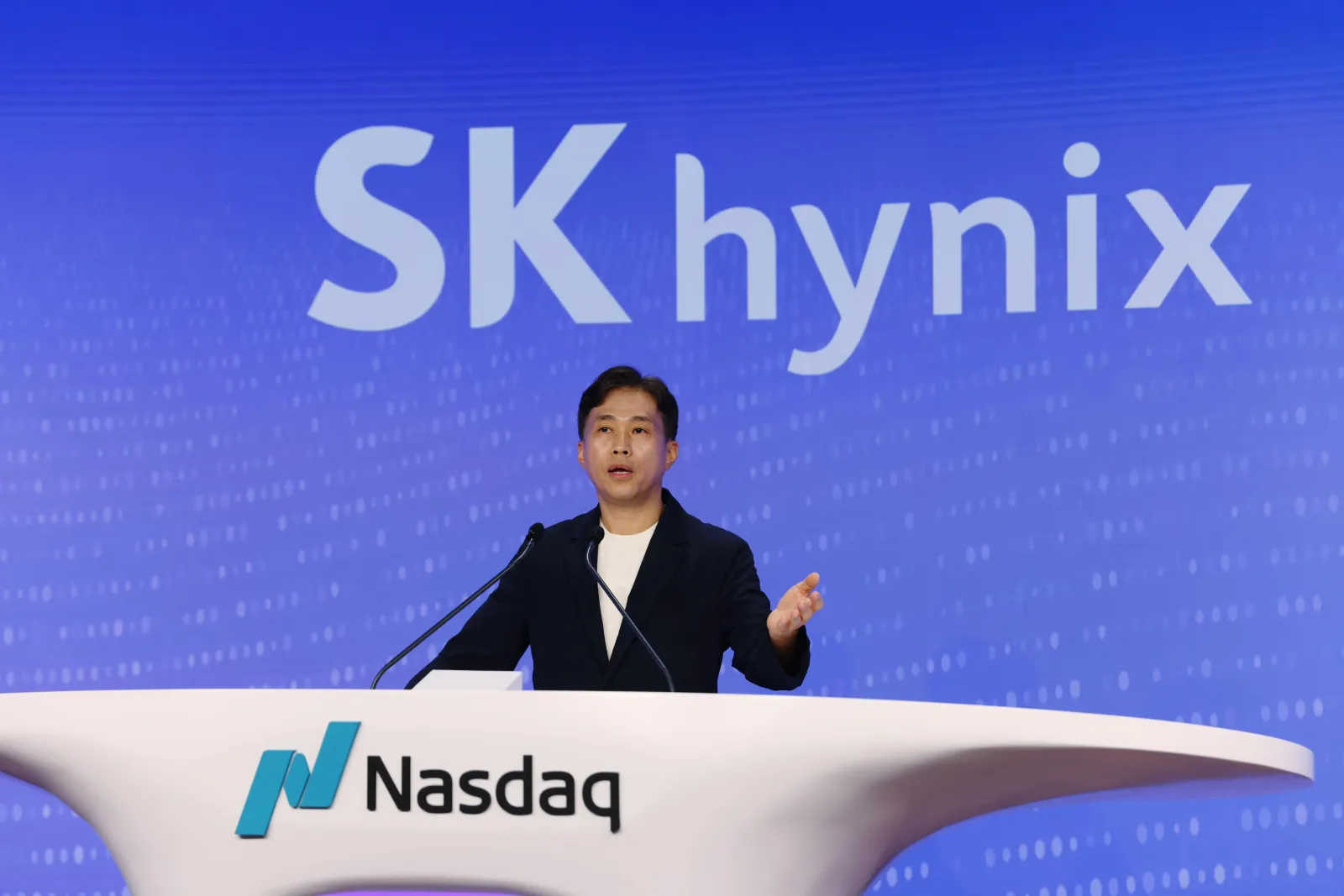
SK Hynix opens at $170, raises $26.5B, and tops foreign IPO records
In Friday's Wall Street debut, SK Hynix turns AI RAM demand into a $26.5B fundraising moment that rewrites comps.

China lands a reusable Long March booster, a first that matches SpaceX and Blue Origin
A barge landing and net-based recovery move China from theory to proof, reshaping the reusability race and satellite ambitions.