

ICE arrests Johns Hopkins employee at Baltimore airport during personal trip
The university says it is deeply concerned about the arrest of its researcher, raising reputational and compliance questions.

ICE arrested a Johns Hopkins University employee while the person was traveling for a personal trip. Johns Hopkins officials say they are deeply concerned, and the incident creates an immediate risk for higher education institutions managing compliance, safety, and reputational exposure.
ICE has arrested a Johns Hopkins University employee at a Baltimore-area airport during what Johns Hopkins characterizes as a personal trip. Johns Hopkins officials say they are deeply concerned about the arrest, even though it reportedly occurred away from any university assignment.
That distinction matters, because it frames the situation as both a law-enforcement event and an institutional risk event at the same time. For universities, a staff member getting arrested during personal travel is not just a headline. It can quickly become a test of how the institution handles external scrutiny, internal communications, and duty-of-care expectations in the face of uncertain facts.
To understand why this lands hard, you have to know how immigration enforcement and institutional compliance tend to collide. ICE is part of the U.S. Department of Homeland Security and handles immigration enforcement actions. Those actions can occur at ports of entry, including airports, and they often produce public uncertainty before institutions can fully verify timelines, charges, or case specifics. Meanwhile, universities operate as complex ecosystems with researchers, administrators, and visiting affiliates who travel frequently for work and for life, and policies around travel, records, and support systems often get stress-tested in high-visibility moments.
In this case, Johns Hopkins is publicly signaling concern over the arrest, which suggests the university expects reputational and operational fallout even if the conduct was unrelated to an institution role. “Deeply concerned” is a specific phrase, and it usually indicates a stance that is meant to convey seriousness without overstepping into assumptions about guilt or intent. The challenge for leadership teams is balancing empathy for a potentially distressed employee, respect for the legal process, and clarity for students, staff, and external stakeholders who will inevitably ask questions.
Boards and executives at research universities routinely track risk in categories that can be easy to underweight until something goes public. There is the direct compliance dimension, which can include documentation practices, awareness of immigration-related risks, and coordination with counsel. There is also the operational dimension, such as ensuring continuity of research activities, laboratory access, and responsibilities if an employee is detained or unavailable. Even when an employee’s travel is “personal,” the university may still be forced to decide what happens next in the chain of command and how it communicates to relevant teams.
There is also an external-relations dimension. Higher education institutions frequently face intense public pressure when any incident touches immigration, law enforcement, or international communities on campus. The optics can move faster than facts, which puts communications leaders in a position where they may need to respond to rumors or incomplete information while staying grounded in what is known. Johns Hopkins, by making its concern public, is effectively telling the market of stakeholders that it will not ignore the event.
Second-order implications can hit in ways that are not obvious at first glance. For one, similar institutions may review their travel support processes, not because they expect ICE to police personal trips, but because they need clearer internal guidance on how to respond when law enforcement action intersects with university affiliations. They may also revisit how they document employee status, international touchpoints, and points of contact for legal support. Another second-order effect is cultural: researchers and staff watch how leadership responds to stressful external events, and that perception can influence trust during future compliance or safety disruptions.
For executives and boards at universities and research organizations, the strategic stake is straightforward: you are managing an event in two lanes at once. One lane is the legal and human lane, where the priority is respect for due process and support for the individual involved. The other lane is the institutional risk lane, where the priority is protecting the organization from avoidable confusion, ensuring continuity, and preventing reputational damage that can outlive the original incident.
This story, as currently described, is about an ICE arrest of a Johns Hopkins employee during personal travel, and Johns Hopkins says it is deeply concerned. Even without additional details in the available reporting, the leadership lesson is clear: when law enforcement actions touch university-affiliated people, the compliance, communications, and operational response cannot wait for perfect information. It has to start immediately with what the institution knows, what it does not know, and how it plans to reduce harm while maintaining credibility.
This story's Key Insights and Take-aways are locked.
Create a free account to unlock Executive Actions for one credit.
Register to UnlockAlways free for Executives Club members. Join the Club
More in Politics
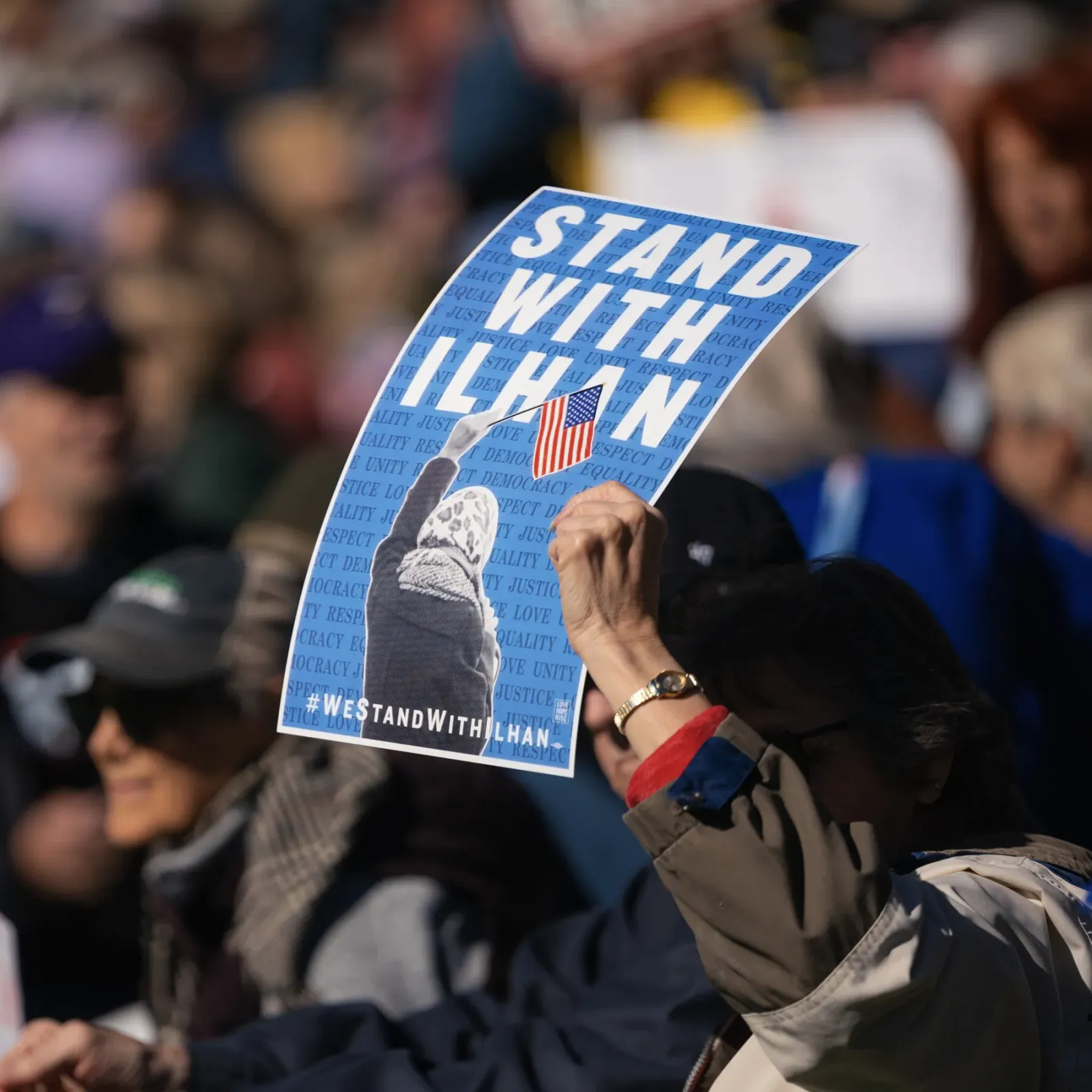
Obama Defends Ilhan Omar After Agents Search Her Home in Trump Inquiry
The former president's intervention raises the stakes in a federal probe into immigration paperwork that has put a prominent progressive lawmaker in the crosshairs.

Blair-era minister: cut welfare to fund youth job support
Alan Milburn's call for welfare cuts to fund employment support opens a Labour fight over benefits and the Neet crisis.

Hot September CPI: energy costs surge, voters feel the squeeze before midterms
The latest inflation print lands as Trump campaigns for GOP control of Congress, putting cost-of-living worries at the center of the midterm fight.