

India's China Imports Doubled in 5 Years. Now Comes the Reckoning.
New Delhi's trade deficit with Beijing has nearly doubled in five years, forcing a painful choice between self-reliance and the cheap inputs its factories still need.
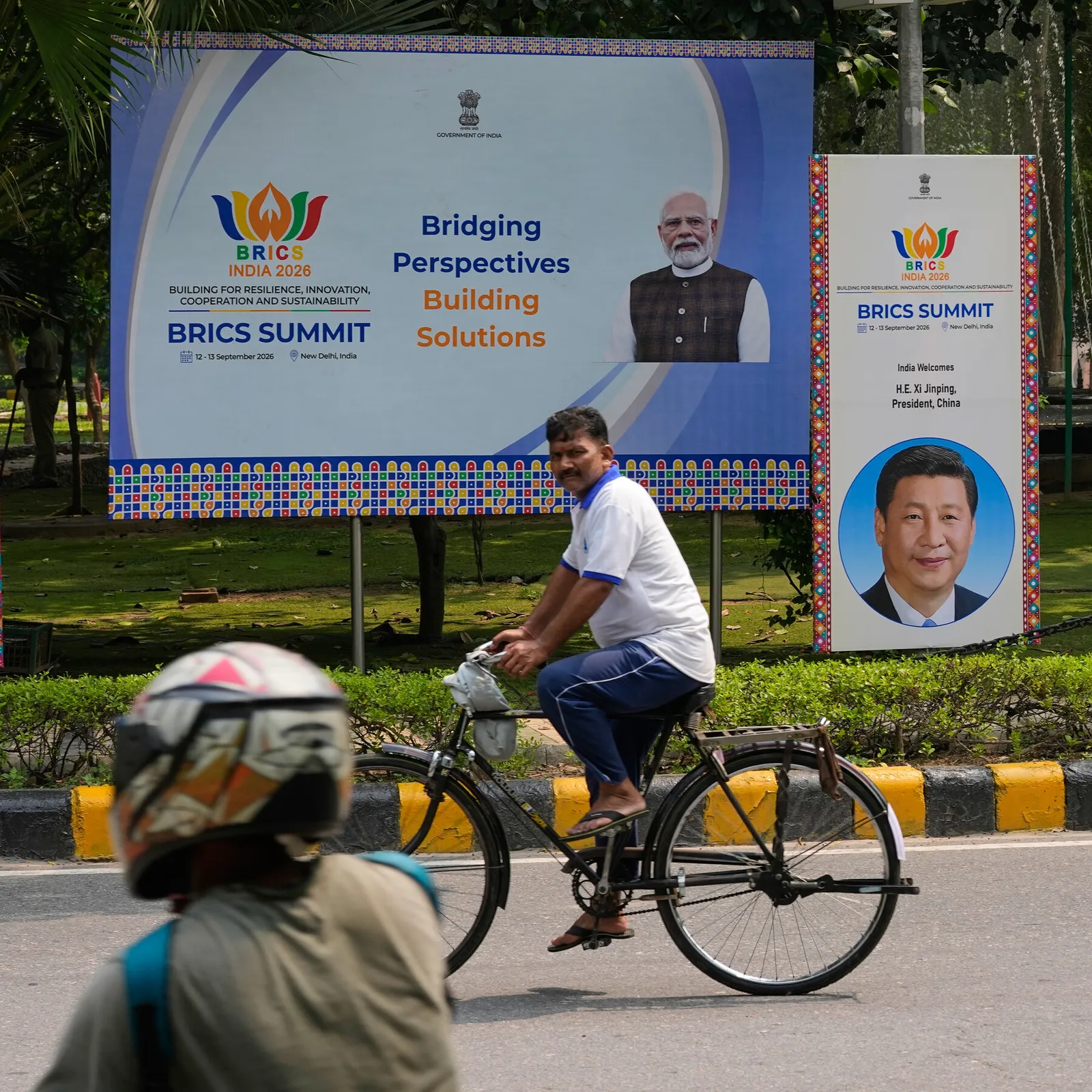
India's trade with China has nearly doubled in five years, leaving New Delhi with a widening deficit and a strategic dilemma over industrial policy. The consequence: Indian manufacturers face rising costs or supply-chain risk as the government pushes for local production.
Trade between India and China has nearly doubled in five years, and the gap is now impossible to ignore. The numbers tell a stark story: New Delhi's deficit with Beijing has widened even as the government has talked up self-reliance. For executives watching the region, this is not just a trade statistic - it is a signal that India's industrial strategy is hitting a wall. The source notes that New Delhi faces a difficult choice over how to build its industrial future, and that choice is playing out in boardrooms and policy meetings right now.
The choice is brutally simple. India can keep buying cheap Chinese inputs to keep its factories competitive, or it can restrict imports to nurture domestic industry - and risk higher costs, slower growth, and supply-chain disruptions. The dilemma is that restricting these imports would raise costs for Indian manufacturers, making their exports less competitive and potentially stalling the very industrial growth the policy is meant to spur. On the other hand, letting the deficit grow deepens a strategic dependence that New Delhi views as a security risk, especially after border clashes and a broader geopolitical rivalry with Beijing.
The backdrop is a decade of ambitious policy. India has rolled out production-linked incentives across electronics, pharmaceuticals, and autos, and it has raised tariffs on Chinese goods. Yet imports keep climbing. The reason is that domestic manufacturing cannot yet match China's scale, price, or quality in key components. For every phone assembled in India, a significant share of the guts still comes from across the border. Consider electronics, India's flagship push: the country has become a major assembler of smartphones, but the components - chips, displays, and circuit boards - are largely imported, with China the dominant supplier.
The same pattern holds in active pharmaceutical ingredients, where India's generic drug industry depends on Chinese bulk drugs, and in solar panels, where Chinese cells and wafers underpin India's renewable energy targets. These are not niche sectors; they are the core of India's industrial ambitions. The government's 'Make in India' campaign and its production-linked incentive schemes were designed to change this dynamic, but the results so far have been uneven. Local manufacturing has grown, but it often remains assembly rather than true component production, and the supply chain still runs through China.
India is not alone in wrestling with this. Post-pandemic, many economies are trying to de-risk from China. But India's situation is uniquely fraught because its domestic market is large enough to support local production, yet its supply chains are still deeply intertwined with China. The transition will not be quick, and it will not be cheap. Tariffs and incentives can nudge behavior, but they cannot conjure a competitive semiconductor ecosystem or a pharmaceutical ingredient base overnight. That requires years of investment, skilled labor, and infrastructure - all of which India is still building.
For executives, the implications are immediate. Companies with Indian operations need to monitor policy shifts closely - tariffs, local-content rules, and incentive schemes can change the economics of a plant overnight. Diversifying suppliers, even at a premium, may be prudent for critical inputs. But the realistic path is a hybrid: keep buying from China where necessary while building alternative sources and local capabilities over time. The companies that navigate this transition best will be those that treat supply-chain resilience as a strategic priority, not a cost center.
The next few years will be pivotal. India's leaders must decide how much short-term pain they are willing to accept for long-term self-reliance. For the rest of the world, the outcome will reshape global supply chains and the balance of power in Asia. The deficit is not just a number - it is a mirror of India's industrial ambitions and the hard choices they demand. Executives who understand this dynamic can position their firms ahead of the curve, while those who ignore it risk being blindsided by policy shifts or supply shocks.
This story's Key Insights and Take-aways are locked.
Create a free account to unlock Executive Actions for one credit.
Register to UnlockAlways free for Executives Club members. Join the Club
More in Business

Royal Caribbean just spent $3B to own half of Sandals
The cruise giant is buying a 50% stake in the all-inclusive resort chain for $3 billion, a bet that land-based vacations are the next growth engine.

Paramount's Ellison: Merger Clearance Done, WBD Deal by Oct 1
David Ellison says the Paramount-WBD merger has full clearance after settling with state AGs, clearing the path for an October 1 close.

Paramount settles with 12 states, $110B Warner merger clears final hurdle
David Ellison's studio avoids a March trial and a $7M-a-day ticking fee by settling with state AGs over local job losses.