

Indian firms quietly test Chinese LLMs as AI budgets get squeezed
As AI costs bite, procurement and product teams are looking East for cheaper large language model options.

Indian companies are looking to Chinese large language models as AI costs bite, according to Nikkei Asia. For decision-makers, the shift changes sourcing, vendor risk, and how fast “AI first” can actually move from pilot to production.
Indian companies are quietly turning to Chinese large language models as AI costs bite, a move that signals something larger than just a vendor swap. The immediate driver is economic: as organizations try to roll out AI in customer support, internal knowledge, and content workflows, the price tag for running AI models and building AI-powered features has started to feel less like an experiment and more like an operating expense.
That cost pressure is the opening. Even for companies that want to move fast, “fast” is expensive when inference costs scale with usage. In practical terms, teams that once treated LLM adoption as a technology roadmap are now treating it like a procurement decision, and procurement decisions tend to favor alternatives that improve the unit economics. Chinese LLM options have become one of those alternatives.
To understand why this matters, it helps to know how LLM adoption usually unfolds. Many companies start with a proof of concept, then discover that the second phase is the real money. Production systems need consistent latency, reliable model performance, and integration with existing data and tooling. And those production requirements typically raise compute costs while increasing the number of users, queries, and workflows that trigger model inference. The result is that budgets tighten after the novelty phase.
Against that backdrop, the sourcing conversation changes. Instead of asking only, “Which model performs best on benchmarks?”, leaders increasingly ask, “Which model gets me the best performance per rupee at the scale we will actually run?” When budgets get tight, the cheapest viable option often wins pilots and forces harder internal prioritization. This is where Chinese LLMs come into the picture, not because every organization is abandoning homegrown plans, but because the economics can make the difference between experimentation and deployment.
There is also a regional tech incentive at play. India has a massive and growing base of software and IT services companies, plus fast-moving consumer and enterprise digital businesses. That means demand for AI capabilities is broad, but so is variability in spending power across industries. When a single large customer requires recurring AI usage, the vendor that can offer predictable pricing becomes a strategic partner. In this environment, model cost structures and licensing terms become board-level issues, even if no one calls them that out loud.
Second-order effects show up in governance. LLM sourcing can be a governance and risk question, not just a cost question. Decision-makers have to weigh vendor concentration, data handling assumptions, and continuity of service. If teams are shifting to Chinese models to control spend, they also need to ensure they can still meet internal standards for security and compliance. That means procurement, legal, and security teams may end up in the center of what used to be a purely engineering conversation.
Regulatory framing matters too, and not only because of India’s own policy environment. Cross-border technology procurement generally triggers extra scrutiny, especially when systems process customer data or generate responses that can influence business outcomes. Even without inventing specific regulatory actions, the basic reality for executives is clear: the more a model touches sensitive workflows, the more leadership will expect documented risk controls and predictable vendor behavior.
Finally, the strategic stake extends beyond any single company. If Indian firms are testing Chinese LLMs because AI costs bite, competitors will notice. Boards and investors will ask whether leaders can deliver AI value within budget constraints, and whether “AI at scale” is becoming a differentiator for operational efficiency rather than just a growth narrative. The companies that can balance cost, performance, and risk will move from promising demos to repeatable deployments. Those that cannot may find AI becoming a series of expensive experiments.
For executives, this is a moment of practical reckoning. The question is not whether AI will matter. It already does. The question is which procurement choices make adoption sustainable when costs rise, when usage scales, and when production performance becomes unforgiving. Quiet vendor testing now can turn into a core infrastructure decision later, shaping margins, execution speed, and risk posture for years.
This story's Key Insights and Take-aways are locked.
Create a free account to unlock Executive Actions for one credit.
Register to UnlockAlways free for Executives Club members. Join the Club
More in Business
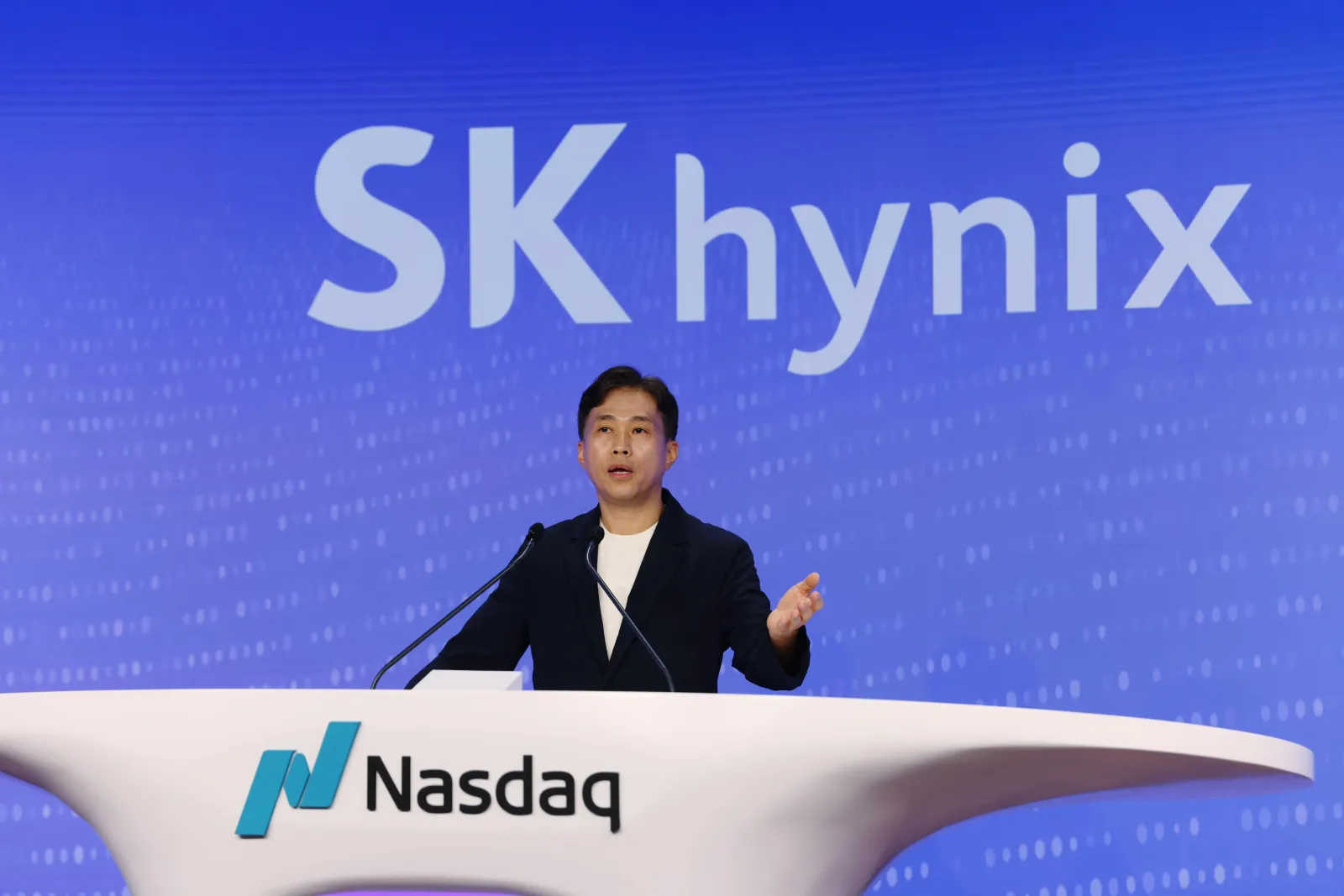
SK Hynix opens at $170, raises $26.5B, and tops foreign IPO records
In Friday's Wall Street debut, SK Hynix turns AI RAM demand into a $26.5B fundraising moment that rewrites comps.

China lands a reusable Long March booster, a first that matches SpaceX and Blue Origin
A barge landing and net-based recovery move China from theory to proof, reshaping the reusability race and satellite ambitions.

AstraZeneca $27B wipeout as Wainua late trial misses cardiovascular target
A failed late-stage heart study triggered a swift market punishment, forcing investors and boards to reset timelines and risk.