

Indonesia's quake aftermath cracks Prabowo's economic plan wide open
The disaster is forcing Jakarta to choose between the president's signature spending promises and the fiscal discipline investors demand.
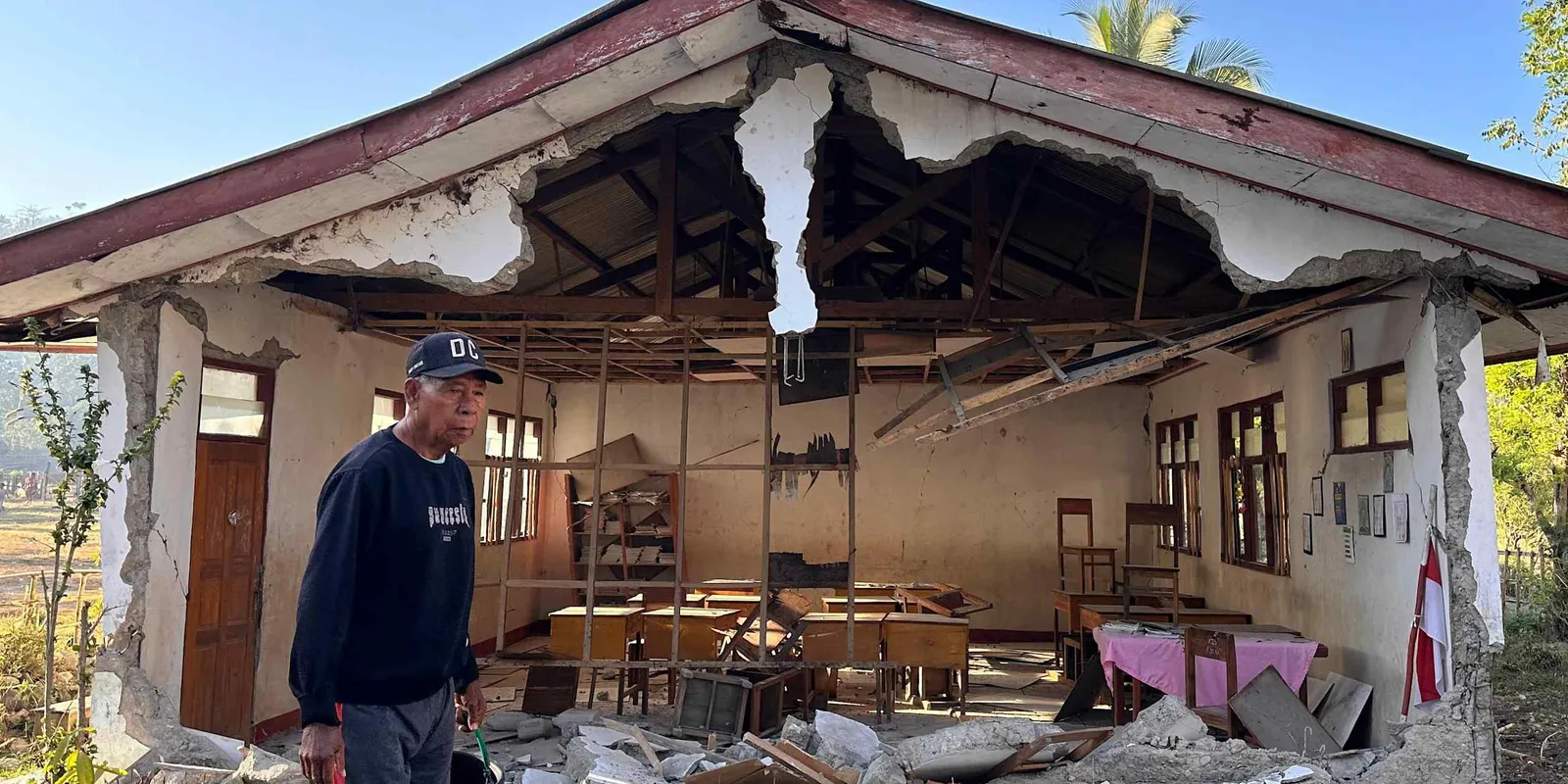
Indonesian President Prabowo Subianto's economic agenda is facing its first major stress test as the aftermath of an earthquake collides with his ambitious spending plans. For decision-makers, the episode signals that Jakarta's fiscal priorities are about to be repriced by markets.
The earthquake that struck Indonesia has done more than level buildings. It has exposed a fault line running through President Prabowo Subianto's economic blueprint, forcing his administration to confront a choice it had hoped to defer: fund the recovery or fund the campaign promises that got him elected. The aftermath is now a stress test for a government that came into office promising both fiscal discipline and a dramatic expansion of state spending.
Prabowo's economic plan rests on two pillars that are now pulling in opposite directions. On one side are the signature programs - free nutritious meals for schoolchildren, infrastructure upgrades, and a push for self-sufficiency in food and energy - that helped him win the presidency. On the other is his stated commitment to keep the budget deficit below 3% of gross domestic product, a red line that has reassured investors and anchored the rupiah. A natural disaster of this scale forces emergency spending, and that spending does not come with a discount.
For context, Indonesia sits on the Pacific Ring of Fire and has one of the highest rates of seismic activity in the world. Earthquakes and tsunamis are not anomalies; they are a recurring cost of doing business in the archipelago. Historically, major quakes have shaved anywhere from a few tenths of a percentage point to more than a full point off annual GDP growth, depending on the damage to infrastructure and the speed of reconstruction. The fiscal bill typically runs into the billions of dollars, and it almost always arrives when the budget is already stretched.
The timing could not be worse for Prabowo. His government has been trying to convince markets that it can deliver on ambitious social programs without blowing out the deficit. That message was already facing skepticism, with investors watching the rupiah and bond yields for signs of strain. The quake aftermath adds a new line item to the budget, and it forces a public conversation about trade-offs that the administration would rather have in private.
The political calculus is equally delicate. Prabowo's coalition includes parties that campaigned on the promise of a more generous state, and his own approval ratings depend on delivering visible benefits to a young and urban electorate. Cutting or delaying those programs to pay for reconstruction would be politically costly. But borrowing more to do both would test the patience of the bond market and could trigger capital outflows, a scenario that has historically ended with a weaker currency and higher import prices.
For executives and investors, the episode is a reminder that Indonesia's economic story is not just about growth numbers. It is about the government's ability to manage shocks without losing credibility. The quake aftermath will be watched closely by regional peers - the Philippines, Vietnam, and India - that are also pursuing ambitious spending agendas while trying to maintain fiscal anchors. The way Jakarta navigates this moment will set a precedent for how emerging-market governments balance disaster relief with investor confidence.
The strategic stakes extend beyond the budget. Indonesia is a major exporter of coal, palm oil, nickel, and other commodities, and any prolonged disruption to logistics or energy infrastructure can ripple through global supply chains. Companies with operations in the archipelago should be reviewing their own contingency plans, not just for physical damage but for the policy response. A government under fiscal pressure may look to raise revenue through taxes, royalties, or export levies, and that is a risk that does not show up on a map of the earthquake's epicenter.
The bottom line is that Prabowo's economic plan was always going to face a test. The earthquake just made it come sooner and with less room for error. For decision-makers, the lesson is to watch not only the reconstruction numbers but the choices that follow them. The fault line in Jakarta is not geological. It is fiscal, and it is now visible to everyone.
This story's Key Insights and Take-aways are locked.
Create a free account to unlock Executive Actions for one credit.
Register to UnlockAlways free for Executives Club members. Join the Club
More in Business

Royal Caribbean just spent $3B to own half of Sandals
The cruise giant is buying a 50% stake in the all-inclusive resort chain for $3 billion, a bet that land-based vacations are the next growth engine.

Paramount's Ellison: Merger Clearance Done, WBD Deal by Oct 1
David Ellison says the Paramount-WBD merger has full clearance after settling with state AGs, clearing the path for an October 1 close.

Paramount settles with 12 states, $110B Warner merger clears final hurdle
David Ellison's studio avoids a March trial and a $7M-a-day ticking fee by settling with state AGs over local job losses.