
Insta360's $298M chip bill tops the $285M GoPro just sold for
Six months of Insta360 chip purchases cost more than GoPro's entire $285M cash sale, and the numbers redefine what a hardware brand is worth.
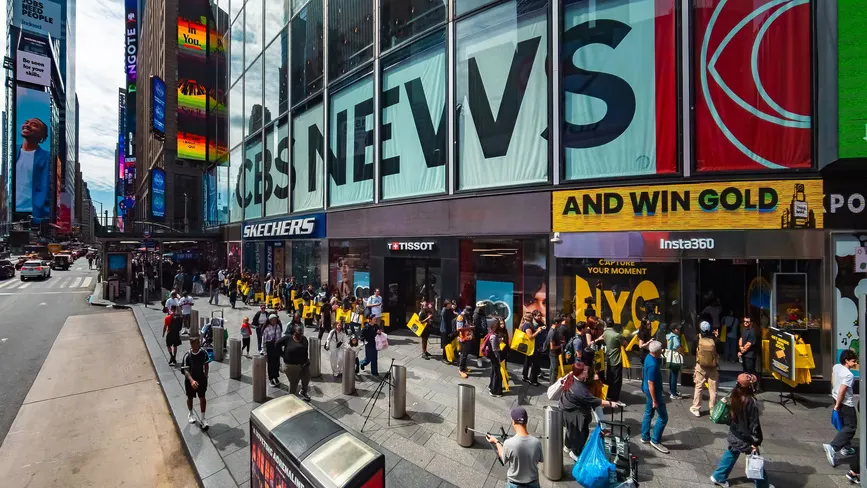
Insta360 co-founder Max Richter confirmed the company spent $298 million on memory chips in six months, just as it opened its first American store in Times Square on Saturday. For hardware executives, the contrast with GoPro's $285 million all-cash sale shows how far component costs and market valuations have diverged in the camera business.
The math is almost too neat to be real. Insta360 spent $298 million on memory chips in six months. GoPro's shareholders are getting $285 million in cash for the entire company. One line item on the rival's procurement ledger is worth more than the whole of the action-camera category's most famous name. That is the number to sit with before you even reach the ribbon-cutting.
The ribbon-cutting happened Saturday at 1515 Broadway, in the middle of Times Square, where Insta360 opened its first American store. It is the company's second self-operated shop outside China, after Tokyo in August. Co-founder Max Richter, interviewed by Iris Deng in Shenzhen for the South China Morning Post, is the public face of the expansion, and the numbers around the opening are the real story, not the scissors. The $298 million figure and the $285 million sale price frame the moment better than any square-footage stat.
Start with the source of the gap. Memory chips are the core input for modern camera hardware; the flash storage that records and holds high-resolution 360-degree video is not optional, and it is rarely cheap at volume. Insta360 moved that volume of chips in half a year, a purchasing pace that dwarfs what most consumer-electronics brands of its size would touch. For context, memory prices have historically swung hard between gluts and shortages, so a six-month bill of $298 million is both an operational fact and a bet on future demand. It also raises the question of what the company's total cost structure looks like when one component alone exceeds a competitor's entire valuation.
The GoPro comparison sharpens the point. GoPro pioneered the action camera category and built a global brand, but its shareholders are now taking $285 million in cash for the whole business. That is $13 million less than Insta360 spent on one component category in six months. Whatever either company's trajectory says about execution, the gap between a chip bill and a rival's total enterprise value is the most honest measure of how the market currently prices hardware.
The store itself adds texture. A self-operated shop at 1515 Broadway is a brand statement planted in the most expensive foot-traffic corridor in the United States, and it follows Insta360's Tokyo location from August as the company's second shop outside China. Physical retail is an unusual move for a category that grew up online, and it signals that Insta360 wants a front door in the market where GoPro built its name. For hardware makers, the expansion reads as a bet that the next cycle will be won in person, not just in search results.
For executives in adjacent hardware businesses, the strategic stakes are straightforward. Component costs are not a back-office line item; they are the difference between healthy margins and margin compression, and they move with supply chains and trade policy that no single company controls. A firm that spends $298 million on chips in six months is exposed to that volatility in both directions: it benefits if prices fall and bleeds if they rise. The scale of the number also implies purchasing muscle, inventory risk, and a treasury function that has to fund it all. For boards, the lesson is to track component spend as a strategic metric, not a footnote in the procurement report, because in hardware the P&L is written at the supplier negotiating table before the marketing team ever gets a chance.
The second lesson is about capital markets and category perception. GoPro is leaving public markets for $285 million, a figure that would have seemed unthinkable when the company defined the modern camera category. Insta360, by contrast, is spending at a pace that implies it expects to be in the game for years. One company sold for less than the other's six-month chip appetite; the other is building storefronts in Times Square. That divergence is the real story behind the Broadway address.
For decision-makers, the takeaway is not to pick winners in the camera wars. It is that hardware is a supply-chain game before it is a brand game, and that valuations can diverge wildly from operating reality. Insta360's $298 million chip bill and GoPro's $285 million price tag belong side by side; together they say more about the state of the industry than any press release or ribbon-cutting photo.
This story's Key Insights and Take-aways are locked.
Create a free account to unlock Executive Actions for one credit.
Register to UnlockAlways free for Executives Club members. Join the Club
More in Business
Royal Caribbean just spent $3B to own half of Sandals
The cruise giant is buying a 50% stake in the all-inclusive resort chain for $3 billion, a bet that land-based vacations are the next growth engine.

Paramount's Ellison: Merger Clearance Done, WBD Deal by Oct 1
David Ellison says the Paramount-WBD merger has full clearance after settling with state AGs, clearing the path for an October 1 close.

Paramount settles with 12 states, $110B Warner merger clears final hurdle
David Ellison's studio avoids a March trial and a $7M-a-day ticking fee by settling with state AGs over local job losses.