

Iran’s Gharibabadi: use Qatar frozen funds for “required goods” after Doha talks
The deputy foreign minister says Tehran will tap some frozen assets in Qatar to buy needed goods under the Iran-US deal.

Iranian Deputy Foreign Minister Kazem Gharibabadi says Tehran will use some frozen assets in Qatar to purchase required goods after talks in Doha. For decision-makers, the move is a practical test of how the Iran-US memorandum of understanding can convert frozen capital into real-world supply.
Iranian Deputy Foreign Minister Kazem Gharibabadi said Wednesday that Tehran will use some of its frozen assets in Qatar to purchase goods needed by the country, after talks in Doha. In other words, the policy fight over “frozen money” is starting to translate into procurement decisions, not just legal arguments.
Gharibabadi tied the plan to a specific mechanism under the memorandum of understanding that halted the war between Iran and the US. Under that memorandum, Washington agreed to make available Iran's frozen or restricted assets as part of the agreement's implementation. So the headline question for executives and operators is simple: when assets are legally constrained, can they actually become usable purchasing power? His answer, at least in this instance, is yes, through Qatar.
To understand why this matters beyond diplomacy, it helps to look at how “frozen” assets typically behave in sanctions and dispute frameworks. Frozen or restricted funds are usually not just a bank account that is temporarily off-limits. They can sit behind restrictions on transfer, payment, counterpart risk, and compliance approvals. Even when a settlement exists, turning constrained value into procurement means navigating who can pay whom, for what goods, using which channels, and under which documentation. The reference to purchasing “required goods” signals that the objective is not abstract liquidity. It is operational continuity, the kind of basic supply chain need that can create friction domestically if it cannot be addressed.
Qatar’s role here is also noteworthy. The source describes talks in Doha and an arrangement to use assets in Qatar. When geopolitical negotiations put a neutral or facilitation hub in the middle, the administrative work tends to concentrate there. That can include escrow-like handling, compliance screening, and coordinating distribution. For businesses and finance teams that deal with cross-border payments in controlled environments, hubs like this often determine whether the process is smooth or slow, because they can consolidate approvals and reduce transaction scattering.
The memorandum of understanding that halted the war between Iran and the US forms the legal and political backbone for this. The source does not provide more granular terms than that, but it does make one key point: the US agreed to make available Iran's frozen or restricted assets as part of implementation. The phrase “part of the agreement's implementation” is doing a lot of work. It implies that there is an agreed path for unlocking funds, and that the current statement is an execution step rather than a one-off threat or proposal.
Second-order implications follow quickly. First, the act of designating “required goods” suggests that future unlocks may be tied to specific categories of needs rather than general spending. In sanctions-adjacent regimes, that distinction can determine how quickly assets translate into economic activity. Second, the mention of “some” of the assets hints at partial availability. Partial availability often leads to prioritization games, where departments compete for what gets paid first, and boards watch whether the procurement plan remains consistent with the broader political timeline.
Third, the move tests operational compliance, not just politics. Even when a legal framework exists, the payment rails still require transaction-level controls. Executives overseeing procurement, trade finance, or treasury operations should pay attention to how the described mechanism handles counterpart verification and documentation. If the process works smoothly for goods purchases, it may set expectations for other asset-release steps. If it gets bogged down, it could harden scrutiny and slow future implementation.
For peers in similar roles, this is a reminder that geopolitical agreements can have real-world effects, but only through execution details. Treasury and compliance functions often get dragged into diplomacy after the headline breaks, so the earlier you understand the likely pathways for “implementation,” the less disruptive the next unlock attempt will feel. Gharibabadi’s comments are not just a statement about money. They are a signal that frozen capital can become procurement capital when the agreement’s implementation is moving, and that operational reality will increasingly track political commitments.
This story's Key Insights and Take-aways are locked.
Create a free account to unlock Executive Actions for one credit.
Register to UnlockAlways free for Executives Club members. Join the Club
More in Politics
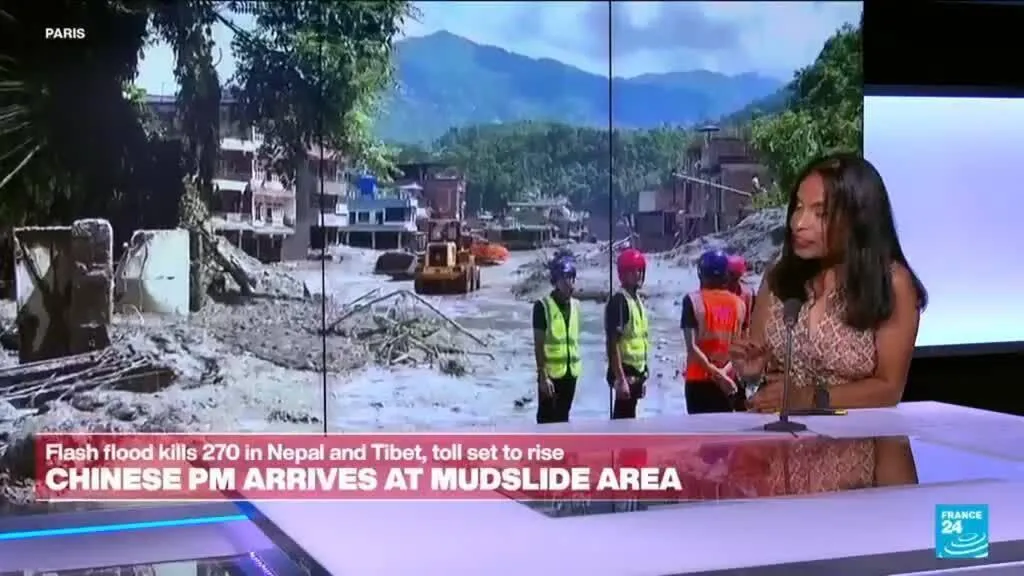
Glacial collapse, not rain, killed 180 in Nepal's Himalayan flood
The Himalaya's extreme geography hid the true cause of Nepal's catastrophic flood, a glacial collapse that turned a geological battleground into a mass-casualty zone.
Iran’s Esmail Baghaei says Oman talks start shipping via Hormuz, not US talks yet
Temporary route plans with Oman aim to restart commerce while Tehran says Washington dialogue is not on the table.

Standards watchdog opens probe into Reform UK deputy leader Richard Tice over interests
The parliamentary standards commissioner says it began an investigation on 28 July into a possible undeclared interest.