

Iran strikes Gulf islands and Kuwait targets hours after US-Iran Hormuz signals diverge
Regional shelling escalated as both Washington and Tehran offered contradicting statements about whether the Strait of Hormuz was open to traffic.
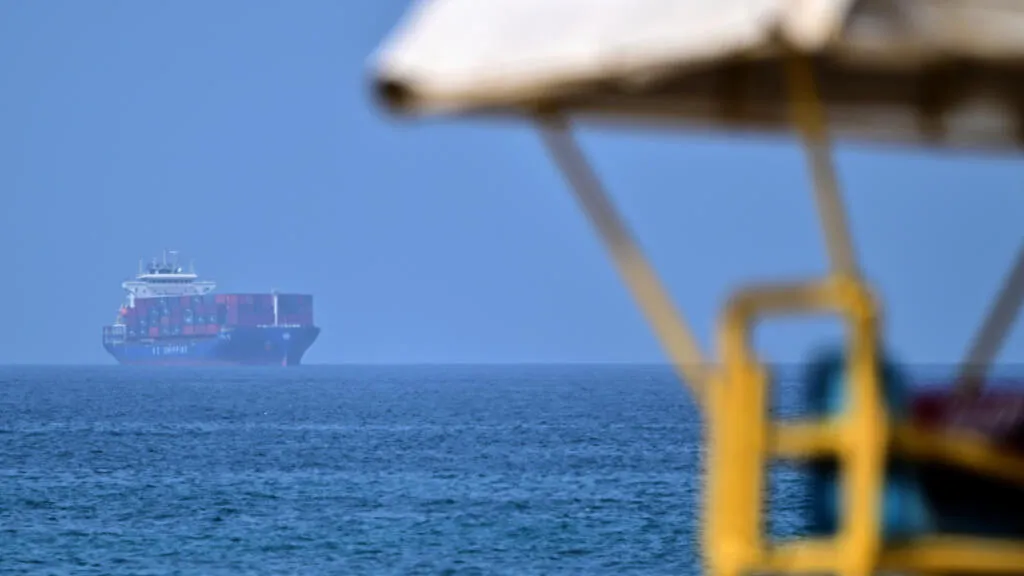
Iran reported strikes Sunday evening on two of its southern islands, while Kuwait said border posts and an offshore oil platform were attacked. The timing followed hours of US and Iran conflicting statements about traffic access through the Strait of Hormuz, the key chokepoint for Gulf energy flows.
Iran reported strikes Sunday evening on two of its southern islands, while Kuwait said border posts and an offshore oil platform had been attacked. The strikes were as-yet unclaimed, but they landed after hours of contradictory signaling from Tehran and Washington about whether the Strait of Hormuz, one of the world’s most important shipping lanes, was open to traffic.
For decision-makers, that sequencing matters more than the headlines. When gunfire and information policy move together, markets do not just price the physical risk, they price the uncertainty. Even with no confirmed attribution for Sunday’s attacks, the fact pattern is clear: Iran is publicly acknowledging strikes on its own territory, Kuwait is reporting attacks linked to areas tied to its security and offshore production footprint, and both sides are simultaneously sending mixed messages about the chokepoint that shipping firms, insurers, and energy traders rely on to plan routes and schedules.
The Strait of Hormuz is not just a geographic detail. It is the kind of chokepoint that turns a “regional” event into a global one because it sits between most energy shipping and the rest of the world’s buyers. When statements diverge about whether the waterway is open, the practical question for companies is not what side is “right” in the political sense, it is whether cargo can move safely, legally, and on time. That feeds directly into risk premiums, freight rates, and insurance pricing. It also pressures boards and treasury teams who are trying to protect cash flow, hedging positions, and supply continuity during fast-moving uncertainty.
Kuwait’s role adds another layer to the risk map. The source notes that Kuwait has been a focal point because Iran has repeatedly targeted US installations there. That matters because it ties this moment to a broader pattern, not a one-off flare-up. For executives overseeing compliance, government relations, and operational security, repeated targeting increases the chance that future incidents will be framed by regulators and counterparties as part of an ongoing threat environment. In that environment, companies often face tighter scrutiny for anything that looks like it could be construed as exposing assets, personnel, or infrastructure to harm.
The fact that Iran reported strikes while Kuwait reported attacks, yet the strikes themselves remain unclaimed, creates a familiar fog-of-war problem that corporate planning cannot ignore. Businesses cannot wait for a clean attribution chain when the operational impact can begin immediately. The second-order implication is that some decisions will be made under partial information: rerouting shipping, adjusting staffing and logistics for offshore operations, accelerating or delaying contract performance, and tightening controls on what vessels and contractors do in and around sensitive areas. Those moves may be protective, but they also can be expensive and disruptive, especially if they turn out to be unnecessary once information clarifies.
There is also a market-structure angle here. In periods like this, liquidity can change fast. Traders and insurers often widen spreads when the availability of reliable information drops. That tends to raise costs for energy buyers and producers even before supply is physically disrupted. If the Strait of Hormuz is perceived as intermittently accessible or at heightened risk, then even “status quo” shipments can cost more, and alternative routing can increase transit time, tying up working capital. That is the kind of effect that hits finance teams and operations teams simultaneously, which is why board-level oversight tends to jump in these moments.
Strategically, the most important element for executives is the contradiction in messaging described in the source. The US and Iran offered conflicting statements about whether the Strait of Hormuz was open to traffic. For companies with exposure to the Gulf supply chain, contradictory statements are a signal in themselves. They suggest that the dispute is not only about physical operations, it is also about controlling narratives, influencing behavior, and shaping risk expectations. When that happens, the “wait-and-see” period can be shorter than people expect because pricing often starts moving as soon as uncertainty increases.
Peers in similar roles should take away a simple executive priority: treat information quality as an operational variable. The next decisions in this kind of environment will be made by teams that can quickly translate geopolitical risk signals into practical actions: route planning, insurance documentation, operational security measures, vendor communications, and scenario planning for delays. Sunday’s strikes on Iran’s southern islands and Kuwait’s reported attacks on border posts and an offshore platform show how quickly the region can escalate, and how tightly corporate risk is linked to the availability of the Strait of Hormuz.
This story's Key Insights and Take-aways are locked.
Create a free account to unlock Executive Actions for one credit.
Register to UnlockAlways free for Executives Club members. Join the Club
More in Politics

Glacial collapse, not rain, killed 180 in Nepal's Himalayan flood
The Himalaya's extreme geography hid the true cause of Nepal's catastrophic flood, a glacial collapse that turned a geological battleground into a mass-casualty zone.

Iran’s Esmail Baghaei says Oman talks start shipping via Hormuz, not US talks yet
Temporary route plans with Oman aim to restart commerce while Tehran says Washington dialogue is not on the table.

Standards watchdog opens probe into Reform UK deputy leader Richard Tice over interests
The parliamentary standards commissioner says it began an investigation on 28 July into a possible undeclared interest.