
Jackass: Best and Last opens June 26, 2026 as critics call it the proper send-off
Reviews say the franchise finds a balance: new stunts with old chaos, plus surprisingly real emotion.

Jackass: Best and Last opens in theaters June 26, 2026, and early reviews from outlets including The Daily Beast, TheWrap, and Variety describe it as a best-fit goodbye. For decision-makers, the business takeaway is how a “final” brand moment can still expand audience reach by pairing familiar IP with fresh risk.
Jackass: Best and Last opens in theaters June 26, 2026, and critics are already treating it like a finale that actually lands. Multiple reviewers describe the film as a proper send-off, even if they do not all agree it is the franchise’s single peak. In other words: this is not just another entry. It is the franchise stepping toward the exit, with its signature chaos trailing behind it.
The first reviews also make the emotional angle impossible to ignore. Critics repeatedly say the movie is not only gleefully puerile, but genuinely sentimental for all involved, including the audience. The film is framed as partly a best-of clip show highlighting favorite stunts and gags from the original series and previous movies, while also including plenty of new content to keep both diehard fans and newcomers engaged.
So what exactly are early critics rewarding, and where do they think it misses? The consensus looks like this: Best and Last is strong on integration, not just nostalgia. Todd Gilchrist at TheWrap calls it a “worthy and satisfying resting point,” though he says it falls slightly short of the franchise’s superlative installment, which he identifies as Jackass Number Two. Variety’s Guy Lodge says the new stunts are “mostly solid enough to stand beside the old ones,” and Tim Grierson at Screen International adds that the new sequences, while sometimes less physically demanding, remain “incredibly agonising or humiliating.” That matters because the Jackass product is not only about spectacle. It is about the feeling that the stunts are risk-heavy and committed.
At the same time, reviewers are clear that this is not a full escape from “we have seen this before.” AV Club’s Matt Schimkowitz bluntly labels it “Far from the best Jackass.” Liz Shannon Miller at Consequence acknowledges the worry that it might play too much like a retrospective, but counters that “the new material is plentiful.” Still, ScreenCrush’s Matt Singer calls out a specific weakness: not enough original content. That criticism, in plain terms, is about freshness. Even if you deliver new gags, fans notice when the “new” is doing too much remembering.
The reviews also give a window into what kinds of new content worked. IndieWire’s David Ehrlich points to a raging-bull confrontation returning as a standout highlight connected to Jackass Forever, and Screen International similarly says the series’ gasp-inducing shock has not lost its edge. There is also a pointed discussion of how the film handles the cast’s physical limits. Ben Kenigsberg at The New York Times says Best and Last does not shy away from the idea that the gang’s riskiest, most physically demanding stunts are behind them. If you translate that into a strategy lens, it is a product decision: you can keep the franchise’s identity without asking for the highest-cost stunt at every turn.
Where the movie leans into Jackass DNA, critics say it does so with familiar disgust-and-delight. AV Club highlights moments like the franchise’s “fecal fixation” updated for middle age, including the guys chugging colonoscopy prep fluid before a game of Twister. Variety and Screen International both describe the new pieces as still embracing go-for-broke spirit. And ScreenCrush’s Matt Singer says it took only 13 minutes for him to laugh so hard he “cried.” That line is not just a gag report. It is a reminder that the film’s job is to trigger immediate, embodied reaction, and critics feel it doing that quickly.
But the reviews also underline a divide between “familiar funny” and “questionable new.” Variety’s Guy Lodge flags an overlong bit featuring game guest star Paul Walter Hauser, describing him being strapped down and threatened with giving one of the crew a rim job. IndieWire’s Ehrlich, meanwhile, criticizes the Jamiroquai-inspired opening sequence as limp compared to the Godzilla intro from Jackass Forever. In a normal entertainment release, this is the kind of detail that decides whether a mainstream audience sticks around. In Jackass, it is also about credibility. The franchise sells risk. If the early beats feel underpowered, the emotional buy-in can wobble.
Now, the biggest second-order story in the reviews is how the franchise handles endings. Sophie Monks Kaufman at Time Out says it is the first time Jackass induces tears that are not from laughter or disgust. Matt Singer at ScreenCrush describes vulnerabilities as both emotional and physical, while Consequence’s Liz Shannon Miller notes multiple moments where Knoxville and the gang get genuinely emotional about the end of an era, without getting “too bogged down in sentiment.” Even critics who argue about quality still circle back to the same idea: the movie feels like a proper send-off. Tim Grierson at Screen International says it has the feel of a proper send-off, and Liz Shannon Miller adds that Knoxville behaving more cautiously on camera signals it is the right time for the series to wrap things up.
Even the “who wins this entry” conversation has a business-logic flavor. IndieWire says Steve-O “finally fulfills his dream of being the MVP of a Jackass movie.” That matters because it reflects how the franchise is managing legacy roles. You keep the brand’s engine running by distributing the spotlight, not just the stunts. And critics across outlets seem to agree on the framing: Jackass: Best and Last is less about proving it can still shock, and more about letting audiences relive what they loved while delivering a finale that hits differently because it knows it is ending.
For peers tracking how IP-based franchises evolve, the strategic stakes are clear. If you are running a legacy brand, you eventually have to decide whether “final” means “smaller” or “sharper.” The early reviews suggest Best and Last tried for sharper. It uses historical clips and known pranks to meet newcomers where they are, while insisting on enough new content to feel like more than a greatest-hits release. Critics do not call it perfect, but they repeatedly call it the right kind of goodbye. In that tightrope walk, there is a blueprint for how to end with motion instead of memory.
This story's Key Insights and Take-aways are locked.
Create a free account to unlock Executive Actions for one credit.
Register to UnlockAlways free for Executives Club members. Join the Club
More in Entertainment

Broadway and Chicago went feral in 2026, with Maya Rudolph and a tornado pause
From Maya Rudolph’s Broadway debut to Hold Steady’s shelter-in-place moment, here are 2026’s standout live shows.
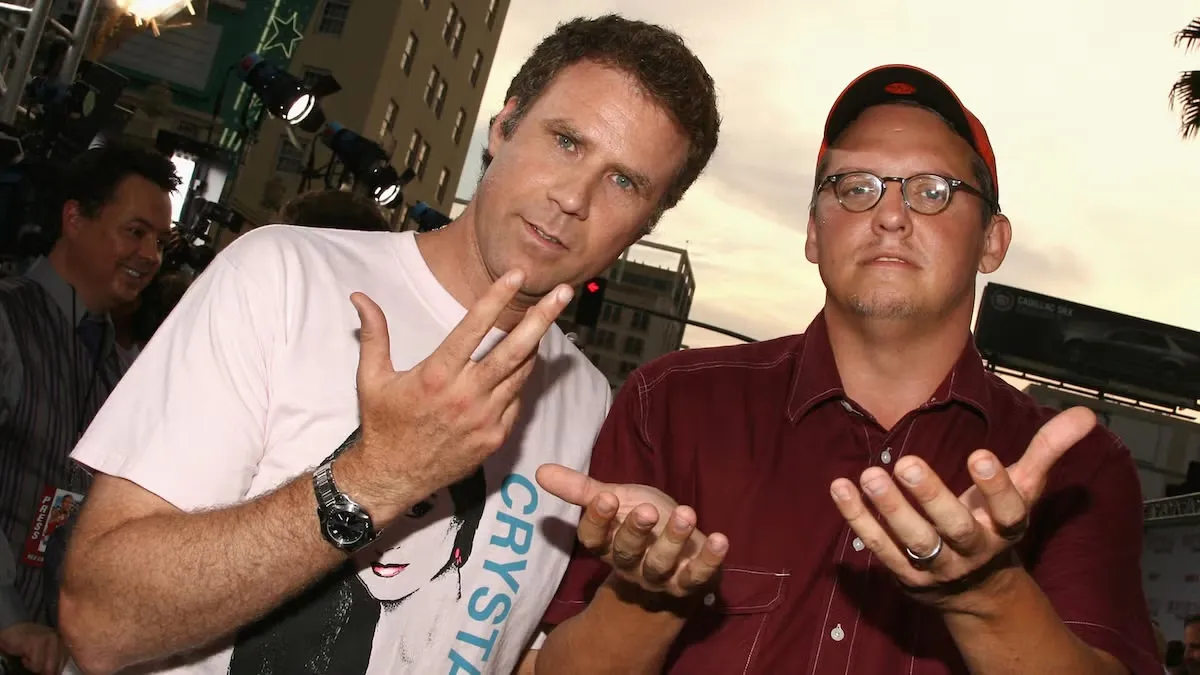
Adam McKay says he’s open to reuniting with Will Ferrell after Gary Sanchez breakup
The creative rift traced to 2019 fallout is thawing, and McKay says he has “no hard feelings” now.
Phoebe Bridgers’ $1 shows triggered a lyric-ban backlash that even reached ableism claims
The “surprise $1” stunt for her third album return turned discourse into a second act, with phones banned at shows.