
Jaguar Land Rover drops EV-only factory plan, tells investors petrol and hybrids are back
The UK automaker U-turns on an EV-only shift to chase US growth, widening the fossil-fuel rollback debate.
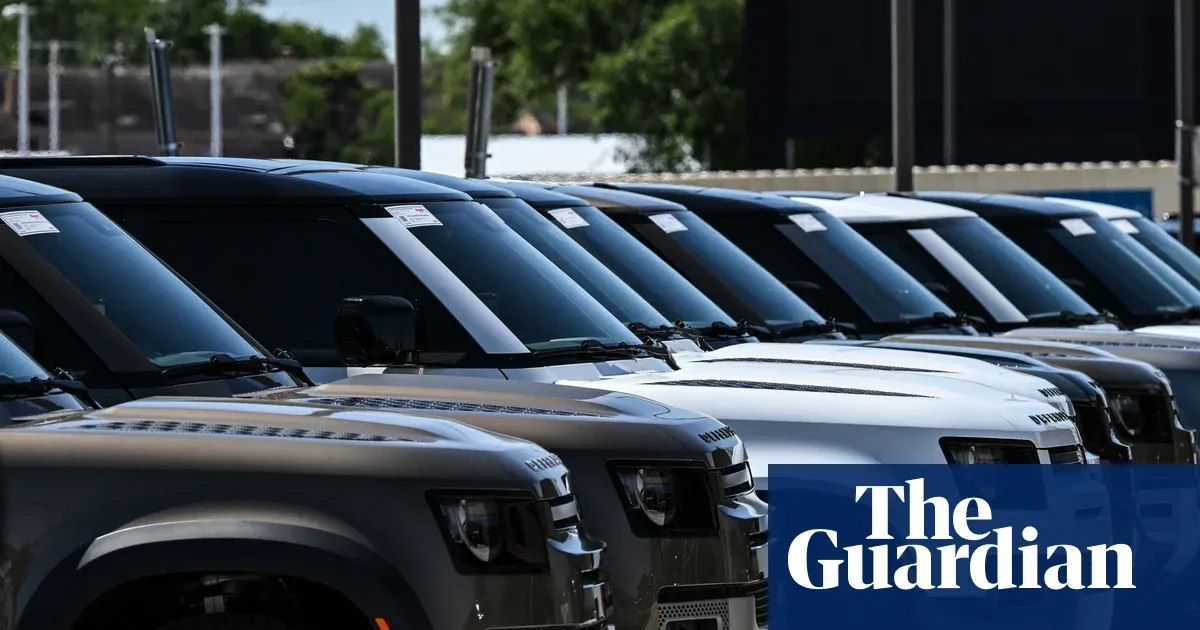
Jaguar Land Rover has reversed plans to make one of its factories electric-only, telling investors it will offer petrol and hybrid versions of new models. The move matters for boards and investors watching how quickly carmakers are adjusting product and capex amid US growth priorities and shifting transition expectations.
Jaguar Land Rover has officially reversed course on an EV-only factory plan. In a Wednesday update to investors, the Britain-based carmaker said it will offer petrol and hybrid versions of new models, including smaller SUVs that had been planned to shift toward all-electric sales.
That is the core of the story. Jaguar Land Rover is no longer committing to a clean break where a factory makes nothing but electric cars. Instead, it is keeping internal combustion and hybrids in the mix while it leans harder into growth in the US, and it is doing so right as pressure for a faster transition away from fossil fuels is still colliding with practical sales realities.
This is not happening in a vacuum. The Guardian frames Jaguar Land Rover’s decision as part of a broader pattern: the company is the latest carmaker to roll back on the move away from fossil fuels. And crucially, it comes as Britain’s largest carmaker “further rowed back” on that transition. Translation for decision-makers: the industry signal is getting louder, not quieter. When the biggest players start re-timing their electrification roadmaps, the market starts adjusting expectations for timelines, costs, and demand assumptions.
So why does this matter beyond headlines about “EV-only” dreams? Because factory-level commitments are among the most capital-intensive choices a manufacturer can make. Once you retool a plant, commit supply chains, and line up manufacturing processes, the transition becomes hard to unwind without cost. Even if the underlying technology trajectory stays on course, the business case for timing changes quickly when regulators, customers, and competition start pulling in different directions.
Jaguar Land Rover’s stated rationale is about focusing on growth in the US. That matters because the US is not just another market. It is typically where scale decisions meet margin pressure, and it is where electrification plans can face a harder test in demand, incentives, and product mix. If a carmaker believes it cannot hit near-term volume and sales targets with EVs alone, it will often prefer a hybrid or petrol hedge while it gathers traction on electric vehicles. In that scenario, an EV-only factory stops being a “destination” and becomes a “risk,” especially if competitors can still sell what customers want right now.
There is also a governance angle for executives and boards. Jaguar Land Rover is telling investors that it will change what it sells, which usually means it is also managing what it builds. That sort of reversal can trigger questions about prior assumptions: What demand model did the earlier EV-only plan rely on? Were timelines too aggressive? Was there overconfidence in how quickly electrification would ramp in key markets? Even when reversals are rational, markets and shareholders tend to care about the quality of the original planning.
And then there is the regulatory context, which is only getting more complicated for automakers. The source points to a “transition away from fossil fuels” debate, and the idea of “rowing back” suggests the industry is re-calibrating against real-world constraints. Regulators often push for cleaner vehicles, but policy frameworks and enforcement timelines can shift, and manufacturers still have to deliver products that move off lots. When carmakers revise strategies in response, it can create a feedback loop: investors demand safer capital allocation, companies adjust product plans, and regulators face a more fragmented industry story about readiness.
Second-order implications are starting to show up for peers in similar roles. If Jaguar Land Rover is backing away from an EV-only manufacturing plan, other manufacturers will likely re-examine whether they should treat electrification milestones as fixed dates or as adjustable pathways. Board members should also recognize that this kind of message to investors travels fast. It shapes how the market prices electrification investment risk, how suppliers plan capacity, and how competitors position themselves to capture share while balancing cost and compliance pressure.
In short, Jaguar Land Rover’s Wednesday investor update is a high-signal move: petrol and hybrid versions are back on the menu, and an EV-only factory future is delayed or replaced. For executives and investors, the takeaway is not just that one automaker is U-turning. It is that the electrification ramp is increasingly being treated like a growth strategy problem as much as a climate strategy problem, and the US focus is where that tension is showing most clearly.
This story's Key Insights and Take-aways are locked.
Create a free account to unlock Executive Actions for one credit.
Register to UnlockAlways free for Executives Club members. Join the Club
More in Business

SpaceX stock jumps 3% after it overtakes Amazon’s market cap
CNBC says SpaceX’s shares surge following its IPO Friday, forcing investors to reprice what “space” and “AI” are worth.

SpaceX’s first options day breaks U.S. records after a $85B IPO win
Big IPO, bigger options debut: what it means for investors, risk teams, and anyone benchmarking market appetite.

SpaceX buys Cursor for all-stock $60B, signaling Elon Musk’s next AI move
SpaceX exercised its option for Cursor in an all-stock deal worth $60 billion, reshaping AI dealmaking expectations.