

Jamie Dimon: broad Mythos access equals giving “ballistic missiles to individuals”
Why JPMorgan’s CEO compared Anthropic’s most capable model to battlefield weaponry, and what controls are changing.
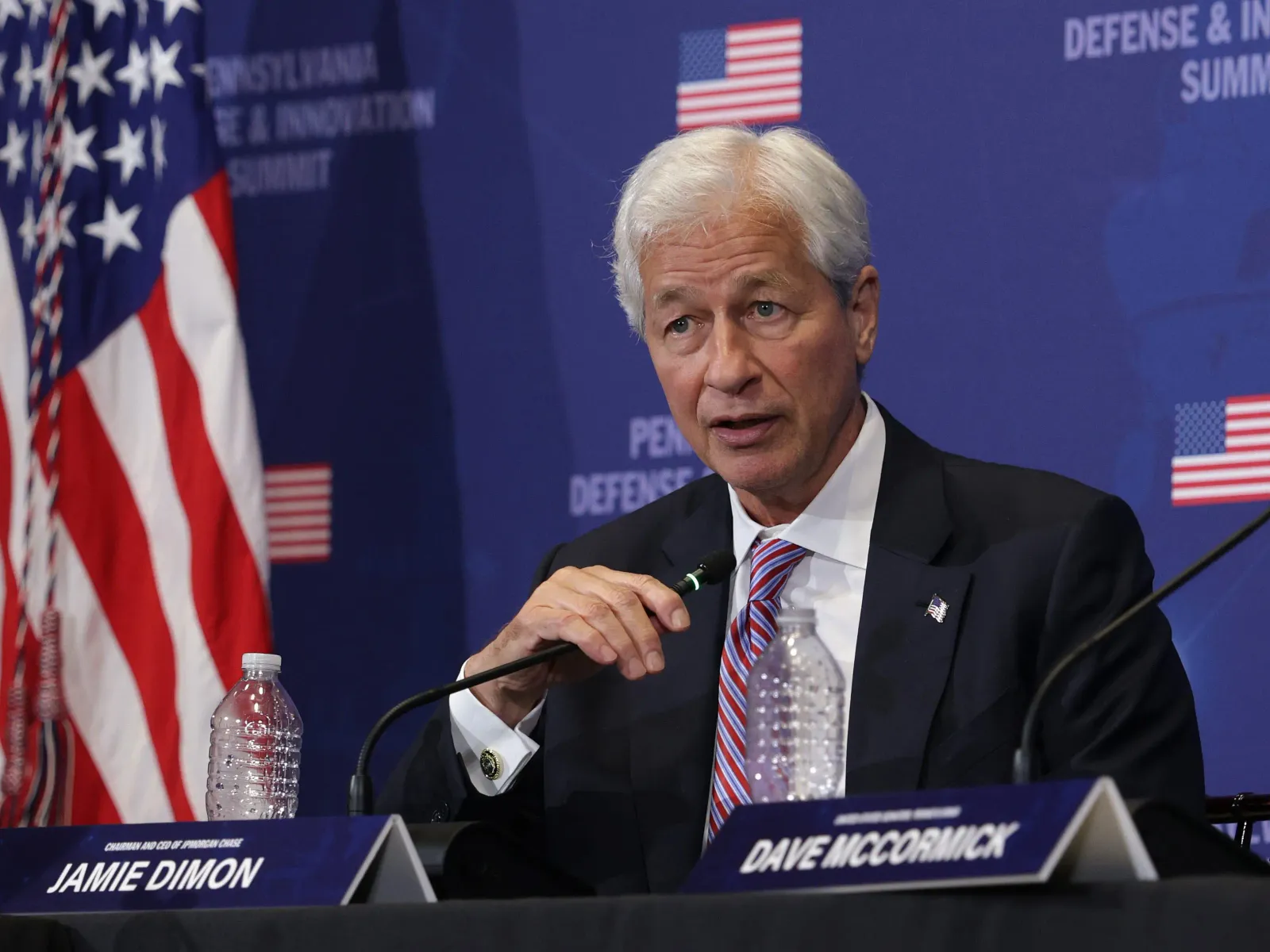
Jamie Dimon, CEO of JPMorgan Chase, warned about the cybersecurity risks of broad access to Anthropic’s Mythos model class. The analogy signals how defense-grade AI capability is colliding with real-world regulation, export controls, and gatekeeping over access.
Jamie Dimon did not mince words about Anthropic’s Mythos. Speaking at the Pennsylvania Defense and Innovation Summit on Thursday, the JPMorgan Chase CEO warned that broad access to Mythos would be like giving “ballistic missiles to individuals with Mythos, basically.” In Dimon’s framing, the US government has been “on top of at this point,” because authorities need to ensure the technology can be controlled when it is rolled out.
That “ballistic missiles” line is the headline moment, but it is also the setup for the real story: Mythos is positioned as Anthropic’s strongest model, and it has a reputation for finding vulnerabilities in software. Dimon called it a “real issue,” and he tied the concern directly to what happens when highly effective capability becomes widely accessible. If you are a board member, a CISO, or an investor underwriting AI risk, the implied question is immediate: who gets the keys to models that can spot weaknesses at scale, and under what rules?
To understand why that matters, you have to connect two threads that are increasingly running in parallel. First is the technical capability of the model class. The source notes that Mythos 5 is Anthropic’s most capable frontier AI model, capable of finding vulnerabilities in operating systems. Anthropic itself, and critics, have warned that if a model like this is made available to the public, cybersecurity risks rise sharply.
Second is the regulatory and policy response that follows when capability outpaces governance. Anthropic said in April that it halted the release of the model because it was too good at finding “high-severity vulnerabilities.” Instead of broad access, the company said it would grant access only to a select group of US organizations. That is already a significant posture shift. It signals that the “frontier AI” conversation is not just about general-purpose productivity. It is about tools that can be used for both defense and offense, depending on who holds them.
The next move shows how difficult it is to draw a clean line between “restricted” and “released.” In June, Anthropic released Fable 5 to the general public, describing it as a Mythos-class model with guardrails against topics such as cybersecurity, distillation attacks, and biology and chemistry. But about a week later, the US government blocked access to both Mythos 5 and Fable 5. The rationale in the source is specific: authorities determined that the guardrails for Fable 5 could be bypassed.
That is the regulatory logic in a nutshell. Controls fail if they can be evaded, and if the model class is strong enough, evasion becomes a practical engineering target. The government then slapped export controls on the model to restrict foreign nationals from using it. In response, Anthropic blocked access for all users, not just foreign users. That sweeping action highlights another second-order implication: when export controls apply, the operational burden can force providers to halt broadly, because partial rollouts can be harder to audit and enforce.
Then came a reversal that will matter to anyone who tracks both AI rollout schedules and compliance calendars. On June 30, Anthropic announced that access had been restored. “We’ve received notice that the Department of Commerce has lifted export controls on Claude Fable 5 and Mythos 5,” Anthropic said in an X post on June 30. “We’ll begin restoring access tomorrow, and will share an update soon. We’re grateful to our users for their patience, and to everyone who worked with us on redeploying the models.”
The JPMorgan summit context matters, too, because it reflects how defense and capital are co-mingling around AI oversight. The event included prominent figures in politics and defense: President Donald Trump, Defense Secretary Pete Hegseth, and Palantir’s defense head, Mike Gallagher, with Dimon participating on an “Investing in America” panel alongside Pennsylvania Sen. Dave McCormick. That lineup reinforces that this is not an abstract tech debate. It is a security and industrial policy debate, where the private sector is expected to build, but regulators are expected to gatekeep.
For executives and boards, Dimon’s comparison is a warning about distribution, not just capability. A model that can find vulnerabilities in operating systems is valuable for defensive security work, but it can also lower the barrier for attackers, especially if access becomes too broad or controls become bypassable. The strategic stake is whether AI providers, governments, and enterprise buyers can implement access regimes that are enforceable in practice. Dimon’s message is essentially that “powerful” is not enough as a governance label. The question is who can get it, how fast, and what happens when guardrails meet the real world.
This story's Key Insights and Take-aways are locked.
Create a free account to unlock Executive Actions for one credit.
Register to UnlockAlways free for Executives Club members. Join the Club
More in Business

Epic and Google drop settlement bid, forcing rival Android app stores by July 22
Google told the court it is ready to carry third-party app stores starting Wednesday, July 22.

SK Hynix opens at $170, raises $26.5B, and tops foreign IPO records
In Friday's Wall Street debut, SK Hynix turns AI RAM demand into a $26.5B fundraising moment that rewrites comps.

China lands a reusable Long March booster, a first that matches SpaceX and Blue Origin
A barge landing and net-based recovery move China from theory to proof, reshaping the reusability race and satellite ambitions.