

Jamie Dimon: JPMorgan says AI cut up to 40% of jobs in certain roles
A blunt claim about labor reduction meets earnings momentum from equities trading, reshaping how banks plan costs and strategy.

Jamie Dimon said AI has helped JPMorgan cut up to 40% of jobs in certain roles. At the same time, the five banks reporting Tuesday morning showed strong revenue from equities trading, reinforcing earnings momentum.
Jamie Dimon, speaking on AI, said JPMorgan has used AI to cut up to 40% of jobs in certain roles. That is the kind of number that forces a board-level question fast: if AI can materially reduce headcount in specific job categories, what happens next to costs, service levels, and the skill sets banks need to keep revenue engines running?
The timing matters. CNBC reports that five banks releasing earnings Tuesday morning have reported strong revenue from equities trading. In other words, while management teams are talking about AI-driven efficiency, the market is also rewarding the traditional money-making machine right now: trading. Put those together and you get a more complicated picture than “AI replaces jobs” or “trading is strong.” You get a plausible internal playbook where AI lowers structural costs in some functions while trading desks and markets revenue keep performance near term.
To understand why this pairing matters for decision-makers, zoom out to how bank earnings tend to work. Equities trading revenue can be volatile, driven by market activity, liquidity, volatility, and investor behavior. When trading revenue is strong, it gives banks breathing room. It can also change the tone of internal conversations. Cost cutting can go from “painful but necessary” to “possible and maybe even accelerated,” because strong quarters make it easier to absorb transition work, systems integration, and any operational changes that come with new tools.
Now add the labor angle. Dimon’s claim is specific, “up to 40%,” and it is tied to “certain roles.” That detail matters because banks cannot simply swap entire departments overnight. Roles with repeatable decision patterns, document-heavy workflows, or standardized processes are often the ones where AI can deliver measurable efficiency. But even when automation is targeted, execution involves more than software. Banks have to manage reassignment, retraining, and the risk that a change meant to save time does not accidentally degrade quality, compliance, or customer outcomes.
That is where board dynamics come in. Boards are typically tasked with overseeing strategy, risk management, and the controls that make sure “innovation” does not become “recklessness.” If AI can reduce jobs at the portfolio level, the board will likely want clarity on three things: where the savings come from, how the bank measures performance during the transition, and how regulatory risk is handled when workflows and decision-making shift.
Speaking of regulation, the banking industry is unusually sensitive to anything that touches governance and model risk. AI systems can introduce new risks: explainability gaps, data drift, and questions about whether decisions are consistent with policy. Even if the bank’s goal is efficiency, regulators often care about how decisions are made and documented, not just how fast they happen. So if JPMorgan is cutting up to 40% of jobs in certain roles with AI, the implicit question becomes: what controls and oversight are being used to keep the model-led process audit-friendly?
Meanwhile, the earnings update provides a second signal. CNBC’s note that five banks reported strong equities trading revenue Tuesday morning suggests that, for now, capital markets activity is supporting profits. That has second-order implications. If revenue holds up, management teams can invest more in the tech that delivers those AI efficiencies. If revenue weakens, they might face pressure to slow down transformation to protect service levels, or to prioritize revenue-generating priorities over long implementation timelines.
For executives across the sector, the stake is straightforward: the firms that can lower costs without impairing trading and client outcomes will be better positioned across cycles. Dimon’s “up to 40%” claim puts a ceiling on what AI might do for labor in specific areas, at least in JPMorgan’s view. The strong equities trading numbers, meanwhile, act like a reminder that banks still win and lose on performance engines that are sensitive to market conditions. The real challenge for peers is blending both truths into one coherent strategy: use AI to make operations leaner, while keeping the trading revenue flywheel healthy enough that transformation does not become a self-inflicted distraction.
This story's Key Insights and Take-aways are locked.
Create a free account to unlock Executive Actions for one credit.
Register to UnlockAlways free for Executives Club members. Join the Club
More in Business

T. rex sells for $50M, surpassing the stegosaurus Ken Griffin bought for $44.6M
A $50 million T. rex auction record reshuffles the rare-fossil leaderboard and sends a clear wealth signal to high-end bidders.
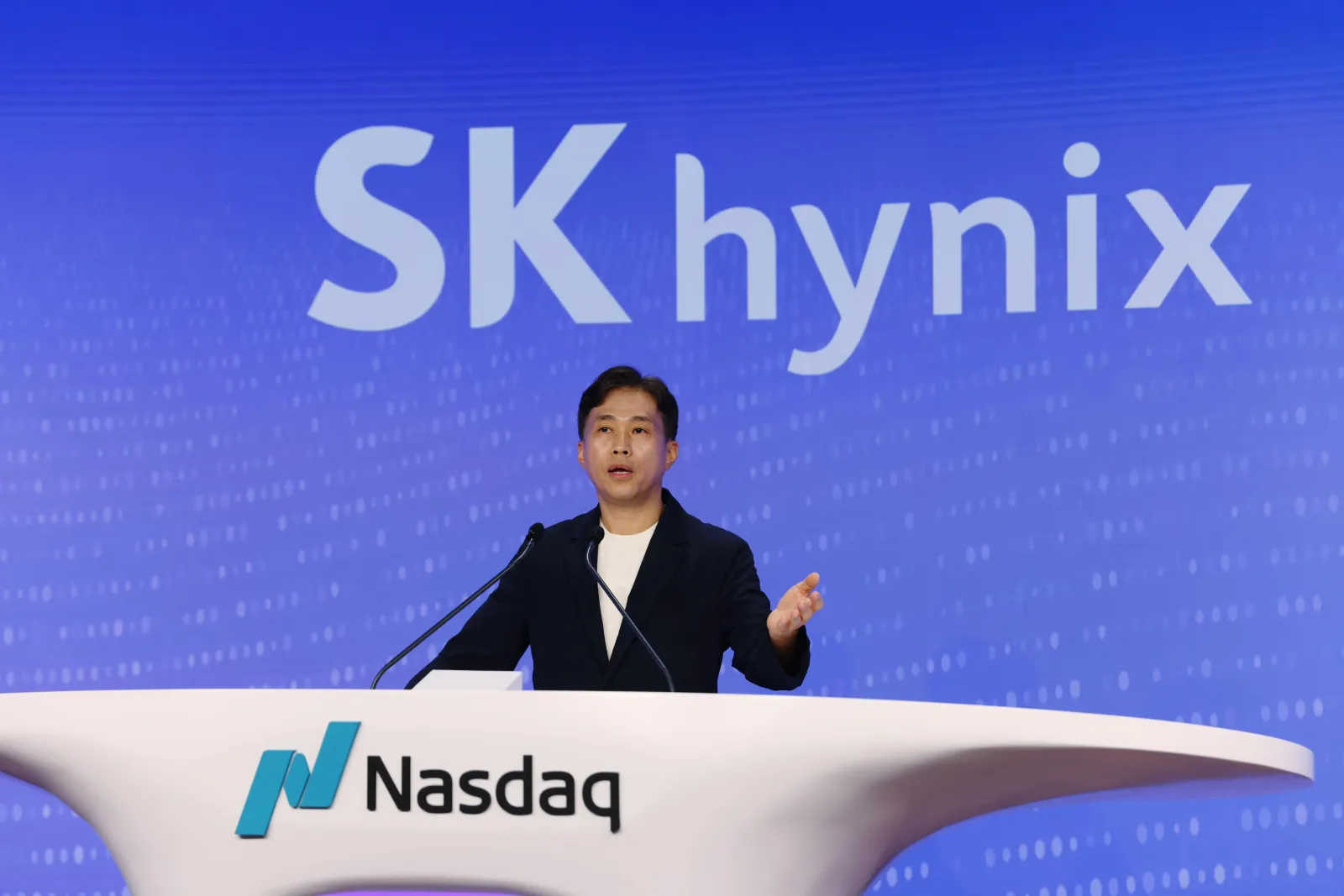
SK Hynix opens at $170, raises $26.5B, and tops foreign IPO records
In Friday's Wall Street debut, SK Hynix turns AI RAM demand into a $26.5B fundraising moment that rewrites comps.

China lands a reusable Long March booster, a first that matches SpaceX and Blue Origin
A barge landing and net-based recovery move China from theory to proof, reshaping the reusability race and satellite ambitions.