

Japan lands a reusable rocket after launch, proving the next step in reuse
The successful landing signals momentum toward lower launch costs, faster cadence, and a more competitive space industry.
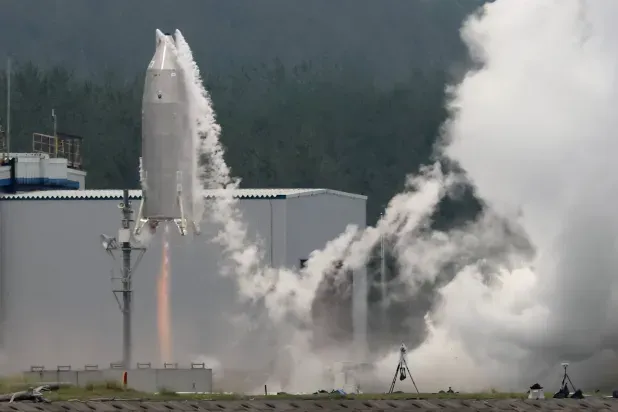
Japan successfully launched and landed a reusable rocket, marking a major milestone for reuse technology. For decision-makers, it is a reminder that cost and reliability gains from reusability are becoming board-level priorities, not sci-fi dreams.
Japan has now done the hardest part of the reusability story: it launched a rocket and then successfully landed it back in a reusable configuration. That matters because in rocket land, “reusable” is meaningless unless you can repeatedly bring hardware back safely and on target. A successful launch and landing is the signal that Japan is moving from demonstrations to capability.
The headline is simple, but the implications are not. Reusable rockets are the foundation for lowering the marginal cost of reaching space, improving launch frequency, and reshaping how satellites are bought, deployed, and serviced. Instead of treating each launch as a one-time expense, operators can start thinking in terms of asset reuse, planning cadence, and supply chain efficiencies. When a country or operator lands a reusable rocket successfully, it is not just a technical headline. It is a competitive one.
To understand why boards should care, zoom out for a second. The economics of space have been dominated by how rockets are built and used: hardware goes up, and most of it does not come back. That creates a model where launch costs are largely driven by producing new vehicles for each mission. Reuse can change the cost structure, but only if landings are not just survivable, they are reliable enough to support repeat schedules. In that context, Japan’s successful landing after a launch is a real-world data point that reusability is progressing.
There is also a regulatory and operational dimension. Space launches are tightly managed activities, typically involving national aviation and space authorities, plus coordination around safety, airspace, and range operations. Even if one part of the system is proven in test mode, moving toward operational reuse usually means tightening procedures, validating risk models, and meeting whatever safety standards apply to flight termination, recovery operations, and landing risk. When a reusable rocket lands successfully, it suggests that the recovery and operations loop has worked, not just the ascent.
The second-order effect is even bigger: reusability changes customer behavior. Satellite operators and constellation builders tend to optimize around delivery timelines and cost per launch, not just performance metrics. If launch providers credibly move toward lower costs and higher cadence, satellite customers can shift procurement strategies. They may place more frequent orders, update architectures faster, or distribute payload deployments in smaller batches. In other words, a reusable landing can ripple into procurement cycles, mission planning, and even the financial models of space customers who previously structured projects around scarce launch slots.
For investors and corporate strategists, reusability also affects competitive positioning. A successful landing gives the industry a practical benchmark, even if different programs have different designs and recovery methods. It pressures competitors to accelerate their own reuse timelines. It can also raise the bar for what constitutes a “credible” roadmap, where demonstrations must evolve into repeatable operational performance. If Japan keeps converting this milestone into recurring launches with successful returns, it strengthens not only its technical credibility but its negotiating leverage with institutional customers seeking dependable access to space.
Finally, this is a boardroom story as much as an engineering one. Reuse programs demand capital, disciplined execution, and careful oversight because the payoff is not immediate and the risks are real. But the upside is structural: lower per-mission cost, a path to higher utilization, and a route to differentiated service levels. Japan successfully launching and landing a reusable rocket is therefore a reminder for decision-makers across tech and infrastructure that “next-gen” often arrives as a sequence of operational proofs, not a single breakthrough moment.
If you are a CEO, CFO, or board member thinking about where the next cost curve break will come from, track reusability milestones like this one. They are the visible turning points where space stops behaving like one-off industrial aviation and starts resembling a reusable logistics system. And once that shift becomes credible, the competitive landscape moves quickly.
This story's Key Insights and Take-aways are locked.
Create a free account to unlock Executive Actions for one credit.
Register to UnlockAlways free for Executives Club members. Join the Club
More in Business

SK Hynix opens at $170, raises $26.5B, and tops foreign IPO records
In Friday's Wall Street debut, SK Hynix turns AI RAM demand into a $26.5B fundraising moment that rewrites comps.
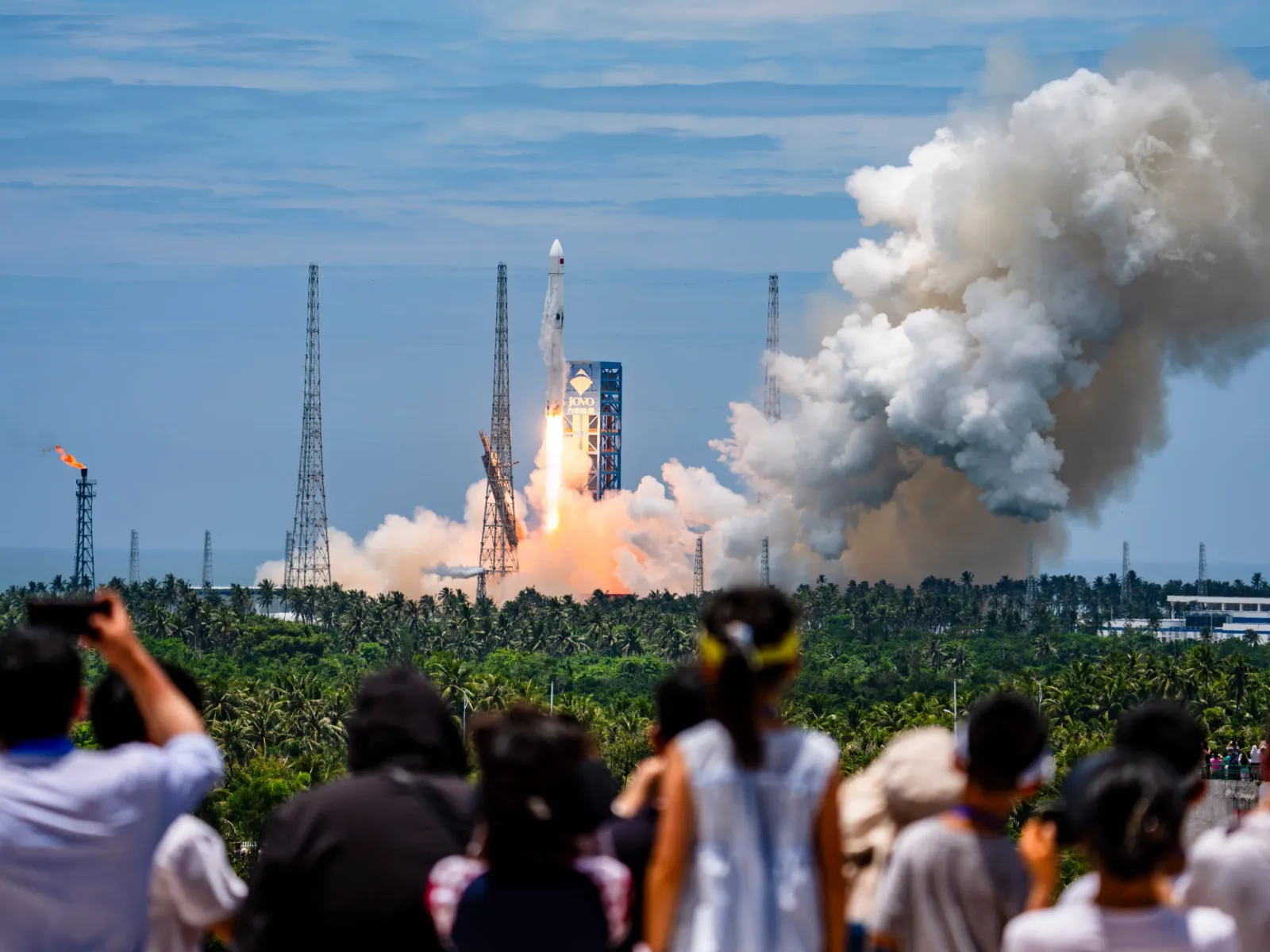
China lands a reusable Long March booster, a first that matches SpaceX and Blue Origin
A barge landing and net-based recovery move China from theory to proof, reshaping the reusability race and satellite ambitions.

AstraZeneca $27B wipeout as Wainua late trial misses cardiovascular target
A failed late-stage heart study triggered a swift market punishment, forcing investors and boards to reset timelines and risk.