

Japan’s firms bake AI into bonus pay, pushing workers to adopt new tools
A Nikkei Asia look at how bonus structures are being redesigned to accelerate AI use across Japan’s workplaces.

Nikkei Asia reports that companies in Japan are paying workers bonuses specifically to spearhead AI use. The consequence for decision-makers is clear: incentives are becoming a lever for AI adoption, not just a tech procurement decision.
Japan’s AI push is getting a very human accelerant: the bonus check.
According to Nikkei Asia, companies in Japan are paying workers bonuses to spearhead AI use. In other words, AI adoption is not being treated as a side project that employees can fit around their day job. It is being wired into compensation, which changes behavior quickly because money is immediate and goals are explicit.
This is a notable shift in how organizations think about “AI implementation.” In many companies, getting to AI use means training sessions, rollout plans, and the occasional internal demo. But those approaches often suffer from the same problem: they rely on voluntary enthusiasm in a system that rewards proven routines. When bonuses are tied to AI efforts, leadership is signaling that experimenting, learning, and applying AI tools are now expected outcomes, not optional ones.
The second-order effect is that AI becomes a performance metric inside the business, which is where incentives get powerful and a little messy. Bonuses can motivate faster adoption, but they can also concentrate attention on measurable tasks. If the organization rewards “using AI” rather than “achieving business outcomes from AI,” employees might optimize for usage volume, speed of completion, or compliance with certain tool workflows. Boards and executives will want to make sure the incentive design points toward productivity gains, quality improvements, cycle-time reduction, or other business results that justify the spend on AI tools.
There is also a board-level dynamic hiding in plain sight. When compensation is tied to AI usage, accountability spreads beyond the IT department. Department heads, team leads, and managers can find themselves managing change management like any other operational transformation. That means the AI roadmap is no longer solely a technology roadmap. It becomes an operating model roadmap. The question for leaders becomes: who owns adoption inside the org chart, and how do you measure progress without turning employees into checkbox machines?
For context, Japan’s labor culture and corporate governance tend to put weight on formal systems and shared expectations. Bonuses are already a familiar mechanism in many Japanese companies. So it is not that Japan is inventing incentives from scratch. It is that AI is being inserted into an existing structure with established credibility. That credibility matters, because employees respond differently when leadership uses tools that the workforce already understands and trusts.
Regulatory pressure is often discussed in AI circles, but incentives are a more immediate lever. Rather than waiting for external enforcement or debating abstract principles, companies are choosing to drive adoption internally. That does not eliminate the influence of regulators or compliance requirements, but it does change the timeline. If firms can accelerate workforce learning, they can also improve how quickly internal processes are adapted to meet any future expectations on data handling, governance, and responsible use. The incentive program becomes one pathway to operational readiness.
Still, executives should treat this as a system-level change, not a one-off perk. When bonuses are linked to AI, organizations may need new playbooks: how teams validate outputs, how managers review work that uses AI assistance, how data is protected, and how employees are trained not just to use tools, but to use them correctly. Even when the initial policy is simple, the operational details determine whether adoption leads to productivity gains or to risk and rework.
So what should peers and decision-makers take from this? If other Japanese companies copy the model, AI adoption could become an increasingly competitive workplace issue, not just a tech issue. Talent will notice what gets rewarded. Managers will plan around what gets scored. And boards will want to ask harder questions about ROI and governance because AI will show up in performance dashboards as clearly as sales targets.
At the executive level, the strategic stake is straightforward: incentives can speed up change, but they also lock in priorities. If Japan’s companies are using bonuses to spearhead AI use, they are effectively making AI part of the performance contract between employees and employers. The winners will be the organizations that connect AI usage to business outcomes and operational discipline, rather than measuring activity for its own sake.
This story's Key Insights and Take-aways are locked.
Create a free account to unlock Executive Actions for one credit.
Register to UnlockAlways free for Executives Club members. Join the Club
More in Business
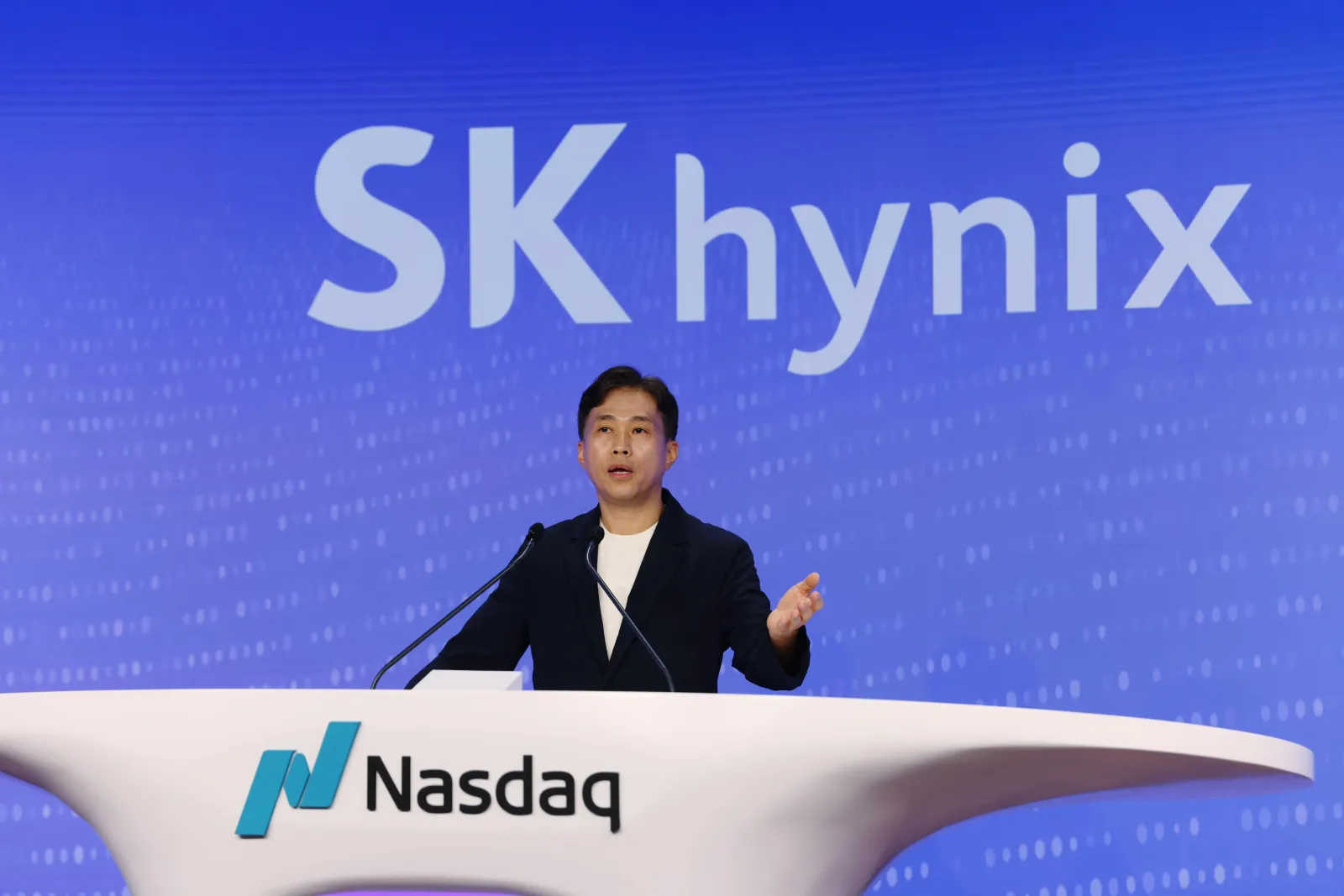
SK Hynix opens at $170, raises $26.5B, and tops foreign IPO records
In Friday's Wall Street debut, SK Hynix turns AI RAM demand into a $26.5B fundraising moment that rewrites comps.

China lands a reusable Long March booster, a first that matches SpaceX and Blue Origin
A barge landing and net-based recovery move China from theory to proof, reshaping the reusability race and satellite ambitions.

AstraZeneca $27B wipeout as Wainua late trial misses cardiovascular target
A failed late-stage heart study triggered a swift market punishment, forcing investors and boards to reset timelines and risk.