
Jay Clayton’s confirmation hearing puts election-security claims under the microscope
In a bid to legitimize concerns with declassified intelligence, the White House faces tough questions on how it’s used.

Jay Clayton is expected to face tough questions in his confirmation hearing connected to leading the U.S. intelligence community. The nomination arrives as the White House pushes to use declassified intelligence to highlight election security concerns, shaping how decision-makers weigh the evidence and its limits.
Jay Clayton is expected to face tough questions in a confirmation hearing tied to his nomination to lead the U.S. intelligence community. That matters because the job is not just about intelligence collection, it is about how intelligence is communicated, defended, and translated into decisions that affect politics, public trust, and national security.
The pressure gets even more specific because the nomination lands as the White House pushes to use declassified intelligence to show concerns about election security. In other words, this is not only a “can you do the work?” hearing. It is also a “how do you justify what you publish, and what do you ask others to do with it?” moment.
To understand why this hearing is positioned to be unusually pointed, you have to recognize what declassification does in practice. Declassifying intelligence turns a typically compartmentalized product into a public-facing argument. That can help policymakers and the public evaluate claims with more transparency than classified briefings allow. It can also raise the stakes for accuracy, context, and timing. Intelligence that might be persuasive in a closed session can become contested when aired publicly, especially when it intersects with election administration and the legitimacy narratives that elections depend on.
This is where incentives and governance collide. The intelligence community operates under legal and procedural frameworks designed to protect sources and methods. But the political system also rewards clarity and momentum. The White House pushing for declassified intelligence signals an attempt to strengthen the credibility of election security concerns by moving from private warnings to public proof. For Clayton and whoever oversees the intelligence community’s posture going forward, that creates a balancing act: providing enough detail to be meaningful without undermining tradecraft or enabling bad-faith misreadings.
Confirmation hearings are, by design, where those tensions get stress-tested. Senators are not just evaluating managerial competence; they are probing the judgment behind what gets shared, when it gets shared, and how claims get framed. If declassified intelligence is going to be used to show concerns about election security, then the confirmation process becomes an audit of process. Who decides what is safe to declassify? What standards apply to interpreting intelligence publicly? What happens if declassified materials are incomplete, misunderstood, or disputed?
For decision-makers, the second-order implication is about how quickly institutions will react to intelligence claims once they are declassified. When information is public, it does not stay in the policy sphere. It travels into media cycles, legal challenges, procurement decisions for election systems, and operational planning at agencies tasked with protecting elections. That means the intelligence community leader is effectively also a credibility architect. Getting that wrong does not just create embarrassment. It can trigger misallocation of attention and resources during the most time-sensitive moments of the election cycle.
There is also a capital and risk analog here, even if the domain is not corporate finance. Boards and executives in every high-stakes industry care about the difference between evidence and narrative. In elections security, declassified intelligence becomes the “evidence base” for narratives that political and administrative actors will act on. Confirmation questions, then, are about whether the evidence base is robust enough to support action without causing backlash that can be politically and operationally costly.
Ultimately, this nomination is being evaluated in two overlapping arenas: the internal credibility of the intelligence community and the external credibility of election security claims as presented to the public. With the White House pushing to use declassified intelligence to show concerns about election security, Clayton’s confirmation hearing is set up to determine not only whether he can lead, but also how he will steer the delicate interface between classified certainty and public argument.
For executives, investors, and operators watching the policy-tech boundary, the strategic stake is simple: when intelligence becomes public, it changes behavior. It can shift budgets, alter risk models, and reshape trust. The question during the hearing is whether the process that turns intelligence into declassified materials can withstand scrutiny, and whether decision-makers can rely on what they are shown to act with confidence.
This story's Key Insights and Take-aways are locked.
Create a free account to unlock Executive Actions for one credit.
Register to UnlockAlways free for Executives Club members. Join the Club
More in Politics
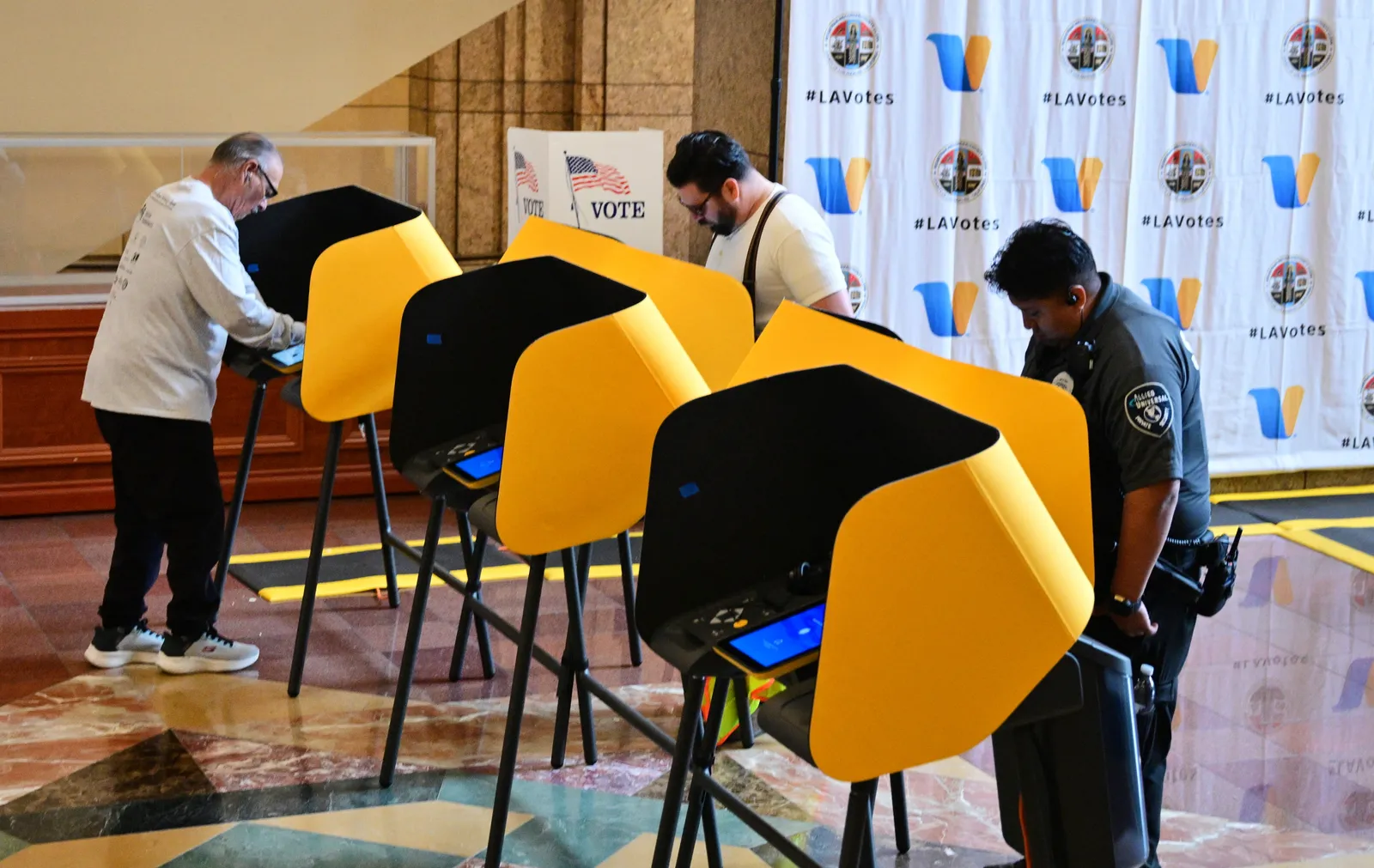
LA County: DOJ's 20,000 'noncitizen' voter list is 'unreliable,' includes U.S.-born
Preliminary review by Los Angeles County election officials finds errors in the federal list, raising the stakes for voter roll integrity ahead of November.
Trump's $1.5B Pentagon chip investment lands in North Carolina
A $1.5 billion defense infusion for North Carolina chipmaking signals a new era of Pentagon-backed reshoring - here's what it means for the industry.

Nigeria confirms first Ebola case in Abuja, a woman just off a Uganda flight
Health Minister Muhammad Ali Pate says the patient flew in from Uganda, putting Africa's latest outbreak on Nigeria's doorstep.